
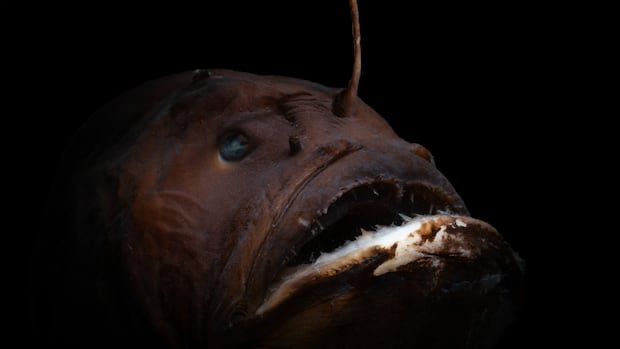
A recent study suggests that the striking forehead appendage of female anglerfish, known as a lure, may serve a dual purpose beyond attracting prey. Biologist Alex Maile, the lead author of the study, describes these deep-sea creatures as a mix of beauty and terror.
Published in the journal Ichthyology and Herpetology, the study analyzed DNA from over 100 preserved anglerfish species to explore how different types of lures evolved to enhance reproductive success.
Marine biologist Milton Love, not involved in the research, finds the theory of the lure’s dual function intriguing and highlights the importance of exploring new perspectives in established concepts.
Anglerfish, often depicted as predators with glowing lures, exhibit a wide variety of species with unique lure adaptations. Maile’s research delves into the evolutionary diversity of these lures, examining how they relate to habitat and behavior.
The study reveals that bioluminescent lures emerged in deep-sea anglerfish species approximately 23 to 34 million years ago. This development coincided with a surge in anglerfish diversity, suggesting that bioluminescence aids male anglerfish in finding females in the dark depths of the ocean.
Maile explains that male anglerfish, significantly smaller than females and lacking lures, rely on sensory cues like bioluminescence and pheromones to locate potential mates. Once mature, male anglerfish cease feeding and focus on finding a female to reproduce.
Bioluminescence as a mating strategy is not unique to anglerfish, with other deep-sea species like lanternfish and dragonfish also using this trait to attract mates. Some studies even suggest that male dragonfish have evolved large eyes to spot glowing females more effectively.
Although the mating ritual of anglerfish may seem brutal, with males physically fusing with females, scientists like Love view it as a natural aspect of these species’ life cycles. The male’s ultimate goal in life is to provide sperm to the female until its purpose is fulfilled.
The research sheds light on the fascinating adaptations and behaviors of anglerfish and deep-sea creatures, offering new insights into the evolutionary strategies that drive their survival and reproduction in the harsh underwater environments.

