
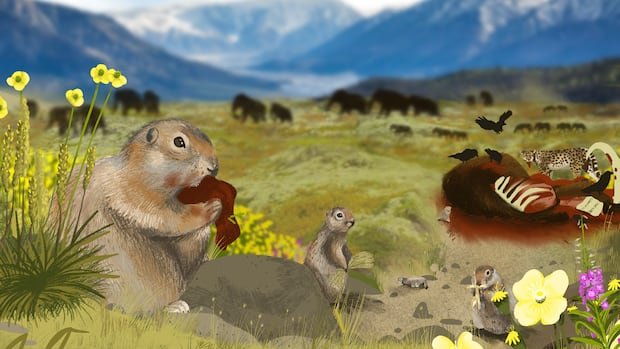
In a recent study published in Nature Communications, scientists have utilized DNA extracted from ancient, unfossilized squirrel feces found in the Yukon to reconstruct the genetic profiles of various Ice Age creatures. The coprolites contained a diverse range of DNA from animals such as mammoths, horses, wolves, and birds, as well as plant species and insects.
Tyler Murchie, a researcher at the Hakai Institute and the lead author of the study, highlighted the comprehensive nature of the genetic information retrieved from the squirrel poop, which provided insights into the ancient ecosystem of the region. These findings shed light on the intricate food web that existed during the Pleistocene era, where even small rodents like ground squirrels preyed on large animals such as mammoths.
The unique preservation of DNA in the ancient squirrel feces has enabled scientists to reconstruct genomes of various species, including woolly mammoths, horses, steppe bison, and ground squirrels that inhabited the Arctic grasslands thousands of years ago. The study revealed that the genetic material present in the coprolites was more concentrated and better preserved than that found in bones and sediments, surprising the researchers.
The analysis of the DNA samples indicated that the plant and animal species present in the ancient mammoth steppe grasslands of eastern Beringia remained relatively stable over a span of 700,000 years during the Pleistocene epoch. This ecosystem differed significantly from the current boreal forest ecosystem found in the same region today, as evidenced by the genetic data extracted from a snowshoe hare coprolite from the Holocene epoch.
The study also raised concerns about the rapid thawing of permafrost sites where these valuable genetic records are stored. With climate change accelerating the degradation of these ancient archives, researchers are racing against time to document and preserve crucial information about past ecosystems and climate patterns. The funding for this groundbreaking research was provided by various organizations, including the Tula Foundation and the University of Alberta Northern Research Awards.

