
Welcome to our weekly newsletter focusing on environmental trends and solutions leading us towards a more sustainable future. Last month, Prime Minister Mark Carney’s nature strategy caught attention for incorporating artificial intelligence (AI) into conservation efforts. Let’s delve into how AI is revolutionizing the conservation sector.
This week’s highlights include the potential impact of AI on conservation work, the positive implications of wind energy, and Parks Canada’s collaboration with social media influencers to influence visitor behavior in Banff.
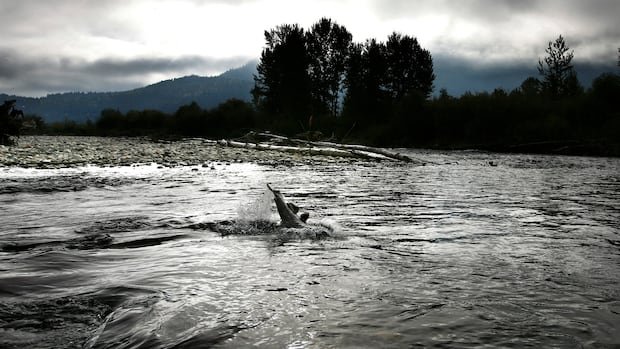
AI technology has revolutionized conservation practices, enabling continuous monitoring of salmon migration and population estimates through camera surveillance. Alemu Gonsamo, from McMaster University, employs satellite and aerial imagery to assess Canada’s vast landscapes, including tree counts and soil carbon levels. Prime Minister Carney’s commitment to integrating AI into Canada’s new nature strategy is welcomed by Gonsamo, recognizing the challenge of processing vast amounts of collected data in remote regions with limited accessibility.
Gonsamo has partnered with World Wildlife Fund Canada and Indigenous communities to study carbon storage in Canadian soils, particularly focusing on carbon-rich peatlands in Northern Ontario. Leveraging satellite sensors and machine learning, Gonsamo’s team processes extensive data sets efficiently. By utilizing 500 ground measurements of peat depth in the Hudson Bay Lowlands, the team accurately estimates peat depth across the entire region, showcasing the potential of AI in conservation research.

