
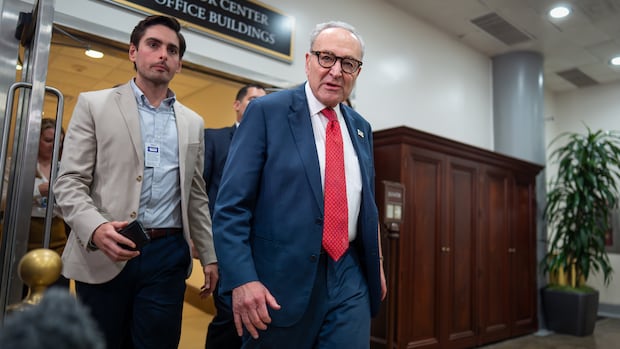
Democrats in Congress successfully held their ground against U.S. President Donald Trump long enough to trigger the longest federal government shutdown in American history.
However, with several Democratic senators having reached an agreement to bring the shutdown to an end, the party risks losing some of the political leverage they have gained over the past six weeks.
Surveys have repeatedly indicated that the Democrats were ahead in public opinion during the shutdown, with a clear majority of voters attributing blame to the Republicans in Congress or Trump rather than the Democrats.
Additionally, those same surveys indicated that most voters sided with the Democrats regarding the central issue of the stalemate in Congress: the impending expiration of health insurance subsidies, which threaten to increase premiums for millions of Americans.
After 40 days and nights of the shutdown, the Democrats are left with only a Republican promise to hold a Senate vote on extending the subsidies—a commitment that has been in discussion for weeks, but one that the Democrats are likely to lose.
Republican House Speaker Mike Johnson expressed his satisfaction, complete with a Seinfeld reference.
Several U.S. Democratic senators have had to justify their decision to vote along with the Republicans in order to start the process of ending the longest government shutdown in U.S. history.
“It really was a shutdown about nothing,” Johnson remarked during an interview on CNN on Monday evening. “I don’t think Chuck Schumer [the Senate Democratic minority leader] gained anything from this other than a political spectacle.”
It would be challenging for the Democrats to argue that they secured any significant outcomes from the shutdown.
Gavin Newsom calls deal ‘pathetic’
Aside from the vote on extending Affordable Care Act subsidies, the other major concession they received from the Republicans is merely a return to the pre-shutdown conditions: reinstating over 4,000 federal employees whose jobs were cut.
This has resulted in a strong backlash from several prominent Democrats outside the Senate who wished for the leadership to adopt a more combative approach:
- “Pathetic. This isn’t a deal. It’s a surrender,” posted California Governor Gavin Newsom, often viewed as a potential Democratic presidential candidate in 2028, on X.
- “A complete betrayal of the American people,” posted Juliana Stratton, the lieutenant governor of Illinois and a candidate for the U.S. Senate in the upcoming year.
- “Feckless traitors,” is one of the few non-profane remarks posted by Keith Olbermann, the former anchor turned commentator.
But is there a way for the Democrats to assert that they achieved something less tangible?
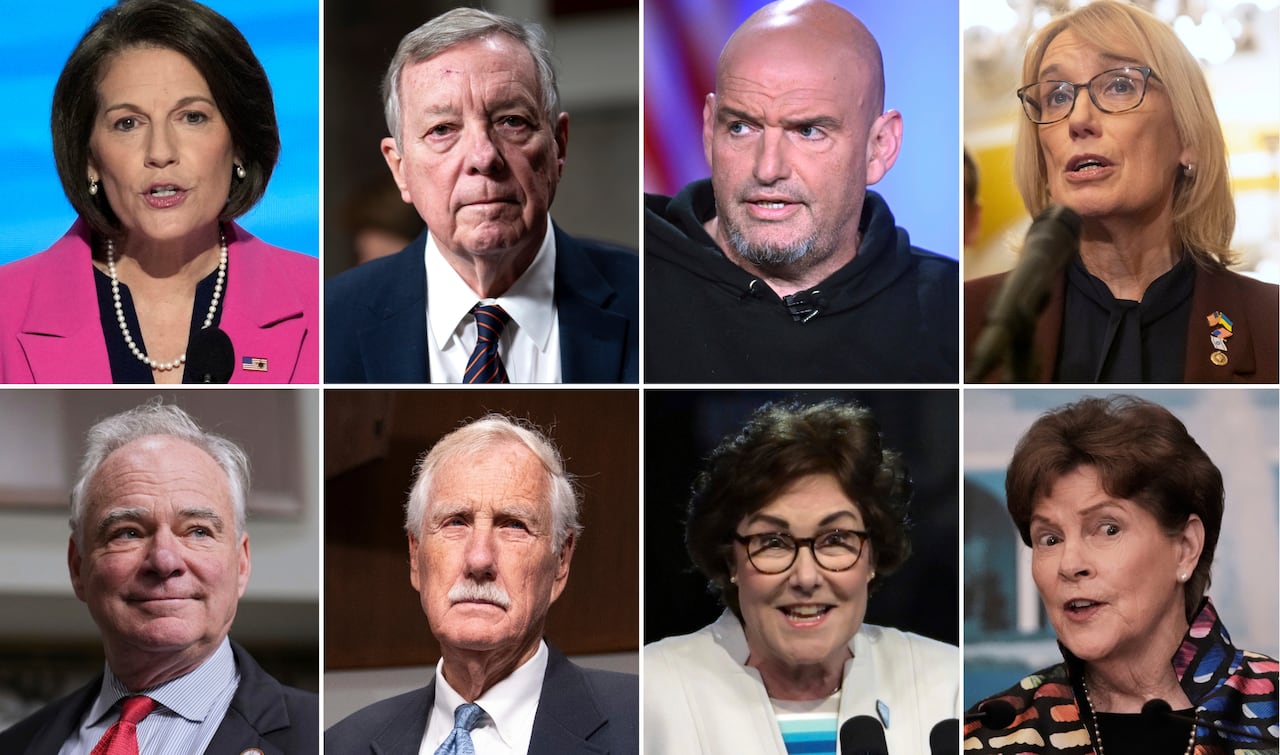
This composite photo features eight senators who are facing criticism from the Democratic party for their agreement to conclude the government shutdown. In the top row from left: Sen. Catherine Cortez Masto, D-Nev.; Senate Judiciary Committee Chairman Dick Durbin, D-Ill.; Sen. John Fetterman, D-Pa.; Sen. Maggie Hassan, D-N.H. In the bottom row from left: Sen. Tim Kaine, D-Va.; Sen. Angus King, I-Maine; Sen. Jacky Rosen, D-Nev.; and Sen. Jeanne Shaheen, D-N.H. (The Associated Press)
Since losing the presidency, as well as the House and Senate last year, the Democrats have been seeking a viable political direction.
For months, the party struggled to gain traction amidst Trump’s rapid efforts to cut federal agencies, impose high tariffs on imports, deploy troops in U.S. cities for immigration enforcement, redraw election maps to benefit Republicans, and generally push the boundaries of presidential authority.
The Democratic leadership faced escalating criticism from left-leaning grassroots members, emphasizing the need for a stronger stance against the Republican president.
Then came October and the initiation of the shutdown, followed by early November electoral victories for the Democrats: winning governorships in Virginia and New Jersey, and passing a California ballot measure that could lead to redrawing its election map, potentially flipping more House seats to blue next year.
Shutdown impact was being felt
While the shutdown may have offered the Democrats some political advantages, it was starting to affect the daily lives of ordinary Americans.
Thousands of flights were cancelled, primarily due to the Trump administration directing airlines to cut back on service. Hundreds of thousands of federal employees were not receiving paychecks. Approximately 42 million low-income Americans faced losing SNAP, the Supplemental Nutrition Assistance Program, previously known as food stamps.
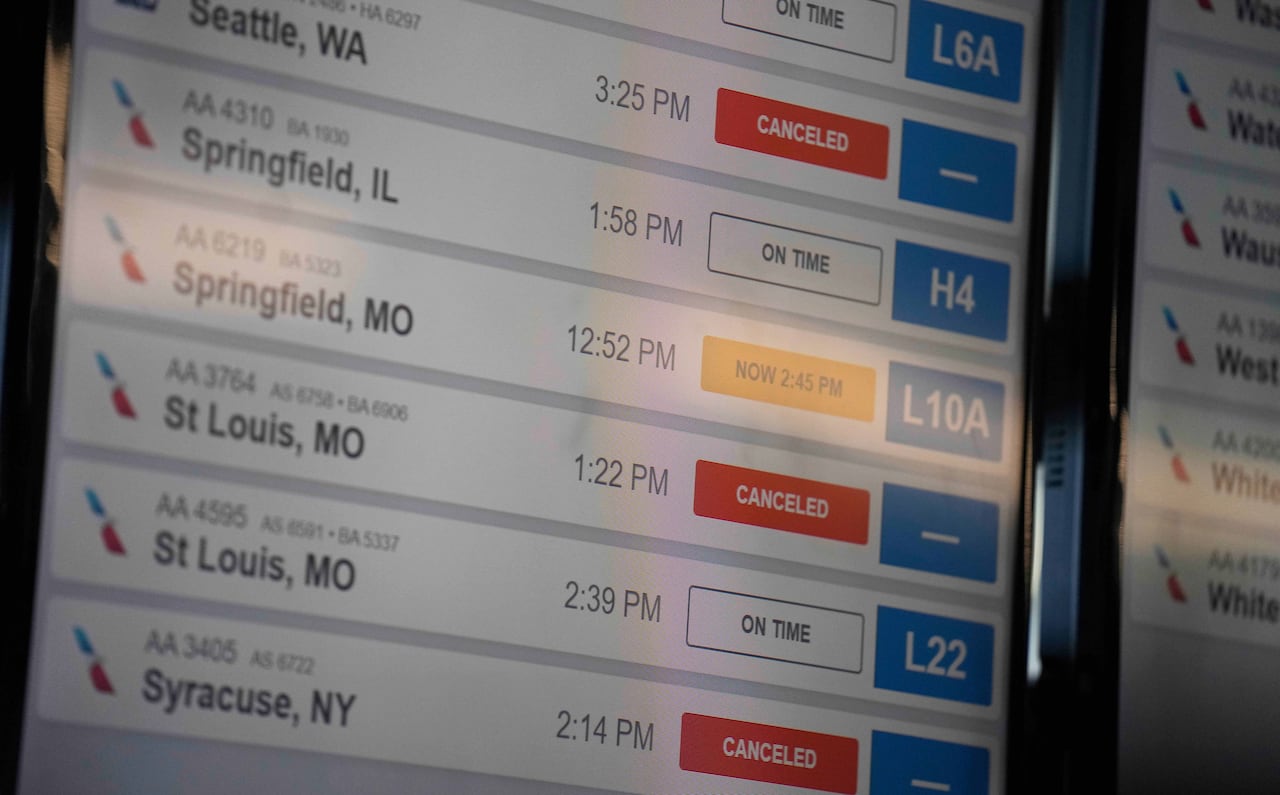
Cancelled flights are displayed at O’Hare International Airport in Chicago on Monday. (Erin Hooley/The Associated Press)
Eight Democratic senators broke away from their party to provide Republicans with the necessary 60 votes to move the bill forward, which would conclude the shutdown once it is approved by the House and signed by Trump.
It is significant that none of the eight senators face voter backlash in the upcoming midterms. None will be up for re-election in 2026; two are retiring, while the others will be halfway through their six-year terms.
A common rationale among these senators for supporting the deal is that everything achievable through the shutdown has already been accomplished. The Democrats highlighted the issue of health insurance affordability, yet they could not realistically expect the Republican majority in Congress to yield any ground on this matter.
“If the strategy isn’t effective, and there were no indications it would succeed, then let’s move forward and not make many others suffer to reach a goal that was unfeasible,” stated Angus King, the 81-year-old Independent senator from Maine who caucuses with the Democrats.
“Confronting Donald Trump didn’t work. It actually empowered him,” King added.
- Moderate Democrats agree to deal toward ending shutdown
- Flight cancellations and delays worsen amid U.S. government shutdown
Senator Tim Kaine of Virginia, which has about 300,000 federal employees, indicated that the key factor for his vote was the language in the bill that prevents the Trump administration from implementing more mass layoffs of government workers.
The agreement to end the shutdown could reach the House floor for a vote as early as Wednesday. It is anticipated to pass, given the narrow Republican majority.
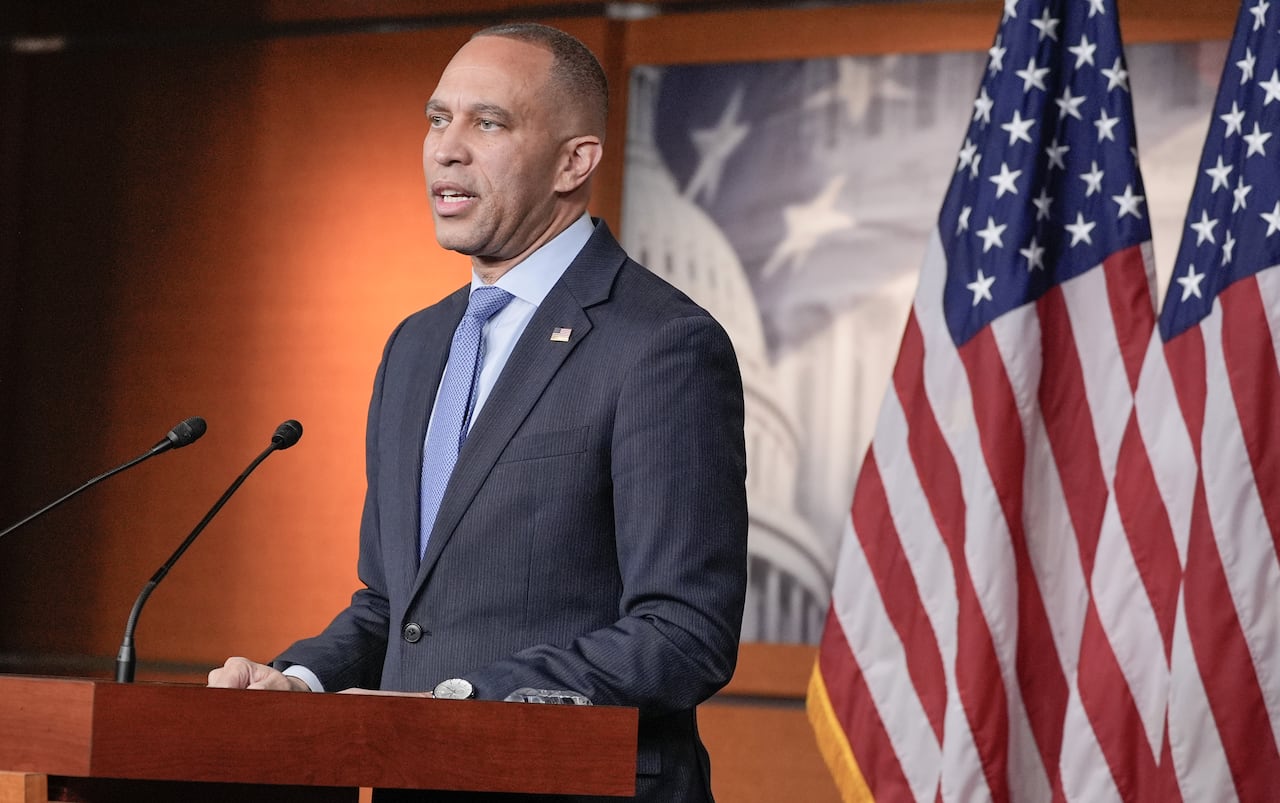
House Minority Leader Hakeem Jeffries, a Democrat from New York, speaks during a news conference on Capitol Hill on Monday, the 41st day of the U.S. government shutdown. (Mariam Zuhaib/The Associated Press)
Despite the high likelihood that he cannot prevent the deal from moving forward, Democratic House Minority Leader Hakeem Jeffries continues to project strength.
“We will not cease the fight. We will persist in our efforts,” Jeffries asserted during a news conference on Capitol Hill on Monday.
“Tens of millions of Americans are about to face significantly increased health-care costs,” Jeffries warned, hinting at the Democrats’ likely political strategy post-shutdown.
“In certain cases, their health insurance premiums could rise by $1,000 or $2,000 annually,” he said. “That is unacceptable. It will be unaffordable for working-class Americans, middle-class Americans, and everyday Americans.”
Thus, even if the Democrats fail to extend the Obamacare subsidies, they will have highlighted an issue of affordability that they can leverage against the Republicans in the upcoming year.

