
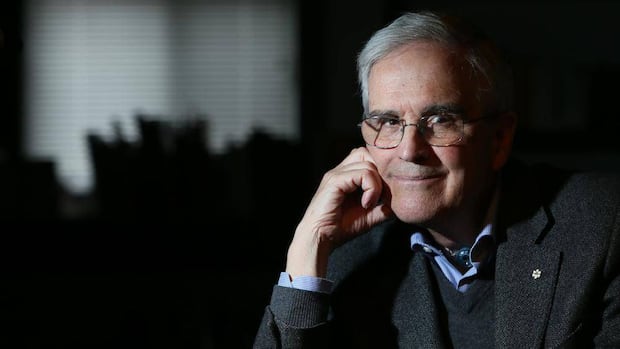
Dr. Balfour Mount, the individual who introduced the concept of “palliative care,” passed away peacefully on September 25 in the palliative care unit named after him.
He was 86 years old.
Mount dedicated his life to helping others and reducing their suffering. Family and colleagues reflected on his life, highlighting his deep compassion and strong commitment to advocating for the dignity of those in pain.
“There’s the legend, Dr. Balfour Mount, who’s known worldwide,” stated James Mount, his son.
“But not much is known about the father he was, and the incredible presence he had, the love and the support. He was more than just a dad or a friend; he was also my adviser. I lost a lot.”
Born on April 14, 1939, in Ottawa, Mount’s father, Dr. Harry Telford Roy Mount, served in both Vimy Ridge and Passchendaele during World War I before pursuing a career in medicine, becoming Ottawa’s first neurosurgeon.
“So the expectations were quite high when Dad arrived in 1939,” James remarked.
As a child, Mount faced challenges in his academic life, struggling with reading at a slower pace, according to James. Nevertheless, he persevered, ultimately graduating from Queen’s University as a urologist.
During his youth, he experienced a bout of testicular cancer, a situation that, in a 2005 interview with the Ottawa Citizen, he noted forced him to confront his own mortality.
It was after attending a church discussion on On Death and Dying, a book by Elisabeth Kubler-Ross detailing the experiences of those near death, that Mount made a significant life change.
“I realized I had no real understanding of death and dying,” Mount mentioned to the Citizen. “I thought, ‘I’m a doctor; I must be knowledgeable about death and dying.’ But, in reality, I knew absolutely nothing.”
The right approach
Motivated by the book, he initiated a small study on the experiences of terminally ill patients at the Royal Victoria Hospital in Montreal. This study revealed to him the “abysmal inadequacy” of care provided to ease the pain and suffering of dying individuals.
He then traveled to England, where he learned under Dame Cicely Saunders, the founder of the world’s first modern hospice, St. Christopher’s, and witnessed firsthand how pain could be effectively managed for terminal patients with the right strategies.
This approach emphasized proper clinical care; for instance, opioids had seldom been prescribed in sufficient quantities to alleviate pain for terminal cancer patients.
Moreover, it included a compassionate approach aimed at grasping the essence of a patient’s suffering — to be there with them — as Mount often articulated, according to his colleagues.
He returned to North America and, in 1975, as part of a pilot initiative, established a hospital ward for dying patients at the Royal Vic.
During this period, he introduced the term “palliative care,” opting for it over “hospice” due to the implications it held for Canada’s francophone community. The French meaning had a more negative connotation, referring to a nursing home.
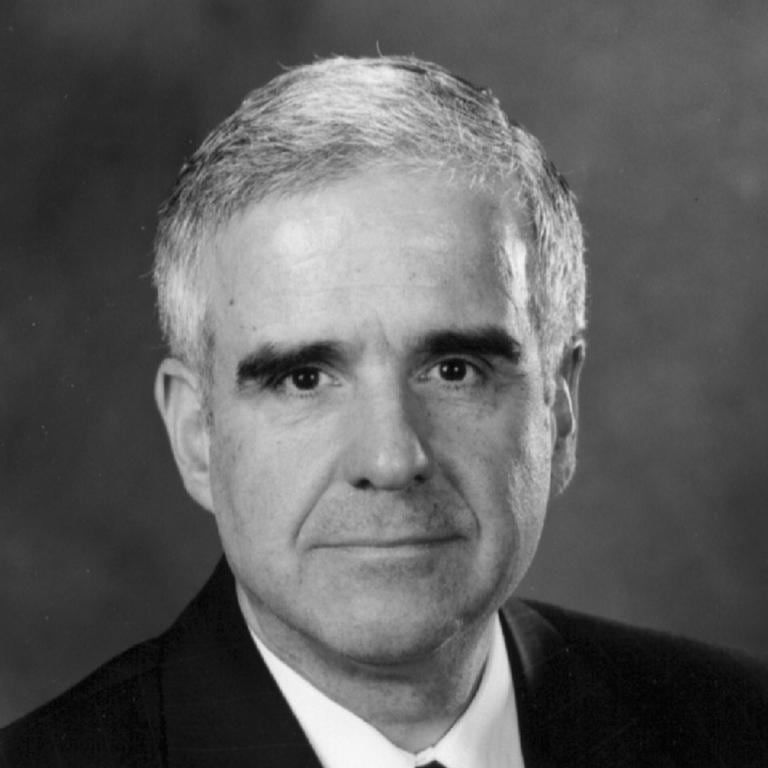
Mount avoided the spotlight, despite receiving numerous honors and accolades throughout his life. (City of Montreal)
John Scott, a colleague of Mount who assisted in establishing the first palliative care unit at the Royal Vic, stated that at that time, many doctors ignored the realities of pain and suffering that they were unsure how to address.
Mount’s approach, Scott noted, was quite the opposite.
“He was incredibly articulate, warm, and personable, while also being brilliant,” Scott commented. “He could break through denial and enable people to recognize that, indeed, honesty was both relieving and healing.”
‘An extreme force’
Dr. Justin Sanders, who currently holds the Eric M. Flanders Chair in Palliative Medicine at McGill University, a role once occupied by Mount, remarked in an interview that Mount was “unafraid to challenge care structures he deemed inadequate.”
“He was, on one hand, a remarkably gentle and compassionate person, and on the other, could be an overwhelming force,” he noted.
James recalled the time spent with his father in the palliative care unit he established. He witnessed his father’s dedication to those who were ill and dying, and his passionate effort to understand their pain and provide comfort.
In his 60s, Mount was diagnosed with esophageal cancer, necessitating a permanent tracheostomy. He continued his work and advocacy for enhanced palliative care and also became an early supporter of holistic care, an approach that emphasizes treating patients as “whole individuals rather than just addressing a disease,” according to Sanders.
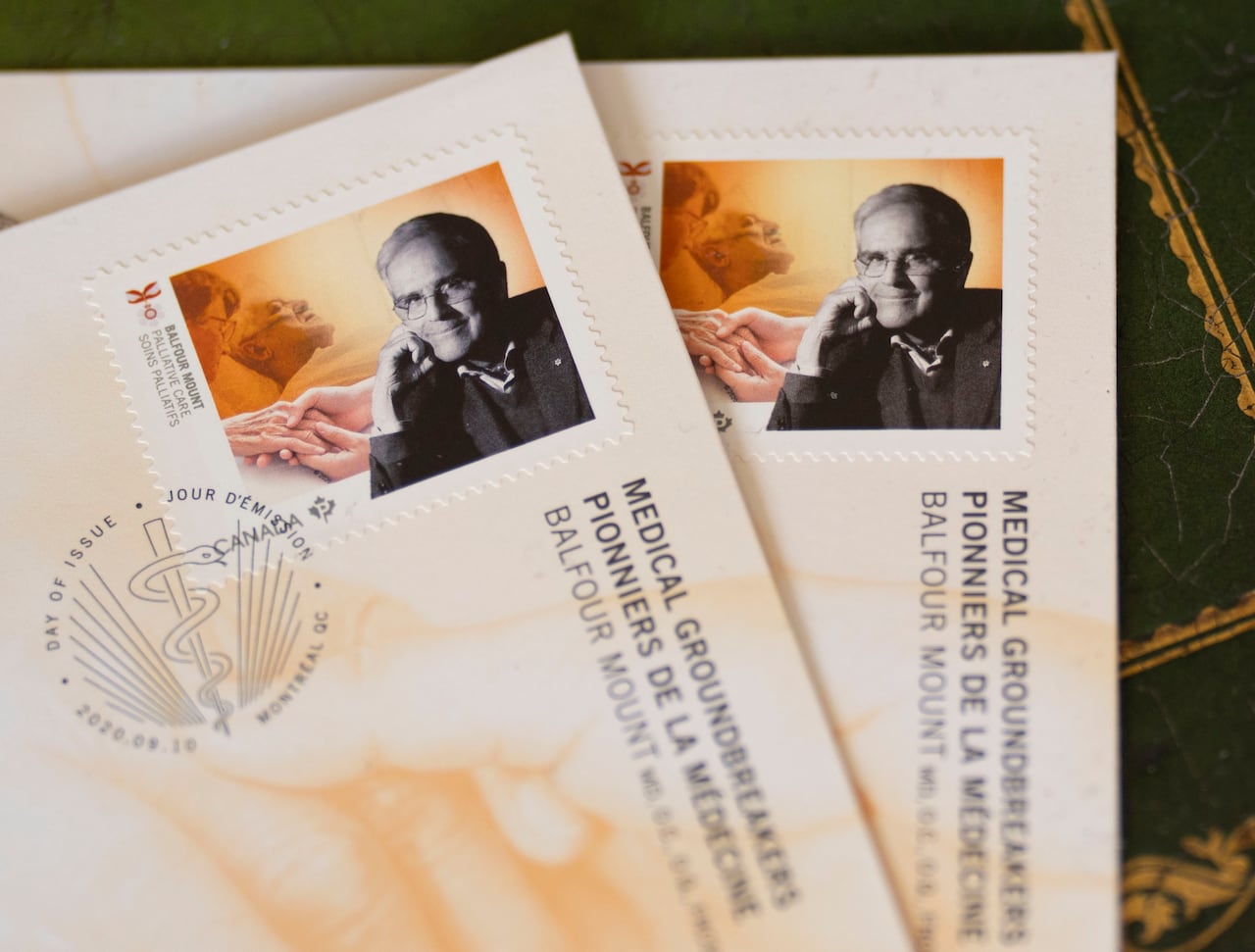
Canadian stamps featuring Dr. Balfour Mount, who passed away last Thursday in the palliative care unit that he founded, are displayed in Montreal on September 30, 2025. Mount is widely recognized as the father of palliative care. (Christinne Muschi/The Canadian Press)
He also opposed physician-assisted dying and advocated for enhanced end-of-life care.
His contributions earned him countless accolades, honors, and awards, including being named an officer in the Order of Canada, though he preferred to avoid the spotlight, often stating that his children were his greatest accomplishments.
He was a loving father who applied the same principles of compassion and care that he offered to his patients in every facet of his life.
The practice of presence
James recounted how his father supported him during a challenging diagnosis of his own. Mount accompanied him to the doctor’s office when he learned he had a rare autoimmune disease. “I felt as if the world had collapsed beneath me,” he recalled. “I turned to Dad, and he smiled, saying it was going to be okay. … and it was.”
He maintained that same calm demeanor in his later years as he became increasingly frail due to age and cancer.
“He never indulged in self-pity,” James noted. “He consistently found ways to redirect conversations away from himself and towards what truly mattered — the person he was engaging with.”
Before his passing, he was admitted to the Balfour Mount Palliative Care Unit, where family and friends were by his side.
Sanders sat with him, holding his hand, sometimes exchanging a few words, but mostly embodying what Mount had taught about palliative care — the “practice of presence.”
“This was a person with exceptional presence, and it was through his own presence and ideas that he inspired numerous doctors to follow his path,” Sanders remarked.
For James, the way his father passed away, pain-free in the unit he established, felt like a blessing — a final act of love.
“I do not want people to remember him solely as the trailblazer he was,” he expressed. “I want them to recognize the humanity behind that legacy. And I hope they come to understand the father he was and the immense gift he was to all of us.”

