
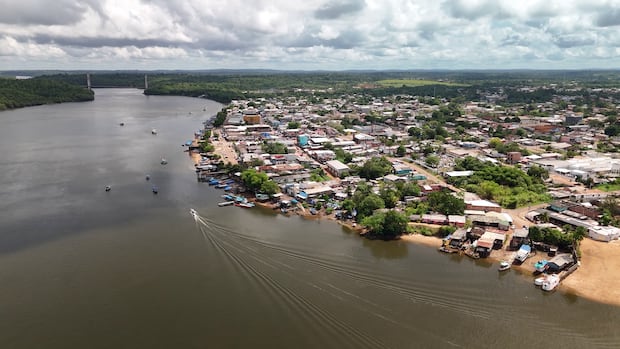

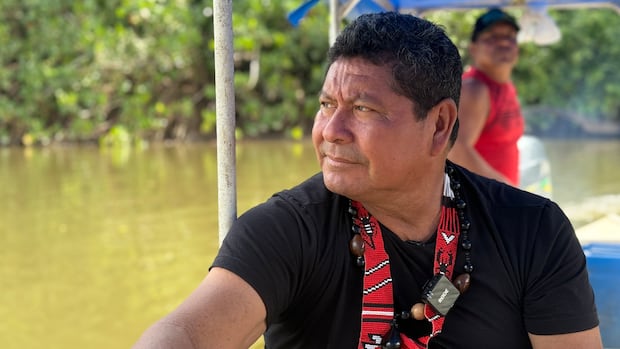
At the river dock in Oiapoque, a border town located near Brazil’s northern coastline, Cleidiney Ribeiro guides his riverboat into the water.
“Oiapoque is on the verge of progress,” he expresses hopefully while navigating an hour and a half towards the point where the river converges with the Atlantic Ocean.
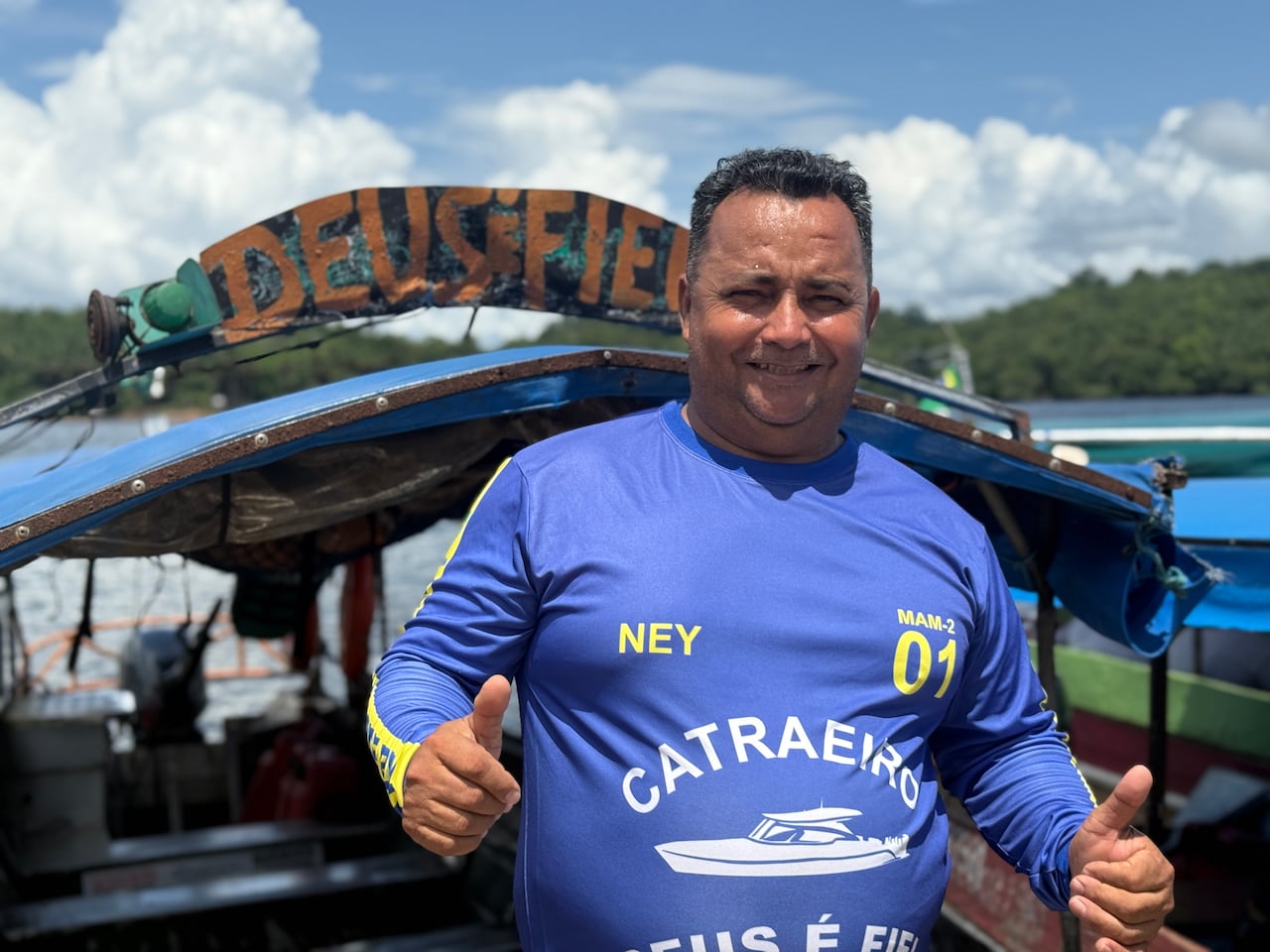
Cleidiney Ribeiro in front of his boat in Oiapoque, Brazil. (Jill English/CBC)
Petrobras, Brazil’s state-owned oil company, has recently initiated exploratory drilling 170 kilometers off the Amazon coast, coinciding with Brazil’s hosting of the world’s largest climate conference in Belém, COP30.
During the opening remarks, Brazilian President Luiz Inácio Lula da Silva informed global leaders on Friday, “The Earth can no longer bear a development model that heavily relies on fossil fuels.”
However, his administration is poised for a potential oil boom should deposits be validated in the Foz do Amazonas basin, situated 500 kilometers from the Amazon River’s mouth.
“This is highly concerning,” stated Suely Araújo, the public policy coordinator at Brazil’s Climate Observatory.
Currently, Brazil ranks as a major oil producer—specifically, the eighth largest—and Araújo commented that the government’s “decision to boost production amid a climate crisis… is illogical.”
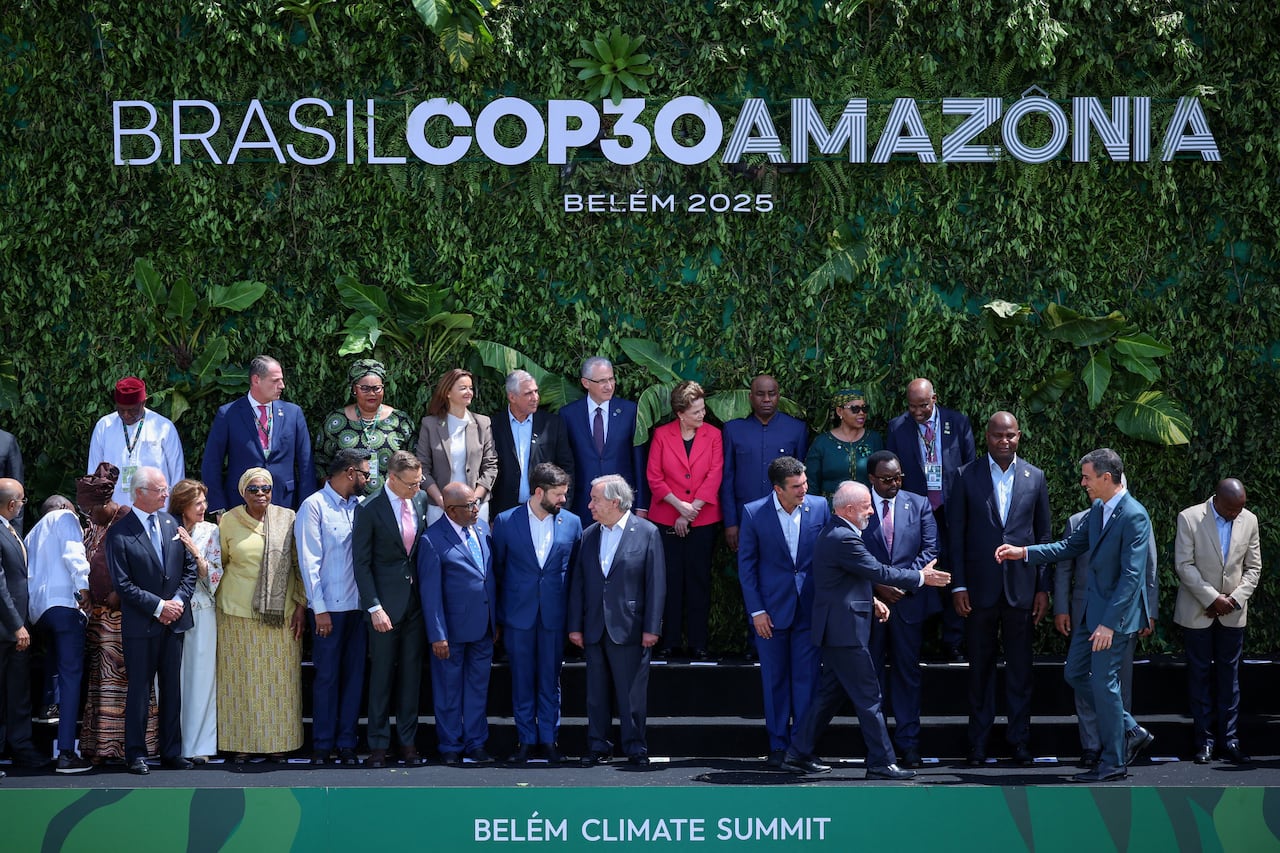
President Luiz Inacio Lula da Silva welcomes Spain’s Prime Minister Pedro Sanchez and other delegates for a group photo at the Belém Climate Summit before the United Nations Climate Change Conference (COP30) in Belém, Brazil, on Friday. (Adriano Machado/Reuters)
Lula advocates for energy transition at COP30
Beginning Monday, Belém will host tens of thousands of delegates and observers in the Amazon city with a population of 1.3 million. Accommodation is limited—two cruise ships anchored offshore will accommodate some delegates, while the president is staying on a luxury vessel.
COP30 aims to generate renewed momentum for addressing fossil fuel emissions that contribute to global warming and encourage nations to accelerate their transition to sustainable energy sources.
“Brazil is open to discussing energy transition,” President Lula declared during the leaders’ summit, pledging to allocate a portion of oil revenues to support this shift.
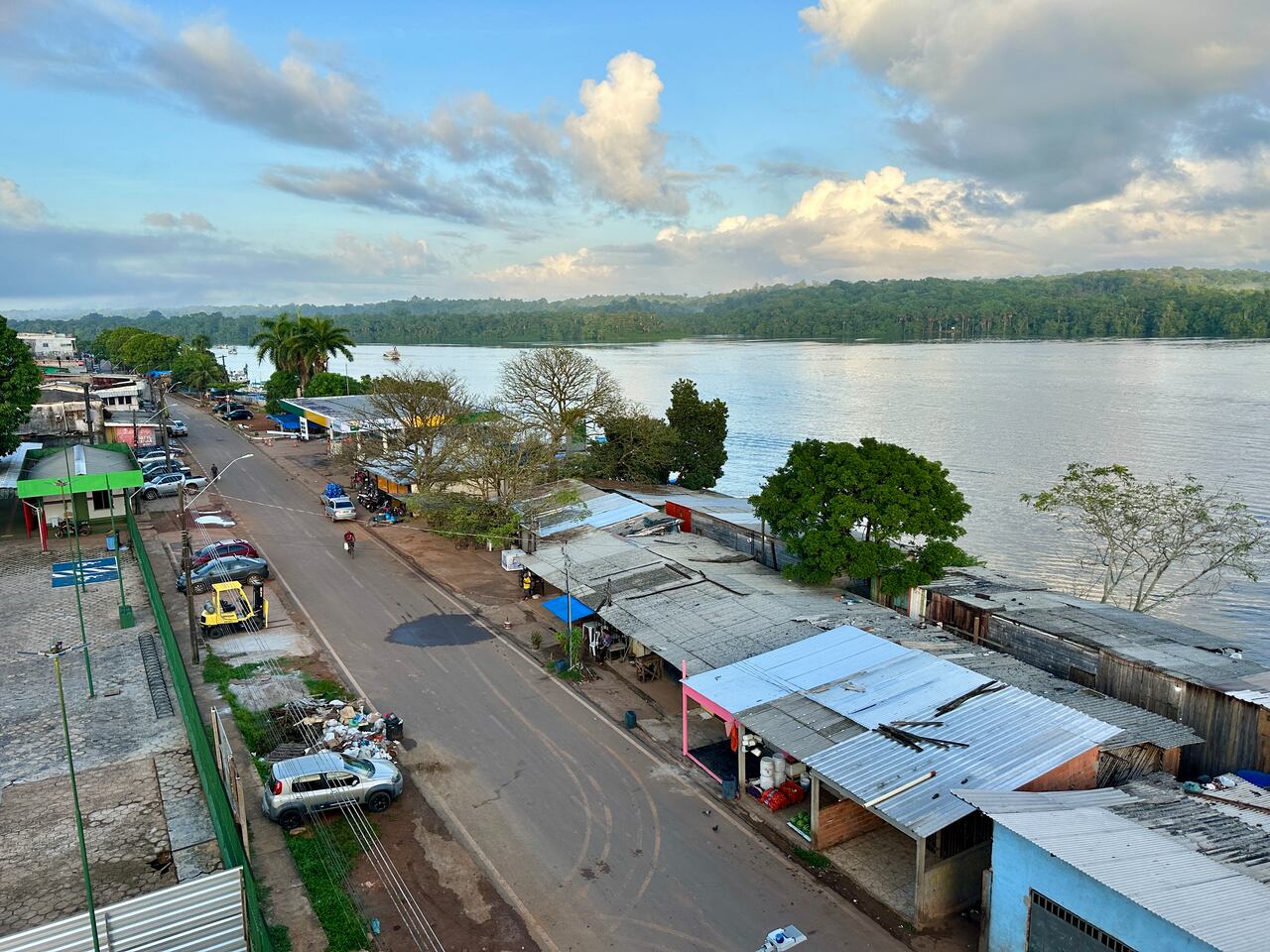
An empty street in northern Brazil’s Oiapoque, where residents are hopeful for an economic boost due to anticipated offshore oil discoveries. (Susan Ormiston/CBC)
Yet, over 1,000 kilometers to the north in Oiapoque, the focus is predominantly on oil;—black gold that could uplift one of Brazil’s most underprivileged regions, as per government statements.
Pinning hopes on oil discoveries
“We are all hopeful that oil is present,” remarked Romeu Costa, who oversees the small Oiapoque airport, which primarily serves medical flights and the oil sector, lacking commercial air travel for now.
“It will bring development to the city,” Costa added, noting that speculation in real estate is already rising in the community of 27,000 residents.
Currently, a few dozen workers are flown in from southern cities twice daily, transferring to helicopters bound for the drilling ship.
Petrobras holds rights to Block 59, which is currently the only offshore area authorized for exploratory drilling to confirm the size of the oil reserves. In an auction last June, the government granted 19 additional oil blocks in the Foz do Amazonas basin to companies such as Exxon Mobil, Chevron, and a Chinese consortium. These companies must subsequently apply for exploratory permits.

Petrobras has secured drilling rights at Block 59, located offshore northern Brazil. Last June, the government auctioned off 19 additional oil blocks in the Foz do Amazonas basin. (CBC)
Petrobras has dedicated over a decade to developing an exploration strategy and conducting environmental assessments, which included establishing a large wildlife hospital in Oiapoque to facilitate approvals. Their efforts were rewarded just two weeks prior to the COP30 climate discussions.
“This is the moment of our triumph, of our success, and of our responsibility to the country and the environment,” stated Wagner Fernandes, a representative of an oil workers’ union affiliated with Petrobras.
‘A winning ticket’: energy minister
The potential deposits along Brazil’s equatorial margin could be immense, estimated at up to 30 billion barrels of recoverable oil, according to the National Agency of Petroleum, Natural Gas and Biofuels (ANP).
Brazil’s energy minister referred to it as “a winning ticket” that could create tens of thousands of jobs and alleviate poverty in the area.
However, future drilling, if approved, may extend closer to the Amazon River’s mouth.
Protests last summer did not prevent the latest oil auction.
“I am very concerned,” expressed Suely Araújo, a former employee of the state environmental agency IBAMA, who previously declined to issue an exploratory permit to Total Energies for a nearby block in 2019.
State-owned Petrobras has commenced exploratory oil drilling off the Amazon rainforest coast, raising concerns about Brazil’s environmental commitments. CBC’s international climate correspondent Susan Ormiston visited the region ahead of the COP30 climate conference to examine the conflict between climate action and oil exploitation along the Amazonian coast.
“This area is delicate, and issues will arise because even without accidents, oil production tends to create ongoing pollution, which is often unnoticed.”
Indigenous communities unite against drilling
A short 20-minute drive from Oiapoque, through the Amazon rainforest, Indigenous tribes inhabit territories along the Curupi River, which were officially recognized by Brazil in 2002.
Chief Wagner Karipuna states they were not consulted regarding the oil license, which he fears may jeopardize their waterways and land.
“In the event of a spill, water knows no boundaries…. It will pollute our river, our fish, the wildlife, and everything will be affected,” he warned.
During a recent assembly, over 50 Indigenous leaders from the Oiapoque region endorsed a letter opposing the oil development, demanding an official meeting with high-ranking Petrobras representatives.
Karipuna expressed doubts that the promised jobs would materialize for them.
“Working for Petrobras requires higher education… and we Indigenous people lack that. The government is misleading us with empty promises,” Karipuna remarked.
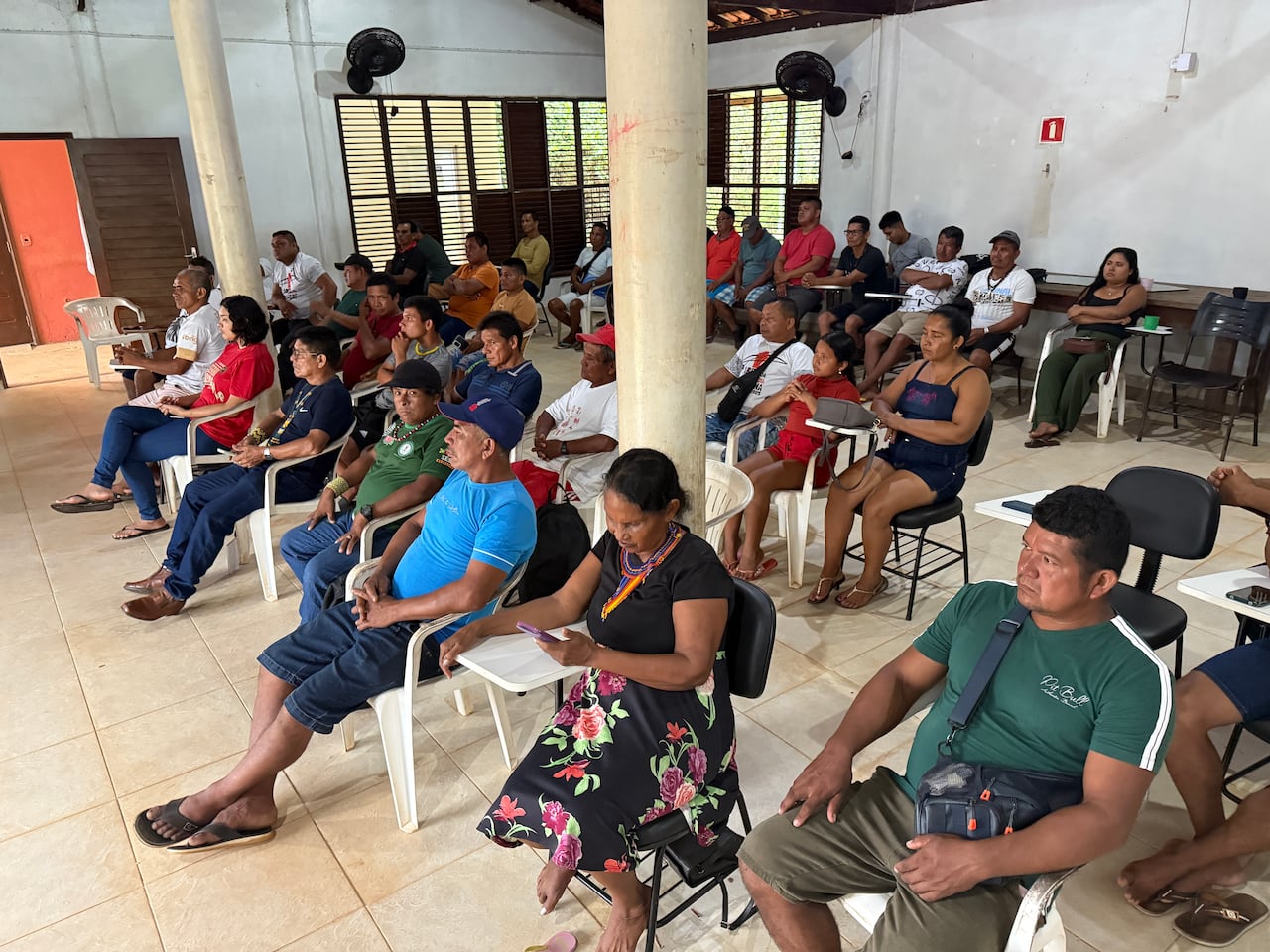
Indigenous leaders from Amapá state in Brazil convene in the village of Manga to unite against drilling along the state’s coastline. (Jill English/CBC)
Indigenous groups are organizing a significant protest at the COP30 venue in Belém to draw international attention and exert pressure on Brazil.
“It’s hard not to perceive [Brazil’s stance] as contradictory. We prefer clear-cut answers, either yes or no, right or wrong,” said Heloisa Borges from Rio de Janeiro, Director of oil, gas, and biofuels studies at the energy research firm EPE.
“By 2050, we will still require a considerable amount of oil and gas,” she noted, referencing estimates by the International Energy Agency indicating that, in 20 years, global demand will range between 24 and 55 barrels of oil daily.
“Just because we wish to avoid it doesn’t imply we won’t need it,” Borges added, asserting that Petrobras holds a “social license” within Brazil.
“Brazil takes great pride in its oil and gas sector. Petrobras is a company that is well-regarded in the minds of nearly all Brazilians.”
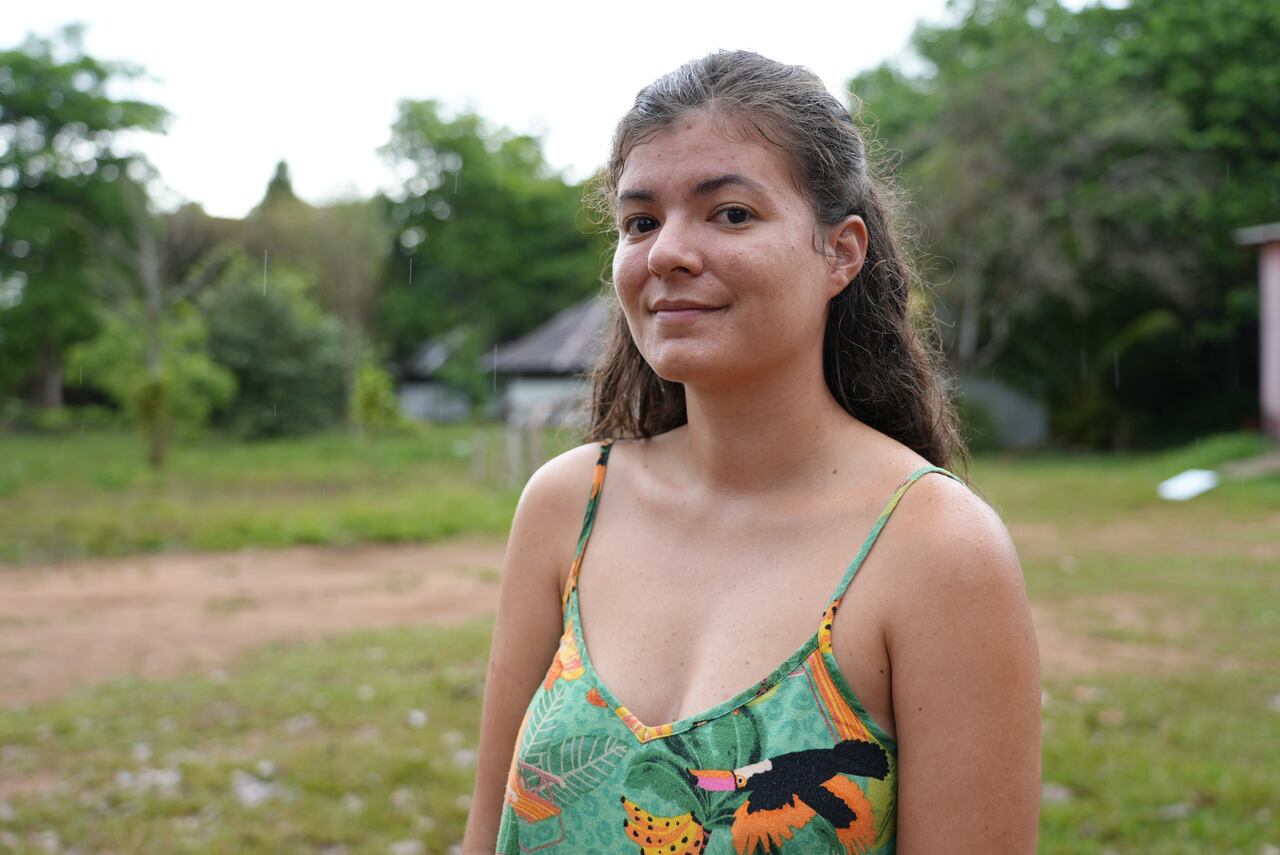
Indigenous advisor Estefany Furtado participates in a meeting with Amapá state Indigenous leaders, as part of her role with the NGO Iepé. (Sam Martin/CBC)
In Oiapoque, there is enthusiasm, yet not universally shared, according to Estefany Furtado, who is involved with Iepé, an organization supporting Indigenous communities in the north.
“Those opposing [the drilling] currently face threats from both the political sphere and from proponents. I have personally received threats,” she shared.
Two years ago, during COP28 in Dubai, nearly 200 nations committed to “move away from” fossil fuels. Since then, various countries, including Brazil and Canada, have achieved record oil output.
President Lula refers to the Belém conference as “the truth COP.” Critics assert that the reality is the world continues to expand fossil fuel production and greenhouse gas emissions are still climbing globally, albeit at a slower rate. This presents a significant challenge for President Lula and the anticipated 50,000 international attendees in Belém.
