
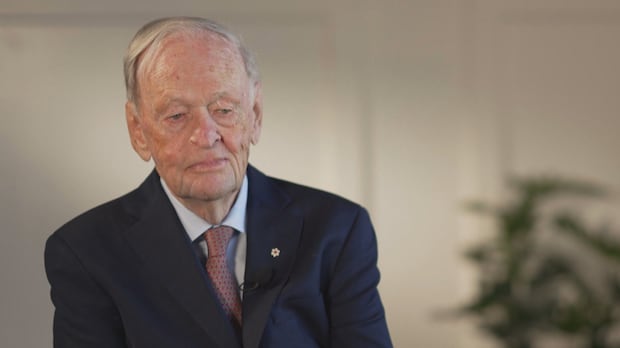
Former Prime Minister Jean Chrétien has expressed concerns that Donald Trump poses a risk to democracy, stating that the U.S. president “does not pay much attention to the rule of law,” which “could lead to many issues south of the border.”
In an interview with CBC’s The House, Chrétien remarked, “Western society relies on the rule of law. When that is absent, it turns into daily blackmail, and that is ineffective.”
He acknowledged that Trump will not remain in power indefinitely, but he expressed uncertainty about the eventual outcome once the situation stabilizes.
When host Catherine Cullen inquired if global leaders should openly criticize Trump’s actions, Chrétien responded that Canada must advocate for its principles, although he recognized the difficulties arising from the necessity to export its resources.
Chrétien stated, “It’s complex — the world will change — and we’ll need to adapt,” reflecting on the challenges Canada faces.
Chrétien highlighted that Canada has successfully endured significant threats in the past and will do so once more.
He recalled, “We experienced terrorism in Europe and constant violence. We reflected on it and managed to get through… I believe we will cope again,” he remarked.
Previously, Chrétien has criticized Trump, particularly after the U.S. president referred to former Prime Minister Justin Trudeau as “governor” and suggested the idea of annexing Canada to become the 51st state.
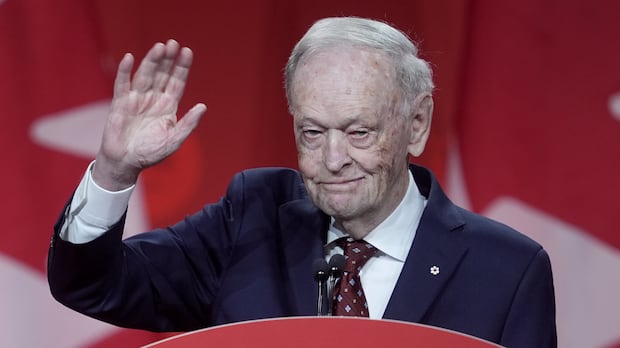
Former Prime Minister Jean Chrétien expresses gratitude to Justin Trudeau for his leadership as Liberal head and Prime Minister, and discusses the tariff war initiated by U.S. President Donald Trump. Chrétien stated, ‘We are good neighbors and friends, but we are proud and independent.’
During a speech at the 2025 Liberal leadership convention, Chrétien proclaimed that Canada “will never merge with the United States,” addressing Trump directly: “From one old guy to another old guy: Stop this nonsense.”
He also remarked that Trump’s actions towards Canada have brought the nation together “like never before.”
Chrétien humorously added, “So I wish to thank him,” suggesting that Trump deserves the Order of Canada.
Provinces clash over trade war response
In his conversation with The House, Chrétien stressed that Trump’s trade war continues to unify the country, even as some provinces have recently disagreed on how to react to the U.S. president’s tariffs and the duties imposed by China.
This week, B.C. Premier David Eby urged the federal government to give greater attention to Canada’s softwood lumber sector, which is now facing tariffs amounting to 45 percent.
Eby expressed his concerns, mentioning that often, provinces like Ontario and Quebec dominate the federal government’s agenda, leaving B.C. and issues affecting British Columbians largely overlooked.
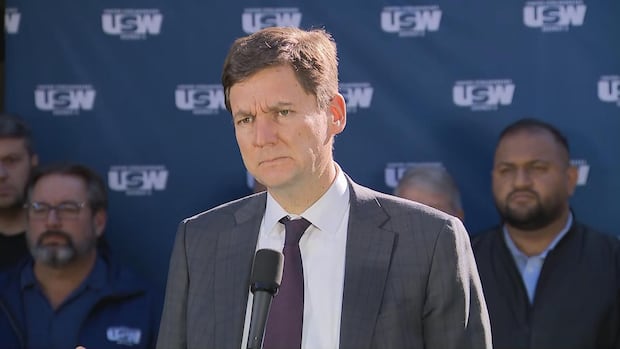
B.C. Premier David Eby argues that Canadian lumber now faces greater tariffs entering the U.S. than lumber from Russia, emphasizing that these increased tariffs must be addressed by Ottawa as a national emergency.
Chrétien acknowledged the ongoing pattern of different government levels blaming higher authorities, stating, “It’s no worse today than it was in the past… However, this does not mean that we lack issues; we always have challenges.”
He added, “When provincial governments encounter difficulties, they tend to look around — it’s easy to target the federal government. As for us, we often blame the Americans since we can no longer point fingers at the queen or king.”
A separate disagreement is emerging between Manitoba, Saskatchewan, and Ontario following a statement from the Chinese ambassador to Canada, who indicated China might lift its tariffs on Canadian canola if Canada removes its duties on Chinese-made electric vehicles.
On Tuesday, Ontario Premier Doug Ford expressed that while he understands the concerns of Manitoba and Saskatchewan, he must also prioritize the interests of his province and that there is “no way” Canada should abolish its tariffs on Chinese electric vehicles.
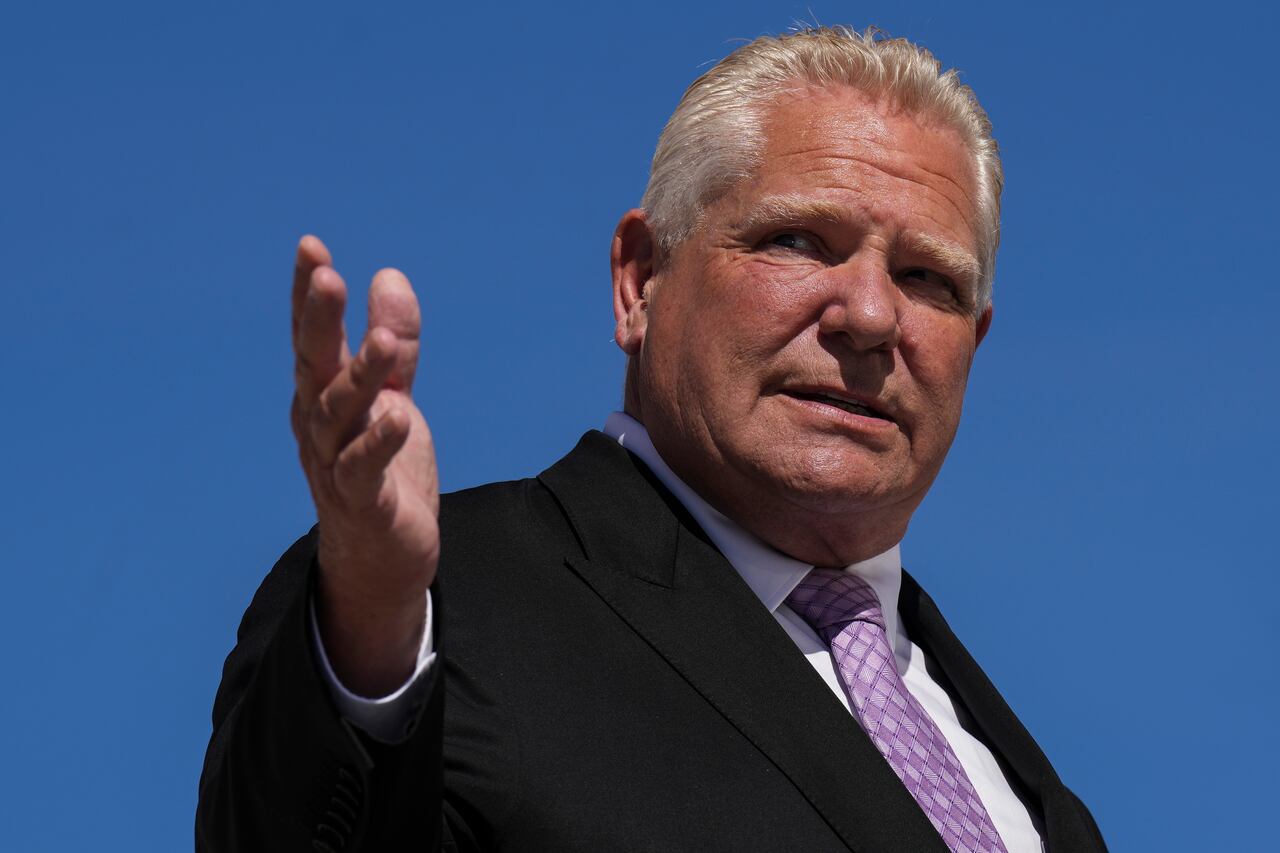
Ontario Premier Doug Ford visits Chapman’s Ice Cream in Markdale, Ont., on Sept. 19. (Chris Young/The Canadian Press)
David Paterson, Ontario’s representative in Washington, shared with The House on Friday that he believes the premiers are more aligned “than I’ve seen in my lifetime,” emphasizing that his province “is heavily invested in the protection of lumber and various other sectors.”
He stated, “We need a deal for Canada, but when considering what Canada supplies to the United States, energy and automotive are the two primary sectors in terms of job flow in Ontario.”

