

Some families in Nova Scotia’s Annapolis Valley are facing uncertainty after discovering that the ashes they buried may not belong to their deceased loved ones. Despite this revelation, an expert in DNA testing suggests that identifying the remains using DNA technology poses a challenge.
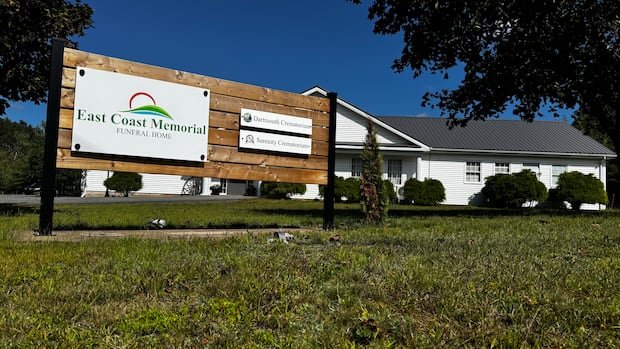
Recently, the new owners of the former Serenity Funeral Home informed several families that ashes of their deceased relatives were found in storage.
Michelle Carey turned to Serenity Funeral Home when her father, Hendrik (Hank) Sabean, passed away in 2018 with specific requests for his funeral arrangements through the funeral home.
Now, in light of having to repeat the burial process and uncertainty about the actual remains buried, Carey expresses skepticism regarding the possibility of definitively identifying the remains.
Carey mentioned, “My sister and I are hesitant about the feasibility of DNA testing. How can we be certain that the remains we receive this time truly belong to our father?”
Dean Hildebrand, who oversees the forensic DNA laboratory at the British Columbia Institute of Technology, emphasized the difficulty of obtaining enough DNA from ashes for identification purposes.
Hildebrand stated, “While some researchers have reported finding trace amounts of DNA in ashes, the challenge lies in effectively utilizing that DNA for identification purposes.”
Although DNA is resilient in various scenarios, such as recovering full DNA profiles from severely damaged human remains in fires, the extreme conditions of a crematorium lead to the complete breakdown of all organic matter.
Hildebrand remarked, “[The situation] presents a challenging scenario for isolation.” He mentioned previous experiences identifying remains from ashes mix-ups involving other funeral homes but highlighted the significant number of remains involved in this case, according to the new owners of Serenity funeral homes, East Coast Memorial.
Although the chances of successful identification are low, Hildebrand did not rule out the possibility entirely. He suggested that testing should be pursued as even a bone fragment could potentially yield valuable DNA for identification.
Hildebrand expressed, “I believe the effort is worthwhile, but managing expectations is crucial.”
Carey shared that she was informed the buried ashes might contain a small metal disc with an ID number, potentially aiding in identifying the remains.
However, the presence of this ID number could be the sole means of determining the identity of the originally buried individual in 2018.
Carey stated, “I want to trust the information provided and believe that our father’s remains are indeed with them. However, the process of identifying the buried individual will be
