
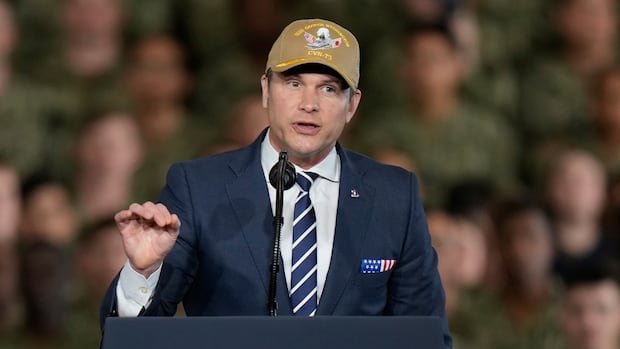
A series of military strikes carried out by the U.S. forces on boats in the eastern Pacific Ocean resulted in the deaths of 14 individuals and one survivor, as stated by U.S. Defense Secretary Pete Hegseth on Tuesday. Hegseth claimed that those aboard the vessels were involved in drug trafficking. Mexican authorities took charge of the search-and-rescue mission for the lone survivor following the three strikes on Monday.
Hegseth mentioned that intelligence sources identified the four vessels as traveling along established drug trafficking routes and transporting narcotics. He shared a brief video showing two boats close together before exploding and another boat detonating while moving in the water.
Following a series of strikes in the Caribbean that began on September 2, the U.S. government revealed last week that its operations had expanded to Pacific waters. Concerns have been raised by experts regarding the legality of these strikes, which have resulted in the deaths of at least 57 individuals. It is unclear if alternative measures were attempted to intercept the shipments, as typically the U.S. Coast Guard handles drug interdiction operations.
The recent military activity in the Caribbean includes the presence of the USS Gerald R. Ford aircraft carrier, guided missile destroyers, F-35 fighter jets, a nuclear submarine, and approximately 6,500 troops. Notably, the U.S. military dispatched supersonic heavy bombers near Venezuela’s coast last week, sparking speculation about potential actions against Venezuelan President Nicolas Maduro.
Criticism has been voiced by U.S. Congress members, including Republicans, regarding the lack of transparency surrounding the strikes. Despite concerns raised, a Democratic-sponsored resolution requiring presidential authorization for further military actions was rejected by the Republican-controlled Senate.
The strikes have drawn international condemnation, with neighboring countries like Brazil, Colombia, and Mexico, as well as citizens of Colombia and Trinidad and Tobago, questioning the targets and casualties. UN experts have labeled the strikes as “extrajudicial killings,” flagging serious implications for regional peace and security. Additionally, concerns have been raised about the violation of international laws and the sovereignty of affected countries.
The situation remains complex, with ongoing military exercises between the U.S. and Trinidad and Tobago, and escalating tensions between Venezuela and neighboring nations. The evolving developments in the region underscore the need for transparency, accountability, and adherence to international norms in addressing drug trafficking and related security challenges.

