
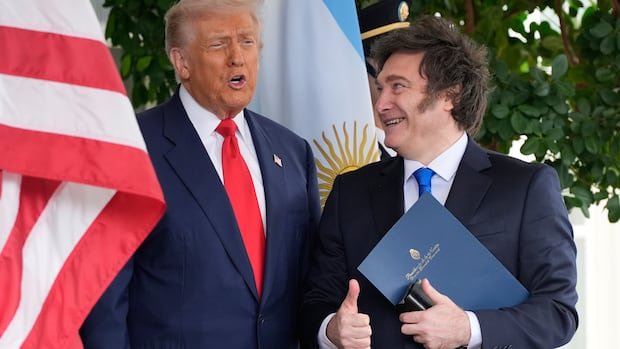
Since President Donald Trump’s return to the White House, there has been a notable pushback on trade with various partners, including Canada and Cambodia. However, recent reports indicate that one particular trading partner, Argentina, is receiving special treatment that has caught the attention of Americans.
According to Politico, the Trump administration is looking to increase the tariff-free allowance for Argentine beef imports fourfold to 80,000 tonnes. This move has raised doubts about Argentina’s capacity to fulfill such a large quota. Trump initially proposed this expansion during a conversation with reporters on Air Force One, stating that it would contribute to reducing consumer prices.
As criticism mounts in the U.S. over the perceived favoritism towards Argentina, Republican lawmakers from states known for cattle ranching are openly expressing their disapproval on social media. Even pro-Trump influencers are joining in the criticism.
Several Republican legislators, such as Rep. Marjorie Taylor Green of Georgia and Rep. Thomas Massie of Kentucky, have voiced their concerns about the preferential treatment given to Argentina. The issue has escalated into a feud between Trump and California Governor Gavin Newsom.
In response to the backlash, Trump defended his actions in a post on Truth Social, asserting that his tariffs on cattle imports have benefited American ranchers. However, experts like David P. Anderson from Texas A&M University argue that the move to import beef from Argentina may not significantly impact prices but is unpopular among farmers and ranchers.
Moreover, the Trump administration’s recent $20 billion currency swap with Argentina has raised eyebrows. The swap, aimed at supporting the faltering Argentine peso before the country’s midterms, has sparked concerns among U.S. farmers who feel disadvantaged by the administration’s actions.
The dispute extends to the soybean market, where U.S. producers are facing challenges due to the influx of cheap soybeans from South America. This situation has led to stagnation in U.S. soybean sales to China, a critical market for American farmers.
The cozy relationship between Trump and Argentina’s President Javier Milei has stirred controversy, with critics questioning the motives behind the administration’s support for Argentina. The alignment of personal interests and financial investments has raised suspicions about the true motivations driving these decisions.
In light of these developments, U.S. farmers are increasingly vocal about feeling neglected and disadvantaged by the administration’s trade policies. The rift between Trump’s actions and the challenges faced by American farmers underscores the complexities and implications of trade relations in the current political landscape.

