
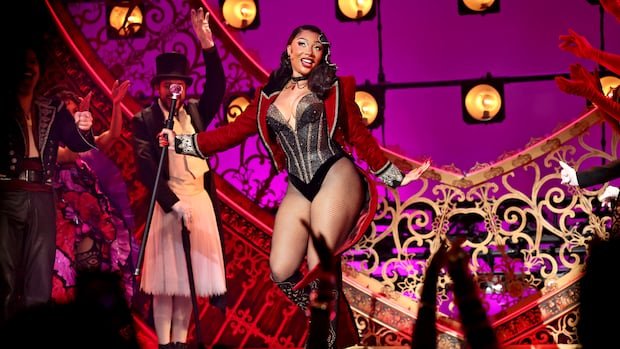
Broadway, known as the ultimate live theatre experience where skilled performers and innovative storytelling intersect, has recently seen an increase in celebrities taking the stage, many without traditional theatre backgrounds. Notable examples include Bob Odenkirk and comedian Bill Burr in “Glengarry Glen Ross,” rapper Megan Thee Stallion in “Moulin Rouge!,” and Kim Kardashian producing “The Fear of 13.”
Moreover, pop star Pink is set to host this year’s Tony Awards, the theatrical equivalent of the Oscars. This trend of celebrities gracing Broadway poses a crucial question: Is the essence of Broadway being transformed?
The evolving landscape is driven by financial considerations. The costs of staging productions on Broadway have nearly doubled over the past decade, accompanied by rising ticket prices. In this high-stakes environment, casting celebrities provides a sense of security as their fame attracts loyal fan bases, media attention, and cultural recognition that directly translates into ticket sales.
A study in 2022 by Kyle Maclean and Fredrik Odegaard from Western University’s Ivey Business School delved into the impact of celebrities on Broadway revenue. Analyzing 290 shows from 2009 to 2015, the study highlighted the financial sway celebrities hold in the theatre industry. The research concluded that it was the celebrity’s popularity that predominantly drove revenue growth.
Chris Peterson, founder of OnStage Blog, acknowledges that a well-chosen celebrity can enhance a production, citing Maya Rudolph’s success in “Oh, Mary!” However, he notes a shift in audience expectations towards entertainment rather than artistic experimentation, influenced by the presence of celebrities.
While some celebrities have garnered critical acclaim on Broadway, there is a mounting pressure on producers to cast stars due to financial concerns. While celebrity involvement often boosts revenue, it does not guarantee profitability. Consequently, original musical projects on Broadway have dwindled, with adaptations from existing media sources dominating the scene.
The prevalence of celebrities in Broadway productions reflects a strategic move to mitigate risks and cater to audience preferences for familiar names and stories. As the industry evolves, there is a shift towards a profit-oriented approach, potentially overshadowing artistic innovation that was once synonymous with Broadway.
With the industry possibly gravitating towards a more digital model, such as streaming, the future of Broadway and theatre at large remains uncertain. As the dynamics of celebrity influence continue to shape the theatrical landscape, the balance between commercial viability and artistic integrity is a pressing concern.

