
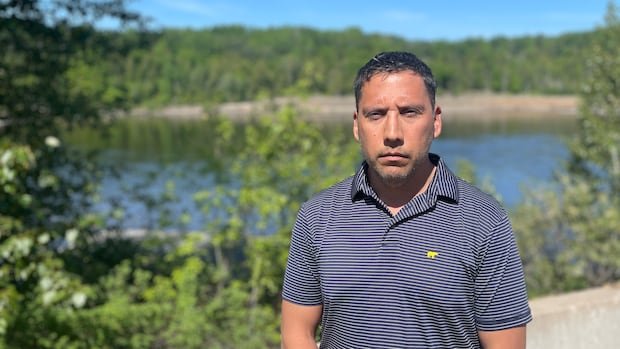
Leonard Nicholas, the fishery strategy director for Tobique First Nation, views Atlantic salmon from a unique perspective – seeing them as relatives or ancestors rather than just fish. Nicholas emphasizes the historical significance of these salmon, stating that they have coexisted with humans for centuries, warranting efforts to preserve them.
The Tobique River, where Nicholas resides, is a subsidiary of the Wolastoq (St. John) River. Formerly home to tens of thousands of salmon in the 1980s, the river system now witnesses only a few hundred salmon returning annually to the Mactaquac Dam, according to data from the federal Department of Fisheries and Oceans (DFO). To assist the struggling salmon population, the DFO-operated Mactaquac Biodiversity Facility has played a crucial role in sustaining their numbers.
UNB biologist Tommi Linnansaari describes the situation as keeping a patient alive but not in good health, comparing the salmon population to a patient reliant on life support. The facility has facilitated the movement of salmon past hydroelectric dams and the nurturing of juvenile salmon before releasing them upriver for breeding.
Despite significant efforts over 25 years, salmon returns remain low, as confirmed by Christine Lyons, a DFO spokesperson. The closure of the Mactaquac facility is expected to have dire consequences for the Wolastoq salmon, also known as outer Bay of Fundy salmon, leading to potential extinction without DFO’s intervention.
Nicholas expressed dismay over the sudden closure announcement in January, accompanied by a lack of support for transporting or nurturing juvenile salmon. He has since been working tirelessly to find alternative solutions to safeguard the salmon population, collaborating with the Canadian Rivers Institute at UNB for assistance.
Research conducted by UNB students under Linnansaari’s guidance reveals the challenges faced by smolts (juvenile salmon) in successfully migrating to the ocean and returning to reproduce, with less than a one percent success rate for these approximately five-inch-long fish.
Former Tobique First Nation fisheries director, John Perley, questions the federal government’s delay in recognizing the endangered status of Wolastoq salmon under the Species at Risk Act. Despite scientific assessments identifying factors like dams, invasive species, pollution, and climate change contributing to the population decline, political considerations seem to impede the species’ inclusion in the endangered list.
The complexities of the decision-making process for listing species as endangered under the Species at Risk Act were highlighted by Bruce Leaman, former co-chair of COSEWIC’s marine fishes committee. He emphasized the frustrating aspect of recommendations not translating into tangible actions for species conservation.
Patrick Polchies, Kingsclear First Nation’s fisheries manager, and other community representatives have advocated for continued DFO support to preserve outer Bay of Fundy salmon, emphasizing the cultural and ecological significance of these salmon to the Wolastoqey people.
The federal government’s stance on listing the outer Bay of Fundy salmon as endangered remains uncertain, pending the review of the 2025 assessment. DFO’s commitment to collaborating with Indigenous communities for the conservation of wild Atlantic salmon reflects an acknowledgment of the cultural and spiritual importance of these species to the Wolastoqey people.

