
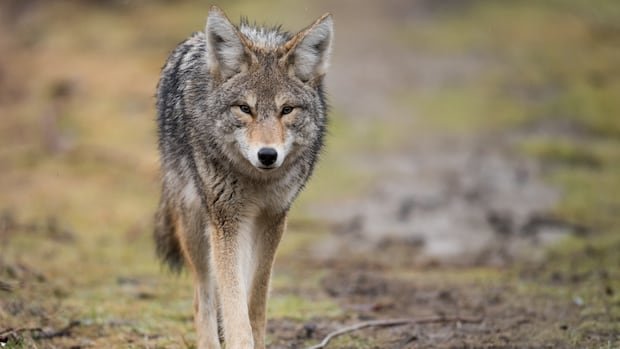
A recent study highlights the potential risks to public health and wildlife when homeless individuals are compelled to share living spaces with urban coyotes. The research, conducted in Edmonton’s river valley and documented in the scientific journal Frontiers in Ecology and the Environment, sheds light on the relationship between homeless encampments and urban coyotes.
The Edmonton Urban Coyote Project, a collaborative effort spearheaded by the University of Alberta, discovered that homeless populations and coyotes often inhabit close quarters. This proximity leads to heightened competition for resources and space, escalating the likelihood of human-coyote conflicts and the transmission of diseases from animals to people.
Lead author of the study, Sage Raymond, describes the situation as a triple loss scenario. Coyotes scavenging in encampments not only endanger themselves but also expose homeless individuals to potential pathogens. Raymond suggests that this dynamic is not unique to Edmonton but likely occurs in other North American cities grappling with urban poverty and coyote populations.
The study indicates that individuals residing near coyote dens in homeless encampments face increased risks of dangerous encounters with the animals and are more susceptible to contracting infectious diseases prevalent among Alberta’s coyote packs. Similarly, coyotes living near these encampments may become habituated to human food, potentially leading to aggressive behavior and nuisance activities in nearby neighborhoods.
Despite the concerning findings, the study advocates for targeted conservation efforts, enhanced medical care accessibility for vulnerable populations, and awareness campaigns rather than punitive measures against homeless individuals or coyote culling.
The Edmonton Urban Coyote Project’s extensive research, spanning 15 years, reveals that the city is home to approximately 3,000 coyotes, with many relying on the North Saskatchewan River valley, a favored habitat also frequented by homeless encampments. Statistics from Homeward Trust estimate around 5,000 unhoused individuals in Edmonton, with a significant portion sleeping rough nightly. The City of Edmonton recorded clearing over 5,600 encampments in the previous year.
Wildlife biologist Colleen Cassady St. Clair, leading the coyote research project, underlines the long-standing observation of overlap between coyotes and homeless encampments. The study underscores the ecological risks associated with encampments attracting coyotes, leading to increased human-coyote interactions and potential disease transmission, notably alveolar echinococcosis, a parasitic infection prevalent among Edmonton’s coyote population.
Darcy Visscher, a biologist specializing in urban ecology, emphasizes the heightened infection risks faced by the homeless population in Edmonton, given the potentially fatal nature of alveolar echinococcosis. The study underscores the necessity for local infection rate assessments and improved outreach strategies to address the issue effectively.
The study advocates for health-care programs to enhance infectious disease diagnosis, provision of hygiene supplies for encampments, and education on safe practices to deter coyotes. St. Clair emphasizes the critical need for secure housing as the ultimate solution to mitigate the vulnerabilities faced by homeless populations.
Alberta’s Ministry of Mental Health and Addiction acknowledges the risks posed by encampments to residents and collaborates with various stakeholders to support vulnerable individuals in accessing housing and essential services. Dr. Louis Francescutti, an emergency room physician and homelessness advocate, underscores the urgent need to address the root causes of homelessness to alleviate associated health risks effectively.
In conclusion, the study underscores the urgent need for holistic solutions to address the complex intersection of homelessness, urban wildlife, and public health risks.

