
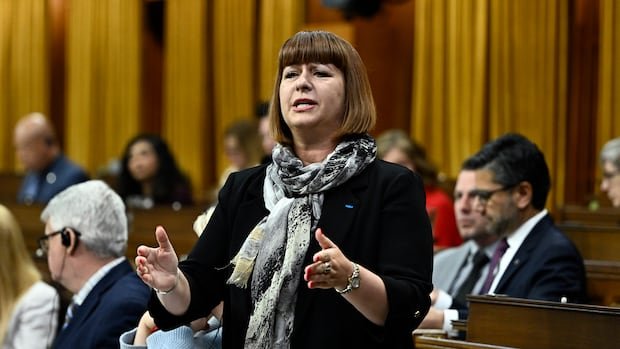
Liberal MP Marie-France Lalonde is advocating for Canada to abandon the practice of biannual clock changes, with plans to introduce legislation aimed at abolishing the tradition. Lalonde emphasized the need to reevaluate the time change practice, which sees clocks set forward in the spring and back in the fall, during a press conference on Parliament Hill.
She intends to present a private member’s bill that does not directly eliminate the time change but urges the federal government to convene a conference involving various stakeholders to establish a permanent time standard. While some regions like Saskatchewan, Yukon, parts of B.C., and Nunavut do not observe clock changes, others, including B.C., Manitoba, and Ontario, align their time policies with certain U.S. states.
Despite discussions in Atlantic provinces about adopting permanent daylight time in 2022, they await leadership from other jurisdictions. In contrast, Alberta residents voted to continue the biannual clock changes following a 2021 referendum. Lalonde’s proposed legislation aims to unify the country’s approach to time changes through collective decision-making.
Critics argue that the biannual clock changes can lead to health issues like strokes and heart attacks, as well as an increased risk of car accidents. While many provinces lean towards adopting permanent daylight time, experts caution that this could disrupt sleep patterns, particularly in winter with later sunrises. Alternatively, a shift to standard time could result in earlier summer sunsets and varying sunrise times across the country.
During a news conference with sleep experts, including Rébecca Robillard from the Canada Sleep Research Consortium, Lalonde emphasized the importance of informed societal discussions over individual preferences in determining time change policies. While Lalonde acknowledged the legislative process may be lengthy, she emphasized the significance of initiating the conversation through her private member’s bill.

