
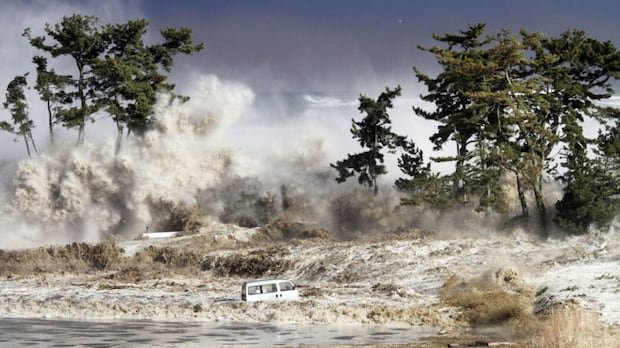
A seismic event in Tofino, British Columbia, would not be initially signaled by sirens but by the trembling earth. Following this, tsunami waves towering as high as five-story buildings could swiftly approach the town’s renowned beaches, frequented by numerous tourists each summer. A recent study examining the risks of earthquakes and tsunamis in the Cascadia region places Tofino in the spotlight, posing a challenging question on how a small community can ready itself for a disaster that might not occur for generations but could swiftly engulf it.
The research indicates that a significant earthquake along the Cascadia Subduction Zone could expose a large portion of Tofino to tsunami inundation, leading to substantial structural damage and endangering hundreds of lives, particularly during peak tourist seasons when the town’s population swells beyond its usual residents. Katsu Goda, the study’s author and an associate professor of earth sciences at Western University, emphasized that the aim is not to instill fear but to highlight the potential risks before they materialize.
Situated along the Pacific coast, Tofino faces heightened tsunami risks due to its proximity to the ocean. The majority of key infrastructures like campgrounds and resort hotels are located in low-lying zones, amplifying the town’s vulnerability. The Cascadia Subduction Zone extends from northern Vancouver Island to Northern California, with the last significant rupture occurring in 1700, resulting in a devastating tsunami that impacted coastal Indigenous communities and even reached Japan.
Although full-margin Cascadia ruptures historically occurred every 500 to 560 years on average, the study suggests that the intervals are irregular and unpredictable. While the immediate risk may not be high, coastal communities must still prepare for the possibility of such rare but catastrophic events. The research projects extreme earthquake and tsunami scenarios in Tofino, estimating that about half of the town’s structures are at risk of tsunami flooding, with most buildings exposed to over three meters of water likely to collapse or wash away.
Considering Tofino’s building assets valued at approximately $2.27 billion, substantial damage from a major Cascadia event could exceed $1 billion in direct property losses. In a severe modeled scenario, the study forecasts potentially hundreds of fatalities, underscoring the importance of taking precautionary measures seriously. The challenge lies in the rapid response required during a local Cascadia tsunami, where the initial shaking serves as the sole warning signal, potentially leaving little time for official alerts.
Efforts in Tofino focus on educating residents and visitors about recognizing early warning signs and promptly moving to higher ground in case of seismic activity. The study emphasizes the impact of Tofino’s fluctuating population, particularly during tourist-heavy periods, on the town’s overall casualty risk. The discussion also revolves around the necessity for additional vertical evacuation options in Tofino, allowing people to seek refuge above tsunami floodwaters when natural high ground is inaccessible.
Community-level risk assessments play a vital role in enhancing preparedness and enabling local authorities and residents to identify critical areas of concern. By providing reliable data, the scientific community aims to raise awareness and foster better disaster readiness strategies for the future.

