
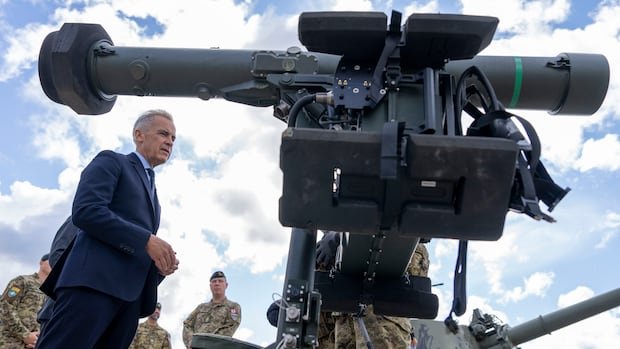
The Canadian government under Prime Minister Carney is working on revitalizing the country’s military and industrial sectors through the establishment of a new federal agency. However, there is a crucial need to differentiate between defense procurement and defense production. Defense procurement involves purchasing military equipment from the market, while defense production entails overseeing the construction of necessary military assets within the country for national security purposes.
The government’s upcoming launch of the defense procurement agency underscores the significance of this distinction. While Carney emphasizes the importance of rebuilding the defense industrial base and bolstering Canadian sovereignty, the shift in mindset from procurement to production is not clearly articulated to the public and policymakers.
Concerns linger among former federal officials and defense experts that the new agency’s mandate for defense investment may simply result in a reshuffling of bureaucratic structures without addressing the essence of defense production. The lack of preparedness for worst-case scenarios, inherent in defense production, is a pressing issue that needs attention.
Wendy Gilmour, a former NATO official, highlights that countries like Poland and Denmark have consciously invested in defense production capabilities, a move that Canada is still contemplating. The need for Canada to prioritize defense production is echoed by Jordan Miller, who emphasizes reducing dependency on other nations and fostering domestic industrial sectors, similar to wartime strategies in the past.
Defense production today involves setting industrial priorities, signaling to defense companies what the government intends to procure, and incentivizing companies to stockpile critical components for emergencies. This approach contrasts with the current lengthy procurement process where it can take years to implement new systems.
The National Shipbuilding Strategy represents Canada’s sole defense production initiative at present, focusing on building navy ships. Partnerships with the European Union and discussions regarding submarine and fighter jet acquisitions indicate a potential shift towards bolstering Canada’s defense production capacity. Companies like TKMS and Hanwha Ocean are offering to contribute to Canadian defense production infrastructure in their bids for major defense contracts.
The willingness of industry players like SAAB Canada to share intellectual property rights underscores the importance of building sovereign defense capabilities in Canada. As the government explores future defense projects, securing intellectual property rights becomes a critical factor in enhancing domestic defense production capabilities.

