
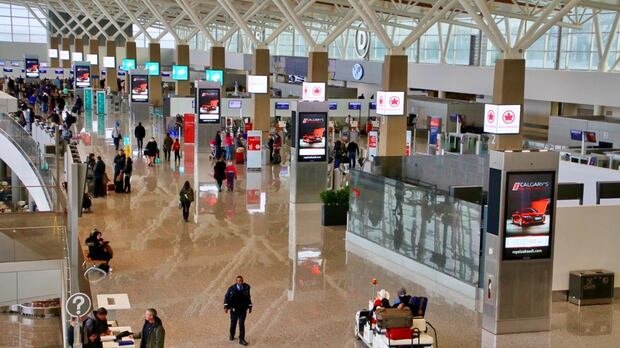
Major airlines, airports, and travelers, both domestic and international, may incur additional expenses if pre-clearance services are discontinued in Canada, according to an aviation expert. The U.S. Ambassador to Canada, Pete Hoekstra, indicated that pre-clearance facilities in Canadian airports are experiencing reduced usage due to a downturn in travel from Canada to the U.S. This decline has led to discussions about potentially reevaluating the provision of this service by the U.S.
Hoekstra mentioned at the Global Business Forum in Banff, Alta., that sustaining pre-clearance operations might be challenging financially as it is funded by the U.S. government. He emphasized the need to analyze the viability of such services when faced with economic constraints.
Pre-clearance allows travelers to clear U.S. customs in Canada before departure, enabling them to bypass long queues at busy U.S. airports. Initially introduced in Toronto in 1952 to attract Canadian travelers to the U.S., pre-clearance is now available at various Canadian airports.
U.S. Customs and Border Protection manages 15 pre-clearance locations across six countries, pre-clearing over 22 million travelers in 2024. This service significantly benefits airlines like Air Canada and WestJet, facilitating smoother travel for passengers heading to or returning from the U.S.
Despite the decline in U.S. travel from Canada, airlines still witness substantial traffic to American destinations. The potential discontinuation of pre-clearance poses risks for airlines seeking to attract U.S. travelers, impacting both major and smaller airports in Canada.
Although the removal of pre-clearance may free up space in Canadian airports, it could lead to reduced revenue from decreased U.S. travel. The economic impact on airports like Toronto, Vancouver, and Montreal would be significant, while smaller airports in cities such as Edmonton and Halifax would also feel the effects.
In conclusion, while removing pre-clearance could open up real estate in Canadian airports for alternative uses, it may result in financial losses due to decreased U.S. travel.

