
Afghanistan reported on Sunday that it had eliminated 58 Pakistani troops during cross-border operations overnight, citing repeated violations of its airspace and territory. This came after Afghan authorities accused Pakistan earlier in the week of carrying out airstrikes in Kabul and the country’s eastern region, although Pakistan did not acknowledge responsibility for the attacks.
Zabihullah Mujahid, the spokesperson for the Taliban government, stated that Afghan forces had seized 25 Pakistani military outposts, resulting in 58 soldiers killed and 30 wounded. Mujahid asserted in a news conference in Kabul that illegal activities along official borders and de facto lines in Afghanistan had been largely thwarted, with no immediate response from Pakistan on the reported casualties.
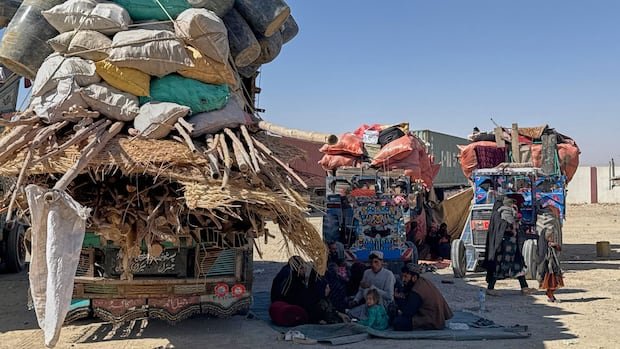
While Pakistan has previously targeted alleged militant hideouts inside Afghanistan, typically in remote mountainous areas, the recent heavy clashes on Saturday night underscore a deepening rift between the two nations. The Torkham border crossing, a critical trade route between Afghanistan and Pakistan, did not open at its usual time on Sunday, causing disruptions for individuals, including Afghan refugees departing Pakistan, due to heightened security concerns.
Amid escalating tensions, the Defence Ministry of the Taliban government declared that its forces had engaged in successful retaliatory operations along the border and stood ready to defend Afghanistan’s territorial integrity against any future violations. The closure of the Chaman crossing in southwest Pakistan further exacerbated the situation, with reports of jets flying over Spin Boldak in Afghanistan and an explosion witnessed by an Associated Press correspondent in Chaman.
Pakistan has accused Afghan authorities of sheltering members of the banned group Tehreek-i-Taliban Pakistan, which it alleges carries out attacks within Pakistan. Islamabad has also pointed fingers at India for supporting armed groups, although without presenting concrete evidence. The recent border skirmishes have raised concerns about regional stability, especially given the history of hostilities between India and Pakistan, particularly in the disputed Kashmir region.
Calls for calm and de-escalation have come from regional powers, with Saudi Arabia urging dialogue and restraint to prevent further escalation and maintain regional security. The situation remains tense as both Afghanistan and Pakistan navigate the aftermath of the recent clashes, with the potential for broader implications in the region.
Pakistan’s Prime Minister Shehbaz Sharif condemned the alleged assault by Afghanistan, asserting that Pakistani forces had responded effectively by destroying Afghan posts and repelling their advances. Pakistani security officials shared videos purporting to show destroyed Afghan checkpoints, although independent verification of these claims was not possible due to restricted media access to the affected areas.
In response to the escalating tensions, Pakistan reportedly took control of 19 Afghan border posts from which attacks were being launched, with reports of Taliban personnel either killed or fleeing the captured posts. The longstanding border dispute between Afghanistan and Pakistan, centered around the Durand Line, continues to be a point of contention, as Afghanistan has never recognized this boundary.
The developments highlight the fragile state of relations between Afghanistan and Pakistan, with the potential for further escalation if diplomatic efforts fail to defuse the situation.

