
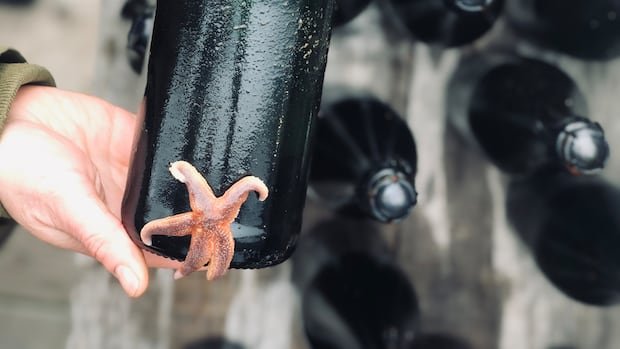
A cidery located in eastern Newfoundland is diving its effervescent drinks deep under the sea to enhance their flavor. The Newfoundland Cider Company, based in George’s Brook-Milton, initiated this unique method in 2024 by submerging 24 bottles in the Atlantic Ocean, introducing the new product line called High Tide. This initiative was repeated for a second year.
Chris Adams, the founder, described the process as a fusion of land and sea, where the bottles accumulate salt, sand, barnacles, algae, and marine life like sea stars during their underwater stay, adding to the allure of the drink. Adams emphasized the importance of preserving the sea creatures that inhabit the crates alongside the bottles, ensuring they are unharmed when retrieved.
The bottles are not cleaned of algae and barnacles upon resurfacing, as these elements contribute to the distinctive experience of tasting High Tide. The cidery utilizes wild apples and yeast in their cider production, drawing inspiration from wineries that age their wines at sea. Adams highlighted the difference in aroma when opening the submerged cider, attributing it to the sea’s influence while maintaining the essence of traditional apple cider.
The process of aging cider underwater mirrors the effects of cellar aging, benefiting from the consistent ocean temperatures. Despite the challenges involved in submerging the cider, Adams remains committed to refining the technique for future batches.
Jean-Benoit Deslauriers, the head winemaker at Benjamin Bridge in Nova Scotia, noted the mystery surrounding how underwater aging affects alcoholic beverages but highlighted the advantages of stable temperatures and absence of ultraviolet light in preserving the drink’s quality. Adams acknowledged the setbacks faced in their recent attempt due to adverse weather conditions but expressed determination to continue experimenting with ocean-aging cider in calmer waters with improved anchoring methods for future success.

