
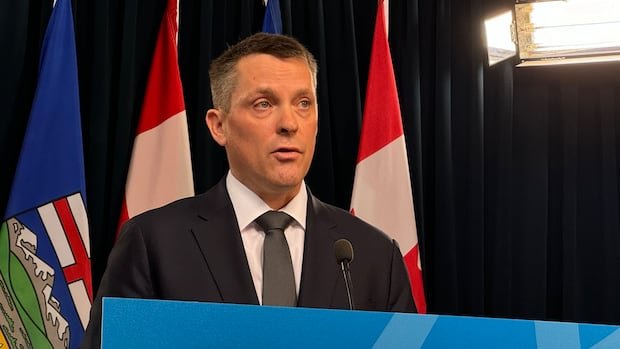
The Alberta government and the teachers’ union have returned to negotiations with less than three weeks remaining before a potential provincewide strike. Finance Minister Nate Horner’s office confirmed that talks with the Alberta Teachers’ Association have restarted, with the government presenting its proposal in response to the union’s recent offer. The union, led by president Jason Schilling, has not disclosed details of the latest offer from the government.
This development follows the resolution of a complaint filed by the government against the teachers for alleged bad faith bargaining, concerning a union document claiming that provincial negotiators lacked authority to discuss non-wage issues, which the province disputed.
A consent order from the labor board has settled the complaint, with only pay raises and COVID-19 vaccine matters remaining unresolved. Minister Horner expressed satisfaction with the resolution, emphasizing that the negotiation topics do not involve classroom issues such as complexity, class size, or student support. He highlighted the government’s commitment to addressing these concerns by proposing the addition of 3,000 more teachers to classrooms.
Despite the government’s offer of a 12% salary increase over four years, teachers rejected the proposal in May, voting overwhelmingly in favor of strike action. The union, representing 51,000 teachers, has set a strike date for October 6 if an agreement is not reached, potentially affecting over 700,000 students across 2,500 schools.
As bargaining resumes, the Teachers’ Association reiterated its focus on students and families. The union disclosed the resignation of Peter MacKay, chair of its negotiating team, expressing gratitude for his service and affirming that his departure will not hinder the negotiation process.
Both the union and the government have launched separate advertising campaigns, each accusing the other of neglecting student interests. The union has utilized various mediums, including billboards, commercials, and social media, to convey its message, while the government’s campaign began with a social media release emphasizing the proposed pay raise and improved classroom conditions.
Opposition NDP education critic Amanda Chapman criticized the government’s advertising expenditure, suggesting it should be directed towards enhancing the education system instead. Premier Danielle Smith and Minister Horner defended the government’s stance, citing budget constraints and the need for teachers to choose between salary increases or additional staff to address classroom overcrowding.
Union president Schilling argued that the proposed addition of 3,000 teachers over three years falls short in alleviating overcrowding, emphasizing the lack of significant salary adjustments in previous years.

