
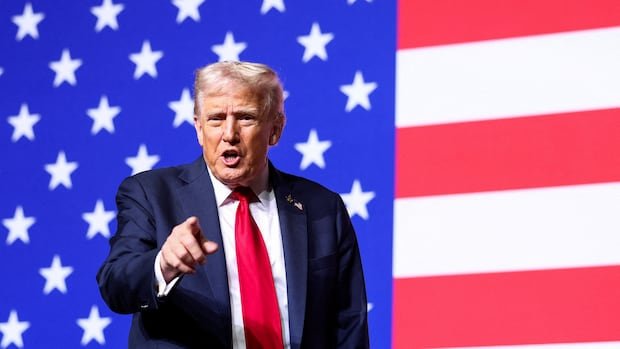
U.S. President Donald Trump has raised the possibility of utilizing the Insurrection Act, a measure not employed by a U.S. president in over 30 years. Trump has expressed interest in deploying the military to various U.S. cities, primarily governed by Democratic officials, to address what he and his administration perceive as escalating crime issues. Legal disputes have emerged between the Trump administration and authorities in Illinois, California, and Oregon, who have resisted federal intervention. Trump indicated readiness to enforce the act if necessary, emphasizing the importance of maintaining public safety.
The Insurrection Act grants the U.S. president the authority to deploy the military or federalize National Guard units to suppress uprisings and rebellions. While commonly known as the Insurrection Act of 1807, it is part of a series of statutes spanning from the late 18th century to 1871 that outline the military’s role in domestic law enforcement. This act can supersede the Posse Comitatus Act of 1878, which generally prohibits federal military involvement in law enforcement activities conducted by local authorities. Under the Insurrection Act, troops may conduct searches and arrests.
Trump’s deployment of the National Guard to cities like Los Angeles earlier this year was based on a different legal basis, Section 12406 of Title 10 of the U.S. Code, which limits the National Guard from engaging in civilian law enforcement duties. This restriction allows them to safeguard federal personnel and property but prohibits them from making arrests, leading to criticism from Democrats and administration detractors.
The potential invocation of the Insurrection Act has sparked controversy due to the long-standing American tradition of separating federal military involvement from civilian matters. The country’s founders, wary of potential abuses from past experiences, sought to prevent unlimited presidential control over military forces to protect civil liberties. Critics have raised concerns about the broad and vague language in some statutes related to the act, questioning the definition of terms such as ‘insurrection’ and ‘rebellion.’
In the past, when the Insurrection Act was activated, there was typically consensus between presidents and governors on the necessity of troop deployment. However, current disagreements between local officials and the Trump administration highlight the contentious nature of utilizing the act. State leaders have expressed reservations about the need for military intervention, emphasizing the importance of maintaining a peaceful environment in their regions.
The Insurrection Act has been invoked approximately 30 times since its inception, with the most recent utilization by President George H.W. Bush in 1992 at the request of California Governor Pete Wilson during the aftermath of the Rodney King riots in Los Angeles. Previous presidents, including Lyndon Johnson, Dwight Eisenhower, and John F. Kennedy, invoked the act to safeguard civil rights protesters and students during turbulent periods in U.S. history.
Legal experts note that while the president holds exclusive authority to deploy the military under certain circumstances, court intervention may be warranted if actions are deemed in bad faith or exceed lawful boundaries. The composition of the current U.S. Supreme Court, which leans towards conservative justices, may impact any legal challenges to Trump’s potential use of the Insurrection Act.

