
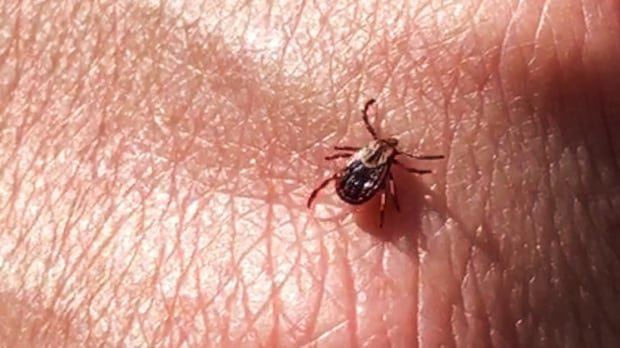
A recent study conducted by University of Ottawa researchers has revealed that the application of woodchips on forest trails can lead to a significant decrease in local tick populations. This low-tech approach may offer a solution to reducing tick bites and the associated risk of Lyme disease for individuals exploring wooded areas.
The research team selected two locations within Ottawa’s Greenbelt for their study: the Mer Bleue sector in the east and the Stony Swamp sector in the west. They divided 20 trail sections, each 50 meters long, and treated them with either untreated woodchips or woodchips treated with the pesticide deltamethrin.
Results showed that the use of untreated woodchips led to a 50% reduction in tick numbers, while woodchips treated with the pesticide resulted in a 99% reduction, according to Katarina Ost, a researcher involved in the study.
Woodchips are effective in deterring ticks as these parasitic arachnids typically climb vegetation, such as grass, to attach themselves to hikers or pets. By placing woodchips on the trail, the growth of vegetation that ticks rely on for climbing is prevented.
Ost emphasized that trails with high tick density are suitable for implementing this method on a larger scale. Deltamethrin, the pesticide used, does not pose a threat to pets walking on the wood chips as it remains relatively stationary once applied.
To prevent tick bites in residential areas, creating a border of wood chips, mulch, or gravel around lawns is recommended by the federal government to create an environment unsuitable for ticks to thrive.
Dr. Christopher Labos, a cardiologist and epidemiologist at McGill University, highlighted the importance of controlling tick populations to limit the spread of tick-borne diseases like Lyme disease. He noted that while woodchips can be effective, individuals must stay on designated paths for the method to work optimally.
Further research is needed to determine if the reduction in tick populations directly correlates with a decrease in Lyme disease cases. Labos emphasized the importance of proving the effectiveness of the method in reducing disease transmission.
In conclusion, the study sheds light on a practical and environmentally friendly approach to mitigating tick populations and highlights the potential benefits of using woodchips on trails to protect against tick-borne illnesses.

