
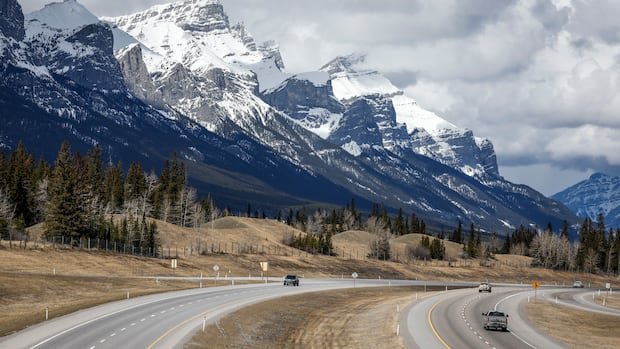
A historic snow drought in the western United States is sparking worries about future water scarcity and wildfires. Recent findings from a Canadian research study indicate that these conditions might represent a prolonged pattern that could jeopardize water resources for millions nationwide.
Snow levels in the western U.S. are currently far below average for this time of year, marking the lowest since NASA’s Terra satellite monitoring commenced in 2001. Researchers from Concordia University in Montreal reveal a concerning decline in snow accumulation and water content in parts of Western Canada from 2000 to 2019, possibly linked to a warming climate.
Although the affected areas make up only a small percentage of Canada, they impact crucial river headwaters in the Canadian Rockies. The study notes minor decreases in other regions of southern Canada as well, though not statistically significant individually.
Ali Nazemi, a study co-author and engineering associate professor at Concordia, highlights that while some basins show declines independently, when combined, 14 out of 25 major drainage basins in Canada are experiencing adverse effects.
The diminishing snowpack has significant implications for various sectors such as municipal water systems, agriculture, lake levels, transportation, and the heightened risk of wildfires in Canadian forests.
Kate Hale, an assistant professor at the University of British Columbia, describes the snowpack in mountainous regions as a natural water reservoir that gradually releases water during the crucial summer months for agricultural and human consumption purposes.
This year’s meager snowfall has disrupted ski operations at major resorts in British Columbia, with many having to halt or reduce their activities due to inadequate snow cover. Vail Resorts reports one of the poorest snowfall starts at its U.S. and Canadian locations. Meanwhile, Vancouver is experiencing its first snowless winter in over four decades.
The snow scarcity, attributed to a shift from snow to rain, has led to what experts term a “wet snow drought.” This transition is consistent with expectations in a warming climate, where rain replaces snowfall due to warmer temperatures, hindering snowpack formation and potentially washing away existing snow layers.
Snow coverage in mountainous regions serves as a critical water source, storing water until the spring thaw when it feeds into vital water systems, ecosystems, and forests. Concerns arise over potential water stress in forests and heightened fire risks across North American forestlands.
Nazemi’s research team predicts that the declining snow trend affecting the Canadian Rockies is extending to southern U.S. mountain ranges. They introduced a new metric, “snow water availability,” to assess water content within the snowpack using satellite data spanning from 2000 to 2019 across Canada and Alaska.
Regions most impacted by reduced snow water include the Okanagan in British Columbia, the Assiniboine-Red River basin in Manitoba, and the Saskatchewan River basin. These declines could hamper water flows in key rivers like the Fraser and St. Lawrence, crucial for water supply and hydropower generation for millions.
Nazemi underscores the historical impacts of dwindling snow cover on water security, citing past instances like the severe drought in central B.C. following a significant drop in winter snowpack. He emphasizes the need for further research to understand the acceleration of vulnerabilities and the severity of future water shortages.
Hale stresses the importance of studying these impacts to facilitate necessary adaptations in water management practices to cope with changing water availability and ensure sustainable water use in the long term.

