
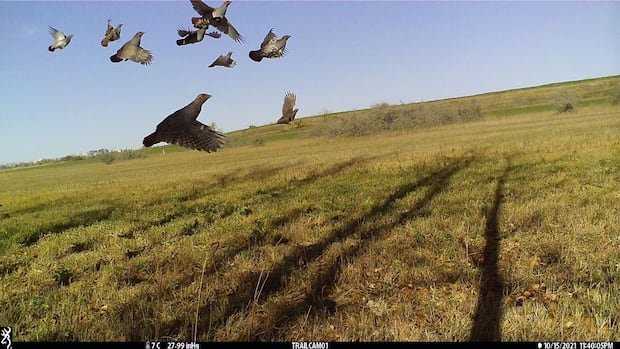
Researchers from the Royal Saskatchewan Museum have conducted a comprehensive study on urban wildlife in the Regina area. Utilizing 28 monitoring stations since autumn 2021, the team captured images and sound recordings of 143 bird species and 15 mammal species. Among the most prevalent species were Canada geese and white-tailed jackrabbits, while the American mink stood out as the rarest find.
Ryan Fisher, the museum’s curator of vertebrate zoology, highlighted the project’s objective of examining the impact of urbanization on wildlife. Thus far, Fisher noted that urban development has not significantly affected the local wildlife due to ample green spaces within the city.
The study revealed a diverse range of species in suburban regions, where natural habitats intersect with human-made structures, attracting a variety of birds. Additionally, moose sightings on the city outskirts were reported. This research coincides with a separate study indicating an increase in moose presence around Saskatoon.
Katie Harris, a University of Saskatchewan PhD candidate and study co-author, reported a rise in moose sightings within Saskatoon city limits over three years. Harris pointed to a notable incident involving a moose crashing into Sylvia Fedoruk School, underscoring the growing interactions between humans and urban wildlife.
Harris speculated that the surge in wildlife presence could be attributed to the availability of green spaces within cities, which provide attractive environments for animals. She emphasized the impact of urban design on wildlife habitats, advocating for the preservation and enhancement of green spaces to support urban biodiversity.
A recent study co-authored by Alex Filazzola from Western University projected a potential influx of new animal species into Canadian cities by 2100 due to climate change. While specific data for Saskatchewan cities is lacking, Filazzola’s research suggested a significant increase in animal species in urban areas, driven by climate-related factors.
Filazzola highlighted the role of climate change in altering animal habitats, leading to the migration of species into urban environments. He noted that Prairie cities’ warmer climates could facilitate the expansion of wildlife populations, potentially introducing new species to urban settings.
Jordan Rustad, a researcher involved in the Royal Saskatchewan Museum’s project, emphasized the importance of designing cities to accommodate wildlife-human coexistence. Notably, Rustad highlighted the presence of free-roaming cats in Wascana Park, posing a threat to bird populations. Encouraging responsible pet ownership, Rustad suggested keeping cats indoors or under supervision outdoors to mitigate the impact on local wildlife.
Furthermore, creating wildlife-friendly environments through green space preservation, diverse plantings, and wildlife-conscious infrastructure was emphasized as crucial for supporting urban biodiversity. Strategies such as wildlife-friendly fencing and reducing light pollution can aid in safeguarding wildlife habitats within cities.
In conclusion, ongoing research underscores the significance of maintaining ecological balance in urban landscapes to promote harmonious cohabitation between wildlife and humans.

