
UEFA, the European soccer governing body, is reportedly considering a vote to suspend Israel from its membership due to the conflict in Gaza, according to sources familiar with the matter. A majority of UEFA’s executive committee members are likely to back a decision to suspend Israeli teams from participating in international competitions, including the upcoming World Cup qualifiers. This potential move could impact both Israeli national and club teams.
The stance of FIFA, the global soccer governing body, on the exclusion of Israel remains uncertain, given the close ties between FIFA President Gianni Infantino and former U.S. President Donald Trump. The Trump administration’s support in organizing the upcoming World Cup in the U.S., Canada, and Mexico is considered crucial for FIFA, which could influence FIFA’s decision regarding Israel’s participation.
Efforts to exclude Israel from international sports events have gained momentum recently, with calls from various parties to take action in response to the situation in Gaza. Diplomatic interventions, including a statement from the U.S. State Department opposing any move to ban Israel from the World Cup, highlight the complex geopolitical dynamics at play.
The push to suspend Israel from international competitions has garnered support from multiple quarters, including Spanish Prime Minister Pedro Sanchez, who drew parallels to Russia’s exclusion following its actions in Ukraine. The United Nations Human Rights Council, along with independent experts, has also urged FIFA and UEFA to consider suspending Israel from international tournaments.
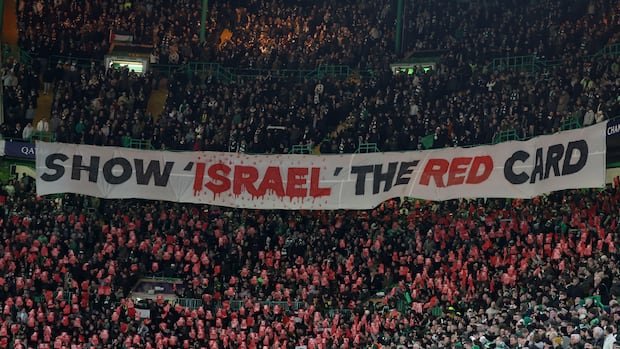
UEFA President Aleksander Ceferin signaled a stricter stance on Israel after banners condemning violence were displayed during a recent match. The ongoing debate surrounding Israel’s participation in international sports events coincides with increased scrutiny and criticism of Israel’s military operations, particularly in Gaza.
Efforts to prevent Israel’s suspension from UEFA have been underway, with Israeli officials engaging in diplomatic maneuvers to safeguard their participation in international competitions. The decision to ban Russia from sports events in 2022 serves as a precedent, driven in part by the reluctance of UEFA member federations to compete against Russian teams.
The involvement of key UEFA executive committee members from countries like Norway and Italy, who have expressed concerns over Israel’s participation, adds complexity to the situation. The geopolitical backdrop, including Israel’s relations with countries like Qatar, further complicates the decision-making process within UEFA and FIFA.
Recent incidents, such as protests and banners displayed during matches, underscore the growing tensions and controversies surrounding Israel’s involvement in international soccer. The outcome of the upcoming discussions within UEFA and FIFA could have significant implications for Israel’s participation in global sports events.

