
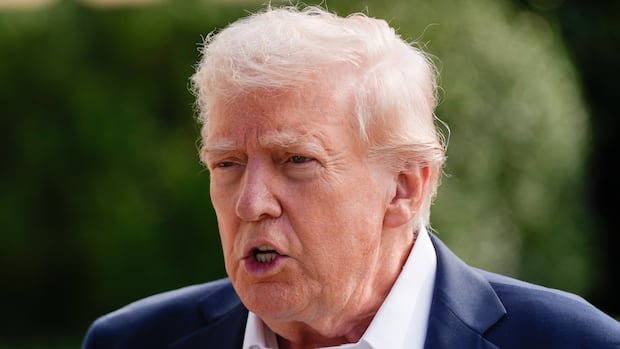
U.S. President Donald Trump stated on Saturday his intention to deploy troops to Portland, Oregon, with full force if needed, in response to what he termed as “domestic terrorists.” This move is part of his broader strategy to extend controversial military deployments to additional cities across the nation.
The Oregon Democratic Governor, Tina Kotek, criticized Trump’s decision, asserting that Portland is managing its affairs effectively without the need for federal intervention. Trump took to social media to announce his directive to the Department of Defense to supply troops to safeguard the supposedly war-torn Portland city.
The President emphasized the necessity of protecting U.S. Immigration and Customs Enforcement facilities, which he claimed were facing attacks from groups like Antifa and other domestic threats. Details regarding the deployment timeline or troop specifics were not immediately provided by the White House upon request.
During a press briefing later in the day, Governor Kotek reiterated her stance against the troop deployment, stating that local public safety is adequately managed without external interference. She emphasized that there is no insurrection or national security risk warranting military intervention in Portland.
Despite the President’s assertions, Portland Mayor, Democrat Keith Wilson, also dismissed the need for troops, emphasizing the absence of lawlessness or violence in the city unless incited by external forces. Trump’s decision follows a recent shooting incident targeting an ICE facility in Dallas, resulting in casualties.
Oregon’s congressional delegation, excluding GOP Representative Cliff Bentz, urged the Trump administration to refrain from deploying federal agents and troops to Portland. They criticized the unilateral action, labeling it an abuse of executive power that could incite violence and disrupt the constitutional balance between federal and state authorities.
Residents in Portland’s downtown area expressed confusion and disapproval over the perceived emergency prompting troop deployment. Many locals questioned the necessity of federal intervention in a city they deemed safe and peaceful, highlighting their dismay with the President’s decision.
Portland has a history of protests, particularly following George Floyd’s murder, which led to clashes with law enforcement. Recent demonstrations around the ICE building have been relatively subdued, focusing on localized issues rather than widespread unrest seen in previous events.
Efforts to revitalize the downtown area have shown progress, with reduced homeless encampments and a decline in violent crime, signaling positive developments since the turbulent events of 2020. Trump’s heightened rhetoric against the “radical left” has raised concerns among local officials and community members.
While Trump has threatened to deploy troops in other cities like Chicago and Memphis, the actual implementation remains pending. Reports suggest a limited troop presence in Memphis, with protests against the expected federal reinforcements emphasizing the community’s preference for social investment over militarization.
As tensions escalate, concerns persist regarding the potential escalation of federal intervention in American cities and the implications for civil liberties and community well-being. Residents and officials continue to advocate for peaceful solutions and dialogue to address underlying issues without resorting to military force.

