
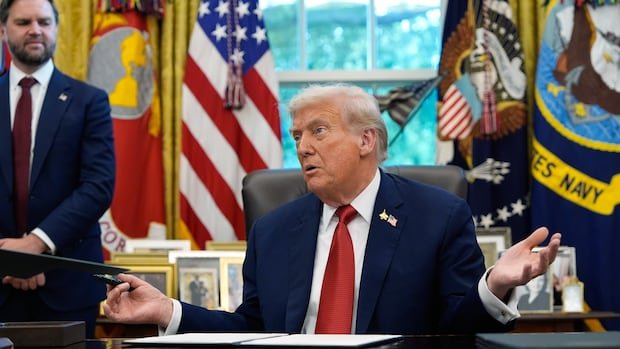
U.S. President Donald Trump announced plans to impose high import taxes on various products, including pharmaceutical drugs, kitchen cabinets, bathroom vanities, upholstered furniture, and heavy trucks. The announcement, made through his social media platform Truth Social, did not specify whether these new tariffs would be in addition to existing national tariffs. This move underscores Trump’s continued support for tariffs, despite previous trade actions taken this year that have caused market volatility.
The potential implementation of additional tariffs raises concerns about exacerbating the already elevated U.S. inflation and potentially slowing economic growth. Federal Reserve chair Jerome Powell highlighted the impact of rising prices on inflation levels, attributing most, if not all, of the increase to higher costs for goods.
Trump’s decision to increase tariffs poses challenges for countries negotiating trade agreements with the U.S., such as Canada and Mexico. Earlier, Trump raised tariffs on steel and aluminum imports, with Canada being a significant supplier of these metals. The administration also raised tariffs on non-compliant goods under the Canada-United States-Mexico Agreement (CUSMA).
The proposed pharmaceutical tariffs drew criticism from Pascal Chan of the Canadian Chamber of Commerce, who warned of adverse effects on American health due to potential price hikes, insurance strains, and shortages of essential medicines. Concerns also arise regarding the expiry of tax credits that have made health insurance more affordable, a critical issue as the credits face expiration by year-end.
Stocks of pharmaceutical companies in Asia declined following the announcement, reflecting investor concerns. Meanwhile, Australia’s Health Minister Mark Butler expressed apprehension over the impact of what he termed as “unfair and unjustified tariffs” after decades of free trade.
Trump specified that the pharmaceutical tariffs would exempt companies investing in manufacturing plants in the U.S., but the exact implications for existing U.S.-based factories remain unclear. Industry groups, like the Pharmaceutical Research and Manufacturers of America, cautioned that tariffs could jeopardize planned investments in the U.S.
The U.S. Chamber of Commerce opposed new truck tariffs, citing the lack of threat to national security posed by top truck import sources like Mexico, Canada, Japan, Germany, and Finland. The proposed cabinetry tariffs may further burden home builders amid housing shortages and high mortgage rates. Additionally, a significant portion of furniture imports in 2024 originated from Vietnam and China.
Trump’s administration defended the tariffs as necessary for national security reasons and revenue generation, aiming to collect billions in tariffs by year-end. However, the impact on job creation remains uncertain, with reports of manufacturing job cuts and downsizing in the construction sector since the implementation of previous tariffs.
Legal challenges to Trump’s tariff policies are ongoing, with previous rulings questioning the president’s authority to impose tariffs. The Supreme Court is set to hear arguments on the matter in November, addressing potential legal justifications for these trade actions.

