
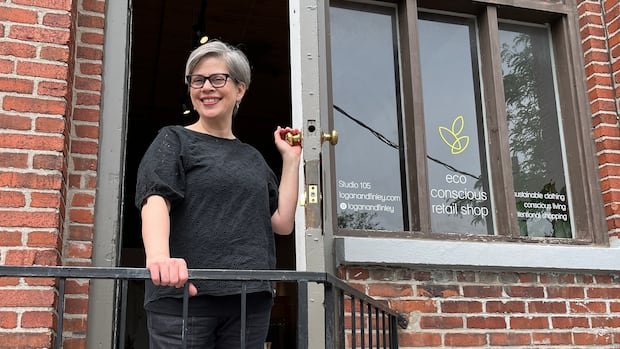
Julie Skirving, a boutique owner in Toronto, found herself inundated with complaints from online shoppers who had either received subpar products or never received their orders. These customers, totaling over 540, had been lured in by sponsored ads on Facebook promoting a site called “Logan Toronto,” mistaking it for Skirving’s store, “Logan and Finley.”
Upon investigating further, Skirving discovered what appeared to be a scam operation associated with “Logan Toronto.” Another related website now redirects to a Shopify page stating that the store does not exist. Efforts to locate contact information for the storefront proved futile, and Shopify was unavailable for comment when contacted by CBC.
Numerous similar instances of deceptive online ads and websites have come to light, showcasing independent fashion retailers supposedly closing down and offering steep discounts on high-end merchandise. These websites, like “Laurel Toronto,” enticed customers with significant price reductions, only to deliver poor-quality items or fail to deliver at all. Disgruntled customers have taken to social media platforms to share their negative experiences.
The Canadian Anti-Fraud Centre has labeled these fraudulent retail websites as “extremely concerning,” emphasizing the deceptive marketing tactics employed. The Canadian Federation Of Independent Business has also expressed growing apprehension regarding fraud and cybersecurity in the retail sector, with a significant percentage of small business owners reporting being targeted by cyberattacks.
As cyber fraud becomes more sophisticated, consumers are advised to remain vigilant, monitor their credit card statements, and promptly report any suspicious activity to their credit card companies. The CFIB recommends reporting fraudulent websites to the CAFC for potential investigation.

