
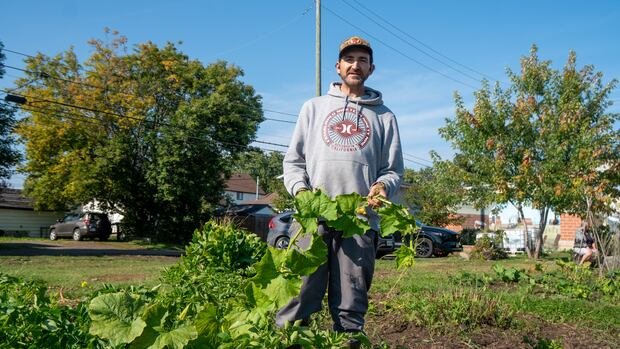
Luke Monk, a resident of Thunder Bay, Ontario, takes great pride in the Simpson Street Community Garden and is dedicated to its long-term sustainability. Raised in a family where gardening was a way of life, Monk, a key volunteer at the garden, learned gardening skills from his father, Murray Monk, an avid outdoorsman and off-grid trapper.
The Simpson Street Community Garden, established in the early 2000s due to rising food insecurity in the area, faced neglect over time. However, a recent collaboration between Willow Springs Creative Centre and NorWest Community Health Centres (NWCHC) revitalized the garden, with active involvement from local residents like Monk.
Judi Vinni, the coordinator of Willow Springs Creative Centre, highlighted the successful growing season at the garden, with abundant crops including potatoes, rhubarb, kale, peas, beans, beets, cabbage, and broccoli. Sunflowers provide shade amidst the lush produce, creating a serene atmosphere in the garden.
The garden serves as a therapeutic space, promoting mental and physical well-being. Community members are encouraged to take home fresh produce, fostering a sense of community and providing access to nutritious food. Additionally, the project has provided job opportunities for young adults with disabilities, enriching their experiences and contributions.
The garden’s impact goes beyond food production, offering a place of tranquility and healing. A traditional Indigenous medicine garden, funded by the City of Thunder Bay, invites visitors to reflect and find solace along a labyrinth path leading to a stone medicine wheel at the center.
To further engage the community, a sharing circle event is scheduled for September 23, ahead of the National Day for Truth and Reconciliation. This event aims to promote cultural healing and understanding, emphasizing the importance of community connections and holistic well-being.
As the gardening season nears its end, volunteers continue their efforts at the garden, inviting community members to participate in the seasonal activities. The garden’s impact extends beyond its physical boundaries, fostering connections, promoting wellness, and providing a space of nourishment and healing for all who visit.

