
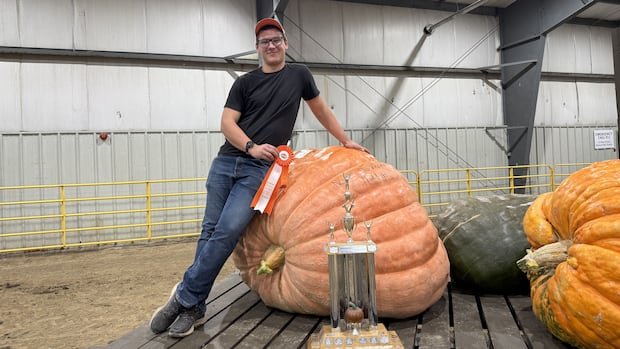
Noah Devisser had an impressive pumpkin that was growing rapidly at about 20 kilograms per day until he noticed small cracks forming on its surface, which could have been detrimental to such a large fruit. Devisser decided to reduce watering for a few days to slow down the growth and prevent the pumpkin from bursting.
His careful approach paid off when the pumpkin weighed a remarkable 508 kilograms at the Spencerville Fair Mammoth Pumpkin Stake, breaking the previous record of 478 kilograms. Devisser expressed his awe at achieving this new milestone, emphasizing the impressiveness of each new record-breaking pumpkin.
Devisser, at just 18 years old, is relatively new to the hobby of growing giant pumpkins. His motivation stems from wanting to elevate the status of this competitive tradition with a long history dating back nearly two centuries. The legacy of growing massive pumpkins dates back to the 1850s when American naturalist Henry David Thoreau cultivated a pumpkin weighing over 45 kilograms.
The competitive gardening scene truly took off in the 1980s, thanks to Canadian grower Howard Dill, who developed the Atlantic Giant variety, the ancestor of today’s giant pumpkins. Devisser highlighted the importance of obtaining seeds from the largest pumpkins worldwide to grow even bigger ones.
While experts predicted the appearance of a one-ton pumpkin by 2014, the achievement came sooner than expected at the Topsfield Fair in Massachusetts. The current world record stands at a remarkable 1,247 kilograms, but Devisser believes growers can surpass this, anticipating a 1,300-kilogram pumpkin this year.
Devisser’s dad, Brian, witnessed his son’s victory at the Spencerville Fair, acknowledging his son’s success in outgrowing him this time. Although giant pumpkins are edible, they lack substantial flavor due to their high water content. After display at various festivals, Devisser’s record-breaking pumpkin will be utilized as chicken feed, with excess parts composted for future use.

