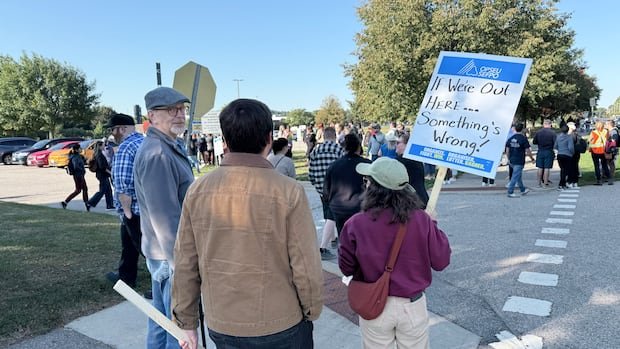
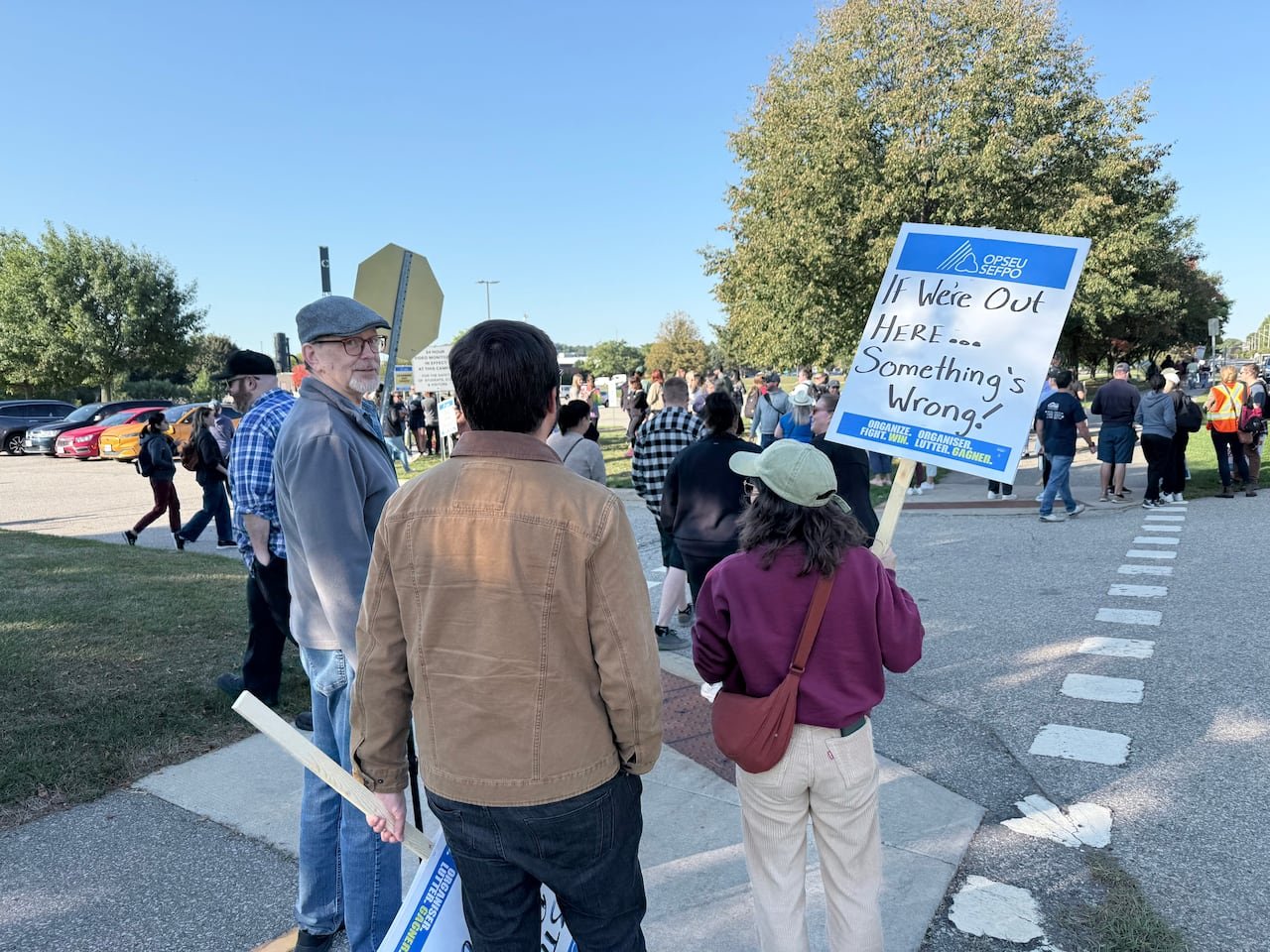
Support staff working full-time have initiated a strike at Conestoga College today, joining over 10,000 employees at 24 colleges statewide. This development follows unsuccessful negotiations between the College Employer Council (CEC) and the Ontario Public Service Employees Union (OPSEU) for a new collective agreement that began in June.
The affected full-time support staff encompass individuals in various roles such as disability services, library technologists, IT services, and food services. OPSEU is advocating for improved wages, benefits, and job security for its members.
Vikki Poirier, president of Local 238 representing Conestoga College support staff, urged the college council to engage in negotiations and emphasized the significance of government intervention due to the community college’s widespread impact across the province.
Approximately 700 individuals participated in picketing activities outside the college as uncertainty looms over the strike’s duration.
Poirier expressed hope for a swift resolution, urging college authorities to return to the negotiation table promptly to facilitate a fair agreement.

Continuity of Classes and Closure of Child Care Centers
Conestoga College affirmed that campuses remain operational with classes continuing as scheduled. However, Grand River Transit announced the suspension of services to the college’s Doon and Cambridge-Fountain Campuses.
During the strike, child care centers at the Doon campus and the Driftwood Park Child and Youth Development Centre will be closed. The college also acknowledged potential disruptions to labs and other activities involving full-time support staff.
First-year animation student Max Stojni expressed minimal concern about the strike impacting his classes, citing the small class size as a mitigating factor.

On the other hand, nursing student Sabrina Shanks voiced concerns about potential online shifts for some of her classes should the strike persist, affecting her educational experience.
Shanks acknowledged the importance of benefits and fair compensation for workers but highlighted the challenges faced by students in receiving reduced services while paying tuition fees.