
A renowned feature of trees is their capacity to sequester carbon dioxide, utilizing it for their development. Young, rapidly growing trees are more efficient at absorbing carbon compared to older trees. However, when trees decompose or burn in wildfires, the stored carbon is released back into the atmosphere.
A collaborative team of researchers from the UK, Switzerland, and the Czech Republic has proposed a unique approach to preserve carbon for centuries. Their idea involves submerging mature trees from the expansive boreal forest into the deep Arctic Ocean to secure their carbon content. This concept aims to offset the carbon release by replanting fast-growing trees in the cleared areas to expedite carbon absorption.
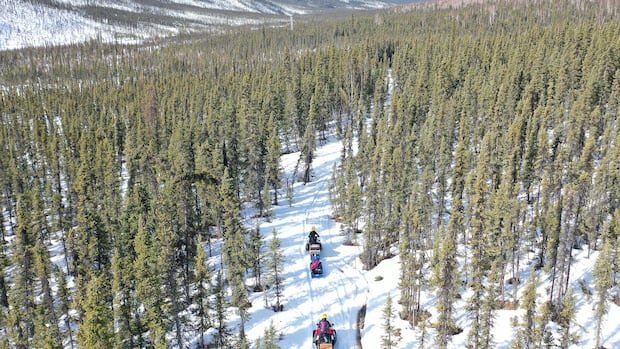
Utilizing computer models, the scientists examined the impact of removing specific stands of mature, fire-prone trees in regions like Canada, Alaska, and Russia. These trees would be transported down six Arctic rivers, including the Yukon and Mackenzie, and submerged in the Arctic Ocean. The researchers believe that the cold, low-oxygen water in the Arctic could inhibit decay, preserving the carbon for millennia.
The study suggests that sinking trees from just 1% of the boreal forest annually could remove one gigaton of carbon dioxide from the atmosphere each year. While this concept shows promise, the scale of the project necessitates significant energy and carbon emissions for tree extraction, transportation, and sinking operations.
Furthermore, concerns arise regarding the ecological impact on ocean floor organisms, disruption to the forest ecosystem, and potential ramifications for Indigenous communities dependent on these forests. These large-scale geoengineering ideas, including alternative methods like spraying particles into the atmosphere or constructing sunshades in space, pose uncertainties about their long-term effects on natural systems.
Ultimately, addressing the root cause of carbon emissions by transitioning away from fossil fuels is paramount. The availability of emission-free energy technologies such as solar, wind, geothermal, and nuclear power offers a sustainable solution. Embracing these clean energy alternatives is crucial to combatting climate change effectively and reducing reliance on carbon-intensive practices.

