
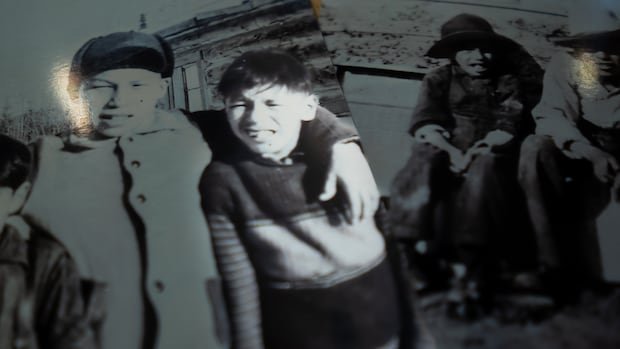
As Percy Onabigon’s family laid cedar and tobacco by his gravesite – situated over 1,200 kilometers away from his hometown – Marcus Ryan expressed profound emotions like never before. Percy, who was taken from Long Lake #58 First Nation in northern Ontario as a child and placed in St. Joseph’s Indian Residential School in Thunder Bay due to his epilepsy and partial paralysis, was transferred to various institutions, including the Orillia Asylum for Idiots, without his family’s consent. Tragically, Percy succumbed to tuberculosis at the age of 27 in 1966 at the Oxford Regional Centre in Woodstock.
After years of advocacy, Percy’s family succeeded in bringing his remains back to Long Lake #58, culminating in a traditional burial ceremony and funeral mass spanning two days. Reflecting on the experience, Ryan, the warden of Oxford County where Percy was initially interred, acknowledged the eye-opening journey of getting acquainted with the Onabigon family. He emphasized the importance of acknowledging the grim history of residential schools and dispelling denialism surrounding such atrocities.
Percy’s niece, Claire Onabigon, delved into her family’s extensive history with the residential school system in her research, which detailed the generational impact on Percy, her mother Bertha, and uncles Kenny and George. Following Percy’s exhumation in Woodstock earlier this year, his remains underwent examination and DNA analysis at Ontario’s Forensic Pathology Service in Toronto.
Claire expressed gratitude for the support received during Percy’s repatriation in a news release by Oxford County, where Ryan proposed an exhibit to honor Percy locally. The exhibit, curated in collaboration with the Onabigon family, showcases Percy’s story through four glass cases, shedding light on his family’s struggle for repatriation and the broader context of residential schools and reconciliation efforts. The exhibit, slated for a closing ceremony on October 6, serves as a poignant reminder of the enduring legacy of the residential school system and the importance of truth and reconciliation efforts.
As the National Day for Truth and Reconciliation approaches on September 30, marking a federal holiday in Canada to acknowledge the residential school system’s legacy, the exhibit stands as a testament to preserving historical narratives and ensuring that stories like Percy’s are not forgotten. Claire expressed her appreciation to Oxford County for their commitment to reconciliation through the exhibit.

