
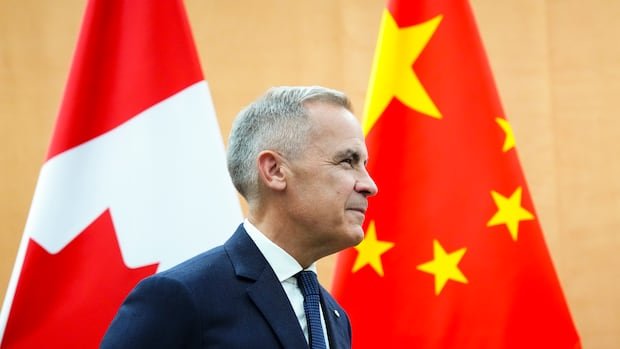
Prime Minister Mark Carney expressed his anticipation of a forthcoming meeting with Chinese President Xi Jinping to foster a solid trade relationship amidst evolving U.S. policies. Carney’s comments followed a positive discussion with Premier Li Qiang in New York City. He highlighted the productive nature of their talks, which build upon previous exchanges between trade ministers and are expected to deepen over time.
Carney emphasized the various avenues for expanding Canada and China’s trade ties, particularly in clean energy, conventional energy, and agriculture sectors. He disclosed engaging in candid conversations with Li regarding steel tariffs and announced that Foreign Affairs Minister Anita Anand will soon visit China, with plans to also travel to India.
Throughout the year, Canadian businesses, analysts, and politicians at lower levels have urged Carney to enhance Canada’s trade relations with China in response to President Trump’s trade policy changes. Carney has prioritized negotiations with China, describing them as a top agenda item in June.
There are potential opportunities for further meetings between the leaders later this year, possibly at the G20 Leaders’ Summit in November. The historical trade and diplomatic ties between Canada and China have been complex, with recent trade tensions leading to retaliatory tariffs on various products.
Efforts are underway to address the tariffs on agricultural goods, with the two nations agreeing to enhance regular communication. Despite China being Canada’s second-largest trading partner, there is room for growth, as Canada’s exports to China in 2024 amounted to $30 billion, significantly less than its trade with the U.S.
Carney, during his visit to New York City, promoted Canada as a reliable trading partner with access to global markets. Speaking at the Council on Foreign Relations think-tank and the UN General Assembly, Carney emphasized Canada’s favorable position to meet global demands at a critical juncture in history.

