
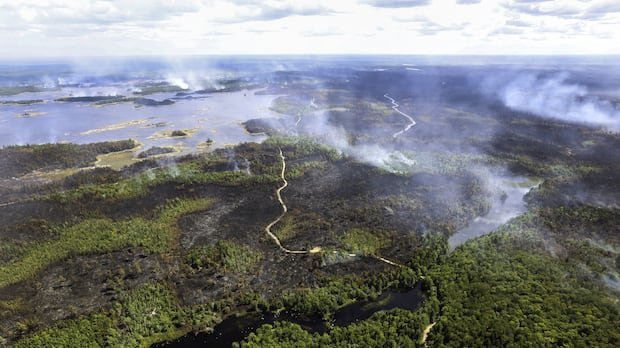
The Long Lake wildfire in Annapolis County has broken records in Nova Scotia for the number of air quality warnings and advisories issued by Environment Canada. Annapolis County was under a warning or advisory for 26 consecutive days from August 14 to September 8, doubling the previous record for the province. Although the Long Lake fire is still burning, it is now under control.
Prior to this summer, the longest period of special air quality statements due to wildfires in the province was 13 days in 2023. That year saw the most devastating wildfire season in Nova Scotia, which burned over 25,000 hectares of land and destroyed 200 homes. In response to the increasing wildfire incidents, Environment Canada introduced a two-tier air quality alert system for all of Canada in 2024.
Under this system, an air quality rating between seven and 10 triggers a special air quality statement, while a rating of 10 or higher results in an air quality warning. The air quality health index assesses air quality’s impact on health, with higher numbers indicating greater health risks.
Residents like Tanya Olscamp from Middleton in Annapolis County found it challenging to be outdoors during the peak of the wildfires. The smoke’s smell pervaded her home, and the worsening air quality led to discomfort. The situation became so severe that Olscamp’s asthma, usually well-managed, flared up, requiring her to use an inhaler.
Dr. Jean Bourbeau, a respiratory illness expert at McGill University, highlighted the health risks associated with wildfire smoke exposure. He explained that fine particulates from wildfires can travel long distances on the wind and are more toxic than pollution from other sources. Prolonged exposure to wildfire smoke can lead to systemic inflammation and potential chronic health issues, similar to those seen in smokers. Bourbeau advised people with respiratory or cardiac conditions to avoid outdoor activities during smoky conditions and seek medical advice.
In the long term, Bourbeau emphasized the importance of wildfire prevention to mitigate health risks associated with smoke exposure.

