
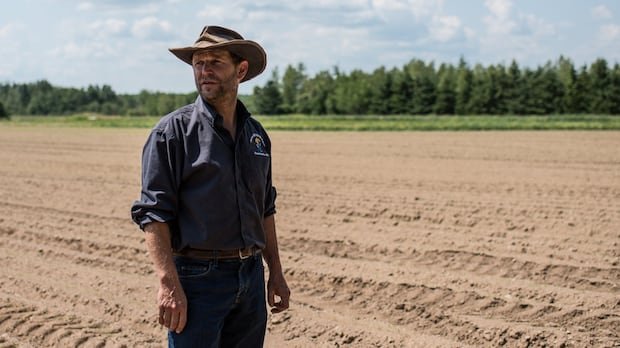
Farmers in New Brunswick are facing challenges following a scorching summer that has severely impacted their crops, leaving them uncertain about future seasons. Don Bostwick, a seventh-generation farmer on the Kingston Peninsula, expressed deep concern over the unprecedented drought conditions they are experiencing, noting the detrimental effects on their apple orchards. The prolonged dry spell has resulted in stressed trees, varying fruit sizes, and premature dropping of apples, with some trees displaying withered leaves.
The lack of rainfall during this crucial period when trees typically store energy for the next season raises apprehensions about the upcoming harvest. Despite the worries, Bostwick emphasized the limited control they have over the weather’s impact on their crops. The farm recently opened to the public for apple picking, but the success of the season hinges on the uncertain prospect of additional rainfall.
In Baie de Bouctouche, fourth-generation farmer Christian Michaud shared similar concerns about his corn harvest, highlighting the smaller cobs and reduced yield due to water scarcity. The adverse weather conditions have also affected his bean and carrot crops, prompting a shift towards more sustainable farming practices to navigate the challenges posed by extreme weather events.
Elsewhere, at Lonsview Farms near Sussex, Eric Walker lamented substantial losses in his silage crop, estimating a financial setback of around $75,000. The dry conditions have forced Walker to seek alternative sources for silage to feed his cows, as the quality of the remaining forage has been compromised. Climate change impacts have been particularly evident this year, altering traditional harvest timelines and necessitating adjustments in farming strategies.
Similarly, Brett Reidpath of Blue Acres Development described the blueberry farming season as particularly challenging, attributing the poor crop quality and reduced prices to the lack of rain and intense heat. The farm concluded its harvest earlier than usual, with dried-up berries remaining on the vines, further adding to the economic strain faced by farmers in the industry.
As farmers contend with the repercussions of an unpredictable climate, the future of agricultural practices and crop yields remains uncertain, underscoring the need for resilience and adaptation in the face of changing environmental conditions.

