
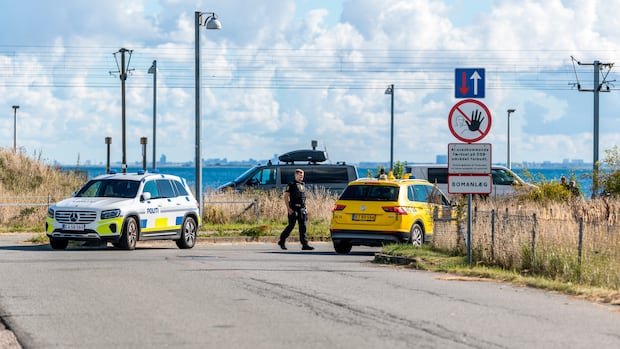
Several unidentified drones disrupted the airspace over Copenhagen’s airport on Monday night, sparking concerns about potential Russian involvement in the incident above Scandinavia’s largest airport. The drones, operated by unknown individuals, did not appear to pose a direct threat, according to authorities, and vanished after several hours. However, the disruption caused significant air traffic disturbances at the airport.
While the perpetrators behind the drone activity remain unidentified, both Denmark’s prime minister and NATO’s secretary-general suggested that Russian involvement could not be ruled out. In response to the incident, Denmark, already on high alert due to its proximity to Russia, will participate in discussions on the European Union’s proposed “drone wall” with frontline nations.
Danish Prime Minister Mette Frederiksen described the event as “the most serious attack on Danish critical infrastructure to date.” NATO Secretary-General Mark Rutte refrained from implicating Russia at this stage, emphasizing that it was premature to assign blame, a sentiment echoed by Kremlin spokesperson Dmitry Peskov, who dismissed such allegations as baseless.
Authorities refrained from taking down the drones due to the high risks involved, given the airport’s crowded conditions with passengers, aircraft on runways, and nearby fuel storage facilities. Jes Jespersen, a senior police inspector in Copenhagen, referred to the operators as a skilled entity showcasing their abilities and possibly honing their techniques through the drone display.
The drones, estimated to be two or three in number, traveled a considerable distance to reach the airport, prompting investigations into their mode of arrival, whether by land or possibly by sea. Flight operations at the airport resumed the following day, although delays and cancellations persisted.
The incident in Copenhagen underscores heightened security concerns in northern Europe amid escalating tensions with Russia. NATO has issued a warning to Russia, emphasizing its readiness to defend against any airspace violations following recent encounters involving Russian drones over Poland and reports of Russian fighter jet intrusions in Estonia. European officials have raised alarms about Russia’s provocations along European borders, citing a pattern of testing resolve and undermining security in the region.
The encounter between NATO and Moscow in Poland marked the first direct confrontation since Russia’s military actions in Ukraine, prompting a reassessment of European preparedness to counter Russian aggression.

