
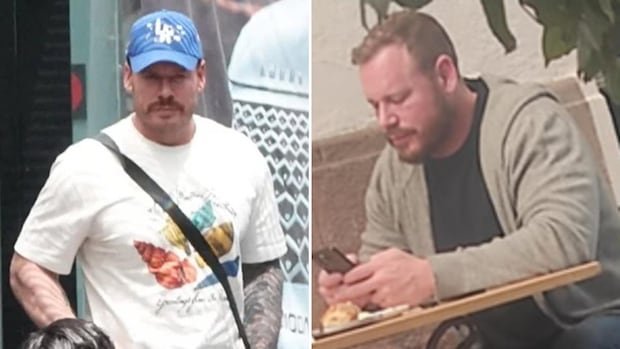
Mexico has deployed specialized federal agents to track down Canadian fugitive Ryan Wedding, according to information obtained by CBC News. This move underscores an improving relationship between Mexican authorities and their U.S. counterparts, who had previously accused local officials of aiding Wedding in evading capture.
Wedding, a former Canadian Olympian who participated in the 2002 Olympic Games in Utah as a snowboarder, is facing allegations of leading a $1 billion US criminal syndicate engaged in the regular transportation of large quantities of cocaine, fentanyl, and methamphetamine across North America. Furthermore, Mexico has tied Wedding’s criminal network to international arms trafficking.
Hailing from Thunder Bay, Ontario, Wedding and his accomplice Andrew Clark, also Canadian, are accused of masterminding four murders in Ontario, including the tragic shootings of a couple from India who were mistaken for targets.
The Federal Attorney General’s Office (FGR) of Mexico, an enforcement agency associated with the country’s attorney general, has confirmed that they are actively pursuing Wedding. The FGR’s statement was relayed to CBC News through the Mexican Embassy in Ottawa, with the agency opting not to be directly contacted due to the operation’s confidentiality.
Collaboration between the FBI and Mexican authorities is ongoing, with Laura Eimiller, an FBI spokesperson, mentioning their cooperation without divulging specific details. The search for Wedding, 44, likely involves a task force comprising Interpol and the Mexican navy, as evidenced by Clark’s arrest in a high-profile operation last year in the Guadalajara region.
Pressure from the U.S. government has prompted Mexico, under President Claudia Sheinbaum, to intensify efforts against major drug cartels, viewed as terrorist groups by the U.S. and Canada. Despite recent progress under the Sheinbaum administration, concerns persist regarding longstanding collusion between government officials and criminal elements in Mexico, as noted by U.S. State Department official F. Cartwright Weiland.
Weiland and the FBI suspect that Wedding may be benefiting from influential ties in Mexico, allowing him to evade capture with the tacit support of both cartels and corrupt officials. The U.S. State Department has offered a hefty reward of up to $10 million US for any information leading to Wedding’s apprehension.
Recent developments from the FBI indicate a focus on the Mexico City vicinity for information-gathering efforts, with a social media campaign underway to solicit tips from locals. There are speculations that Wedding may have undergone plastic surgery to alter his appearance, but former DEA international operations chief Mike Vigil remains confident that authorities will eventually capture him, given his distinctive physical attributes.
Wedding previously faced incarceration in the U.S. for involvement in a cocaine smuggling conspiracy tied to a criminal network based in Vancouver. Following additional charges by the RCMP in 2015, Wedding went on the run. Last fall, Los Angeles prosecutors identified him as the lead defendant among 16 individuals implicated in Operation Giant Slalom, aimed at dismantling the “Wedding Drug Trafficking Organization.”
The RCMP has acknowledged the continued activities of Wedding’s network, while U.S. prosecutors have warned of his potential access to a network of hired killers while evading authorities.
In related legal proceedings, Hardeep Ratte and Gurpreet Singh, alleged associates of Wedding from the Toronto area, are contesting extradition to the U.S. Ratte and Singh have been accused of facilitating Wedding’s bulk cocaine shipments from California to Canada for a fixed fee per truckload.
During a court hearing in Toronto, Singh’s lawyer, Brian Greenspan, raised concerns about law enforcement’s handling of Singh’s abduction by cartel members in Mexico over a drug debt, subsequently resolved by Wedding. Greenspan also highlighted that evidence crucial to the U.S. case was gathered in Canada, including a police recording of a pivotal meeting involving Singh, Ratte, and an FBI informant in Brampton, Ontario.
Greenspan’s inquiries about the informant’s reported assassination in Colombia cast doubt on the future progression of the case, as the informant had collaborated with Wedding for over a decade before assisting investigators in 2023. Despite uncertainties surrounding the informant’s fate, U.S. prosecutors maintain their stance, leading to legal complexities in the extradition proceedings.
The search for Wedding continues to be a focal point, with ongoing efforts by international agencies to bring the fugitive to justice and dismantle his criminal network.

