
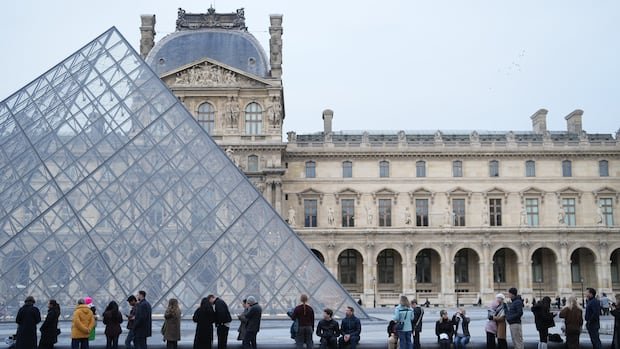
Long queues beneath I.M. Pei’s iconic glass pyramid in Paris have become synonymous with the experience of visiting the Louvre and witnessing the renowned artworks like the Mona Lisa. In an effort to address financial challenges stemming from strikes, overcrowding issues, and a recent daring theft of French Crown Jewels, the Louvre has increased admission fees for most non-European visitors by 45 percent to 32 euros ($51 Cdn) from the previous 22 euros.
This price adjustment aligns with a broader national strategy of “differentiated pricing” introduced last year and now being implemented at various cultural landmarks including the Versailles Palace, the Paris Opera, and the Sainte-Chapelle. Despite the Louvre’s rationale, French labor unions have criticized the move, arguing that it undermines the institution’s universal accessibility.
Visitors from non-EU countries, including the United States, which traditionally constitute a significant portion of the Louvre’s international tourists, will now be subject to the higher entrance fee. Individual non-European visitors will pay the new rate, while guided groups will be charged 28 euros with group sizes limited to 20 individuals for an enhanced visitor experience.
Although some tourists have questioned the fairness of the increased fees, expressing that travel costs should be considered, many visitors remain undeterred, emphasizing the allure of experiencing one of Paris’s premier attractions. The Louvre’s decision has faced opposition from the CGT Culture union, which sees it as commercializing cultural access and creating inequalities in heritage enjoyment.
Certain visitor categories, such as those under 18, will continue to enjoy free entry. The last price adjustment took place in January 2024 when the standard admission fee rose from 17 euros to 22 euros. Following the Louvre’s lead, other notable tourist sites like Versailles are also introducing tiered pricing structures this month.
The Louvre anticipates that the revised tariffs will support investments under the “Louvre — New Renaissance” modernization project and potentially generate up to an additional 20 million euros annually. The consideration of higher fees for non-European visitors had been ongoing before the recent theft of French Crown Jewels, which highlighted the need for enhanced security measures to protect cultural treasures.
In the midst of these developments, the Louvre continues to grapple with internal challenges, as demonstrated by strikes by museum staff over issues such as excessive tourism, understaffing, and poor working conditions. The museum’s struggles underscore broader debates on funding cultural upgrades and the allocation of financial responsibilities to visitors at major heritage sites worldwide.

