
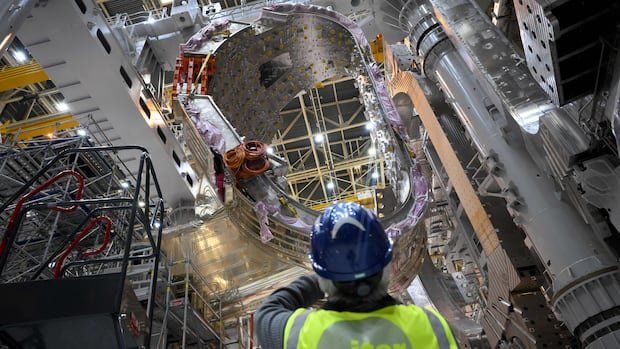
Nuclear fusion advancements by General Fusion in Canada and China’s EAST reactor have generated excitement over the potential of this clean and virtually limitless energy source to meet the increasing power demands driven by AI and electrification. The emergence of new fusion startups globally has attracted substantial private investments.
Nuclear fusion is a long-studied method of producing abundant, safe, and eco-friendly energy by merging nuclei of atoms into a single nucleus, releasing significant energy. Unlike traditional nuclear reactors that rely on splitting atoms of radioactive elements like uranium, fusion reactions, such as combining hydrogen nuclei into helium, do not produce radioactive waste. Despite the availability of hydrogen fuel in Earth’s water, commercial nuclear fusion reactors are not yet operational.
China’s EAST fusion reactor recently achieved a crucial milestone by stabilizing plasma at densities surpassing previous limits, potentially paving the way for more compact and cost-effective fusion reactors in the future. General Fusion, based in Richmond, B.C., also made headlines for breaking a world record in neutron production, showcasing significant progress in fusion technology.
The global interest in fusion energy has been fueled by concerns about climate change and energy security amid escalating energy needs from data centers and AI applications. The Fusion Industry Association reports a surge in private investments, with major tech companies, billionaires, and oil corporations backing fusion startups. The association anticipates fusion power contributing to the grid by the 2030s.
Despite recent advancements, challenges remain in achieving sustained fusion reactions and developing self-sustaining fuel systems. Canada plays a crucial role in supplying tritium, a key fusion fuel, and technology to international fusion projects, aiming to overcome technical and economic barriers for the commercialization of fusion energy.
While large-scale fusion reactors like ITER show promise, their high costs raise questions about the economic viability of fusion energy compared to other clean energy sources. Startups are exploring innovative technologies like high-temperature superconducting magnets to create more affordable and efficient fusion reactors. Collaboration between private industries and governments is seen as essential to address the practical challenges and regulatory frameworks necessary for the successful deployment of fusion power.

