
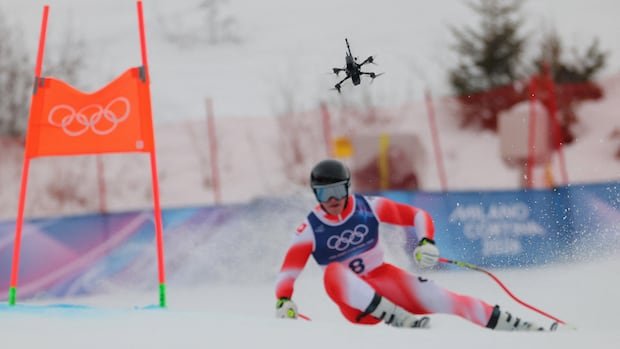
In the finals of the freeski slopestyle event at the Winter Olympics, Canadian Megan Oldham secured an Olympic bronze medal on her last run, with a drone closely following her movements. This innovative drone coverage, using first-person view (FPV) drones, has been a standout feature at the games, providing viewers with dynamic and immersive perspectives of the athletes in action.
The use of FPV drones marks a new approach in Olympic broadcasting, offering high-speed tracking that matches the athletes’ movements with precision on various terrains, from luge tracks to alpine slopes. Piloted by experts equipped with headsets and controllers, these drones have been capturing thrilling moments at speeds of up to 75 km/h, showcasing the agility and skill required in winter sports.
While drone technology has been part of the Olympics since 2014, the introduction of FPV drones has elevated the viewing experience, bringing audiences closer to the athletes’ experiences in real-time. The intricate maneuvers required to navigate the challenging landscapes of the Olympic venues have demanded meticulous planning and execution from the drone teams.
Despite the positive reception of the drone coverage, some criticisms have emerged regarding the noise generated by the drones during broadcasts. Athletes, too, have expressed mixed reactions to the presence of drones during their performances, with some calling for improved visibility for judging purposes. However, overall, the consensus remains that the drone footage offers a fresh and engaging perspective on Olympic events.
According to Pierre Ducrey, the sports director of the International Olympic Committee, while the integration of drones may require an adjustment period for viewers, the added value they bring to the Olympic experience is undeniable. As technology continues to evolve, the use of drones in sports coverage is set to become a prominent feature, enhancing the immersive nature of athletic competitions.

