
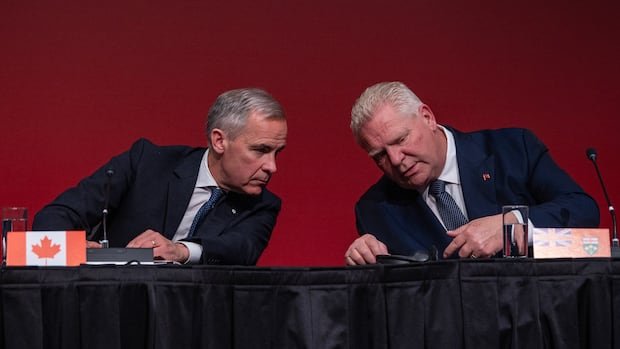
Ontario Premier Doug Ford has emphasized the importance of Canada maintaining a 100% tariff on Chinese electric vehicles in an open letter addressed to Prime Minister Mark Carney. Ford stated that this tariff plays a crucial role in securing a trade agreement with the United States and safeguarding Canada’s automotive industry.
Ford highlighted that removing the tariffs on Chinese-made EVs would undermine efforts made in discussions with U.S. officials to protect and strengthen the interconnected automotive supply chains between the two countries. The premier noted that the tariff is instrumental in safeguarding 157,000 jobs and the substantial $46 billion investment made by the Ontario and federal governments in nurturing Canada’s electric vehicle and battery supply chains since 2020.
The 100% tariff on Chinese EV imports was implemented by Canada in October 2024, following a similar decision by former U.S. President Joe Biden, who initiated a 100% tariff in late September 2024. The Canadian government justified this measure by accusing China of unfairly subsidizing its electric vehicle industry and flooding markets with low-cost vehicles.
China criticized the tariff as a protectionist move that negatively impacts trade relations between China and Canada. Carney recently met with Saskatchewan Premier Scott Moe to address China’s retaliatory tariffs on Canadian canola, including a 76% tariff on canola seed imports and a 100% tariff on canola oil, meal, and peas. Additionally, China imposed a 25% tariff on specific Canadian pork, fish, and seafood products.
Ford expressed concerns that Canada could risk isolating itself in the North American market if it prematurely removes the tariffs on Chinese EVs. Meanwhile, International Trade Minister Maninder Sidhu mentioned that the finance department is currently reviewing the electric vehicle tariff and is contemplating an invitation from Saskatchewan’s trade minister to participate in a future trade mission to China.
In response to the ongoing trade dynamics, Ford recommended exploring a potential bilateral trade agreement with the U.S., citing Mexico’s decision not to join its North American partners in imposing tariffs on Chinese electric vehicles. Mexico recently announced tariffs of up to 50% on various products from China and other Asian countries, including automobiles, as part of efforts to boost domestic production.
The discussions surrounding the tariffs on Chinese EVs continue to evolve, with various stakeholders emphasizing the need to balance trade interests while safeguarding domestic industries.

