
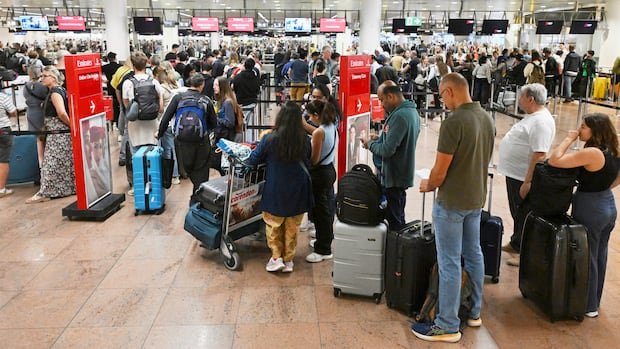
Airport disruptions caused by a ransomware attack affected automated check-in systems, as confirmed by the EU’s cybersecurity agency. The incident led to ongoing disruptions at major European airports, impacting numerous flights and passengers since Friday. The attack targeted Collins Aerospace, a subsidiary of RTX, disrupting operations at airports like Brussels and London Heathrow.
ENISA, the cybersecurity agency, stated that law enforcement is investigating the malicious software responsible for locking data until a ransom is paid. Collins Aerospace is collaborating with affected airports to restore full functionality, with updates nearing completion. Despite efforts, Berlin airport still faces delays and manual check-in processes due to the attack.
Brussels Airport resorted to using iPads and laptops for online check-ins, resulting in the cancellation of 60 out of 550 flights on Monday. Dublin Airport reported minimal impact and implemented manual procedures. The disruptions in Berlin, Brussels, and London compelled staff to resort to manual check-in methods, reminiscent of early air travel practices.
Collins Aerospace’s systems facilitate passenger check-ins, boarding pass printing, and baggage handling. Despite challenges, Brussels Airport maintained 85% of scheduled departures over the weekend, leveraging additional staff and operational resilience. The airline industry continues to grapple with the repercussions of cyber threats on critical infrastructure.

