
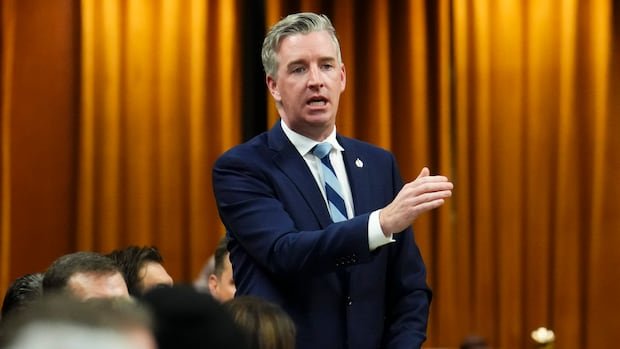
The House of Commons ethics committee has approved a motion to investigate the federal Conflict of Interest Act, focusing on restricting the use of blind trusts and tax havens, and expanding the law’s regulations to include party leadership contenders. Conservative Member of Parliament Michael Barrett initiated the motion during the committee session on Wednesday. This action came after a briefing by Conflict of Interest and Ethics Commissioner Konrad von Finckenstein, where Barrett and fellow Conservative MP Michael Cooper raised concerns about the transparency of Prime Minister Mark Carney’s blind trust. They questioned the adequacy of disclosure regarding Carney’s assets and the roles of his chief of staff and Clerk of the Privy Council in managing his conflict of interest obligations.
Von Finckenstein acknowledged the possibility of making adjustments to the legislation but defended its purpose of balancing transparency and accountability while encouraging capable individuals to engage in public service. The issue of Carney’s financial holdings has drawn opposition scrutiny since his bid for leadership. Apart from his tenure as a central banker, Carney has held various positions in the private sector, including a board membership at Brookfield Asset Management. His ethics screening involves a wide array of companies, prohibiting him from participating in decisions that could benefit these entities. Carney placed his assets in a blind trust shortly after winning the Liberal leadership but before assuming office as prime minister.
Criticism of the Act is not new, with Conservatives previously questioning its efficacy since its inception in 2006 under then-Prime Minister Stephen Harper. Earlier this year, Conservative leader Pierre Poilievre proposed amending the Act to mandate leadership candidates to disclose their controlled assets publicly within 60 days of candidacy. The party also suggested that future prime ministers and their cabinets divest conflicting assets to prevent the misuse of political power for personal gain. Von Finckenstein cautioned against such changes, deeming them overly simplistic and potentially discouraging individuals from pursuing public office.

