
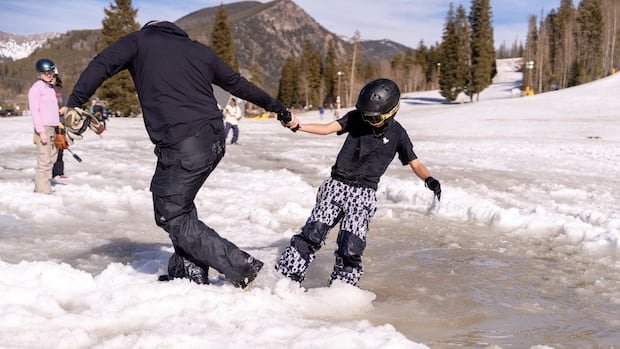
Unusually warm temperatures in March have left mountain ranges typically covered in snow looking bare, signaling an early start to the fire season in the western United States. Climatologist John Abatzoglou from the University of California Merced warned that the conditions are aligning for a potentially severe fire season across the region.
The recent heatwave, which saw temperatures well above normal levels for an extended period, has finally subsided. A study released on March 20 indicated that such extreme warmth would have been nearly impossible without the influence of human-induced climate change, primarily from CO2 emissions.
March heat records were shattered in multiple states, leading to rapid snowmelt across the western mountains. The early disappearance of snow cover has been linked to an extended fire season, as it dries out the landscape, making it more susceptible to fires.
Research shows that a low snowpack combined with early snowmelt not only increases the area burned by fires but also raises the risk of severe fires that hinder forest regeneration. In some regions, snowpack levels are anticipated to be the lowest in decades.
Impact of Reduced Snowpack on Wildfires
Colorado experienced record-low snowpack throughout the winter, with most of it vanishing early this year. This rapid snowmelt has led to an early onset of the fire season in Colorado and neighboring Nebraska.
Wildfires have already erupted in California, primarily in grasslands, indicating the heightened fire risk due to dry conditions. The abnormally warm temperatures have caused vegetation to dry out quickly, creating ideal conditions for fires to ignite.
Preventing Severe Wildfires
While snowpack decline due to climate change poses a long-term challenge, there are opportunities to mitigate fire risks. Balik suggests that snowy winters due to weather patterns like El Niño can be leveraged for prescribed burning, reducing fuel loads and fire severity.
Wildfire Risk in Canada
In Canada, low snowpack is a significant contributor to wildfire risks, especially in the western regions. However, factors like heat and drought play a crucial role in the boreal forest. With drought conditions prevailing in many parts of Canada and expected hot temperatures in 2026, the country remains vulnerable to severe fire seasons.
Despite the concerning fire risk posed by the recent heatwave in the U.S., there is still room for the situation to improve. Abatzoglou remains hopeful for rain in April to alleviate the fire risk.

