
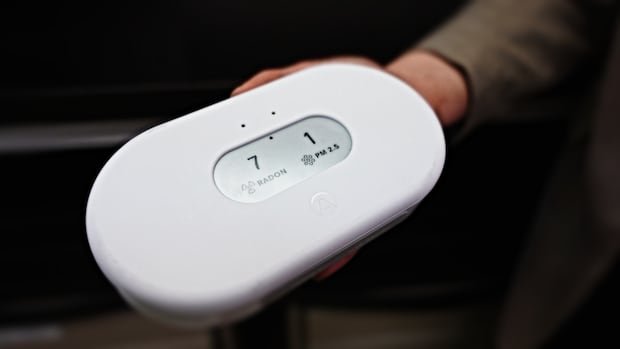
Consumers looking to assess their residence’s radon levels now have a plethora of radon monitors available for purchase online or in brick-and-mortar stores. However, experts caution that many of these devices are ineffective.
Pam Warkentin, the executive director of the Canadian Association of Radon Scientists and Technologists (CARST), which collaborates with Health Canada on the country’s certification program, pointed out that numerous Canadians unknowingly install uncertified monitors. She emphasized that decisions should not be based on these unreliable detectors and advised affected individuals to acquire a different monitor.
Instances where individuals have utilized faulty monitors have resulted in wasted resources and time. Electronic monitors can carry a significant price tag, and the testing period typically spans a minimum of three months. Warkentin recounted an incident where a homeowner bought devices for himself and his adult children, only to realize later that the monitors had been recalled after several months of use.
These substandard devices, according to Warkentin, pose a public health hazard by providing inaccurate readings, potentially deterring homeowners from addressing elevated radon levels in their homes. Radon, a colorless, radioactive gas, can lead to lung cancer through prolonged exposure, with millions of Canadian households believed to have high radon levels as per research, resulting in an estimated 3,200 radon-induced lung cancer deaths annually.
“Many individuals may conduct tests, receive low readings, and not question the reliability of the device,” Warkentin cautioned.
To ensure accurate testing for radon in households, individuals are advised to engage in testing for at least three months, ideally during winter when residences are sealed, facilitating potentially higher radon readings.
Long-term testing can be carried out by hiring a radon measurement professional or utilizing a test kit. While some communities offer free radon monitors through local facilities, homeowners generally bear the cost of purchasing their devices, which range from passive trackers to electronic monitors displaying real-time results.
Notably, some devices provide misleading “false low” readings, failing to accurately reflect the actual radon levels in a residence, as highlighted by Warkentin.
Health Canada’s radon lab in Ottawa conducts tests on home radon monitors to ascertain their performance under typical household conditions. The certification of radon monitors is overseen by Health Canada, with approval granted through the Canadian radon certification program managed by CARST.
Currently, only six electronic monitors have been approved for use as of March 2026, including Airthings Corentium Home, Airthings View, Aranet RN+, Ecosense EcoQube, Ecosense RadonEye, and SunRadon Luft. Interested consumers seeking certified devices can refer to a list of provincial suppliers through the Take Action on Radon program.
Before purchasing a radon monitor, homeowners are advised to check for recalls, as numerous devices have either not received approval or have been recalled by Health Canada. The evolving landscape of radon monitors makes it challenging to stay updated, with manufacturers frequently introducing new devices or rebranding faulty ones.

