
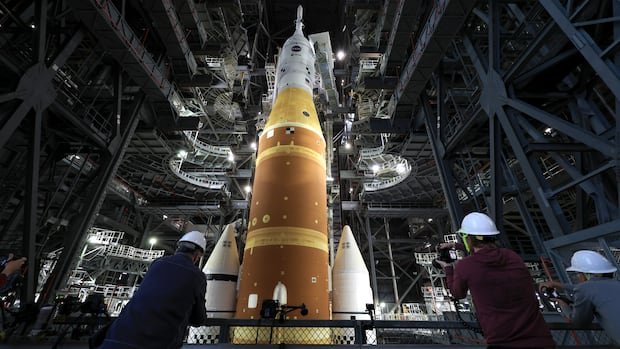
NASA’s Artemis II mission, originally scheduled for a Feb. 8 launch, has been postponed by at least a month due to a hydrogen leak discovered during tank fuelling. This delay mirrors the challenges faced by the first Artemis mission, which also encountered delays caused by fuel leaks.
Liquid hydrogen and oxygen, the components of rocket fuel, present a peculiar phenomenon as they remain in liquid form despite being hundreds of degrees below freezing. These cryogenic liquids have exceptionally low boiling points – oxygen at -183 C and hydrogen at -253 C, just above absolute zero, making them ultra-cold and capable of freezing anything they touch.
To handle these frigid liquids, specialized equipment is crucial to prevent freezing or cracking due to the extreme temperature difference between the fuels and the warm Florida air where launches occur. The core stage of the Space Launch System (SLS) rocket is coated in insulating foam to protect the cold fuel from the surrounding warm air, with pre-chilled fuel lines and tanks to guard against metal heat transfer.
Despite these measures, the combination of ultra-cold temperatures and vapor pressure inevitably leads to leaks, with hydrogen being particularly prone to escape due to its small molecular size. Every pipeline, joint, and valve serves as a potential leakage point in the intricate fuel transfer process from storage tanks to the rocket engines.
During a recent wet dress rehearsal, a leak emerged from the connector linking the launch tower hose to the rocket, a recurring issue that caused delays during the Artemis I flight. Engineers aim to address this leak at the launch pad to avoid further delays, with a new dress rehearsal scheduled before the rescheduled launch no earlier than March 6.
Hydrogen leaks, an ongoing concern in the space program, have led some entities to opt for alternative fuels like kerosene or methane. While liquid hydrogen and oxygen offer high thrust-to-weight ratios suitable for heavy lift vehicles like the SLS rocket, critics argue that the rocket’s costliness and disposable nature may hinder its sustainability compared to reusable rockets used by private companies at a fraction of the cost.
The future of the SLS rocket hinges on resolving hydrogen leaks while balancing flight costs with the preservation of jobs tied to its production across various states.

