
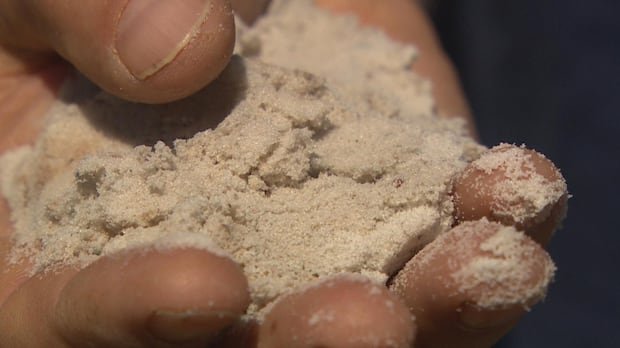
An Alberta-based company looking to mine silica sand in Manitoba is teaming up with the largest university in the province to develop an innovative groundwater monitoring network. Sio Silica’s president, Carla Devlin, announced the collaboration with the University of Manitoba to create a sophisticated and non-intrusive system for real-time tracking of aquifer conditions.
The joint effort aims to conduct a feasibility study and design a robust monitoring system that can assess aquifer health continuously. Devlin emphasized that the initiative goes beyond the company’s operations, serving as a valuable tool for sustainable resource management across Manitoba.
Sio Silica’s renewed interest in extracting sand from the sandstone aquifer beneath the Rural Municipality of Springfield has prompted this partnership. The company’s previous proposal faced rejection in 2024 due to concerns about potential impacts on water quality and underground stability.
Originally, Sio Silica planned to drill thousands of wells over a span of 25 years to extract silica sand for various industrial applications. However, community backlash over environmental risks and water contamination fears led the company to revise its strategy, proposing fewer wells and reduced extraction quantities in a bid to secure an environmental license.
Devlin stressed that the collaboration with the university is independent of the license application process but signifies a commitment to transparency and scientific rigor moving forward. By embracing advanced monitoring technologies and open data practices, the project aims to make informed decisions based on scientific evidence and long-term environmental stewardship.
Describing the research project as a game-changer, Sio Silica’s technology team believes that studying the southern Manitoba aquifer comprehensively will provide a valuable groundwater database, which would otherwise require substantial government investment to replicate.
The research project, spearheaded by Ricardo Mantilla, an associate professor at the University of Manitoba, will utilize quantum gravimetry to monitor changes in the gravitational field associated with groundwater movement. While this technology can quantify groundwater levels, it cannot assess water quality, Mantilla clarified.
The significance of the project extends beyond Sio Silica’s operations, emphasizing the importance of understanding the interactions between surface water and groundwater in Manitoba’s hydrological cycle. Mantilla stressed the need to listen to water and highlighted the potential of gravimetry for developing innovative groundwater monitoring solutions globally.
Notably, the cost-effectiveness and efficiency of gravimetry could reduce the need for expensive well drilling, aligning with Sio Silica’s revised approach of minimizing well installations. Halloran, a hydrogeologist, emphasized the importance of safeguarding groundwater resources, emphasizing their crucial role in the water cycle and as a primary water source for many communities.

