
WARNING: This story contains graphic images of wildlife.
Earlier this month, wildlife photographer Peter Mather from Yukon was on a project south of Whitehorse to capture footage of caribou when he observed a bear displaying unusual aggression.
“It was huffing and making noises, so we had to drive it away,” Mather recounted.
Shortly after, another bear appeared.
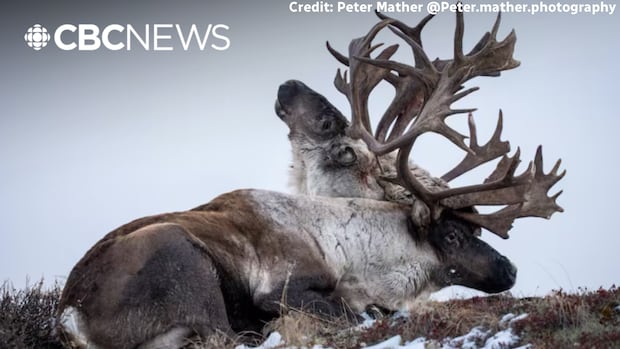
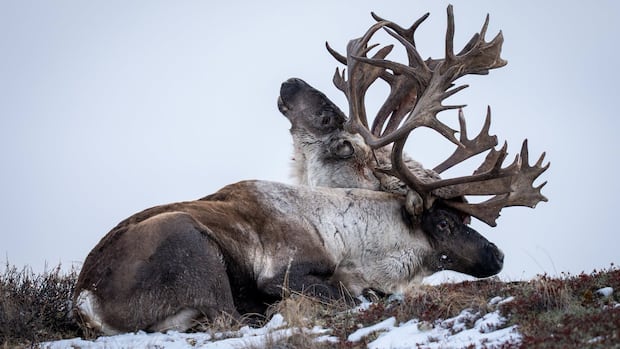
A Yukon photographer documented a caribou carrying another caribou’s remains entangled in its antlers. Peter Mather captured this rare sighting in early October in the high mountains south of Whitehorse. He dedicated 10 days to filming the rutting season of caribou on the traditional lands of the Kwanlin Dün First Nation as part of the Southern Lakes Caribou Recovery Plan.
“Upon seeing that second bear, I thought, ‘There must be a dead caribou nearby,’” Mather mentioned.
He launched a drone to investigate.
“I was astonished to discover… two caribou with their antlers intertwined, one of which was lifeless,” he explained.
He recounted witnessing a bear attempting to approach the caribou, only to be deterred by the surviving bull.
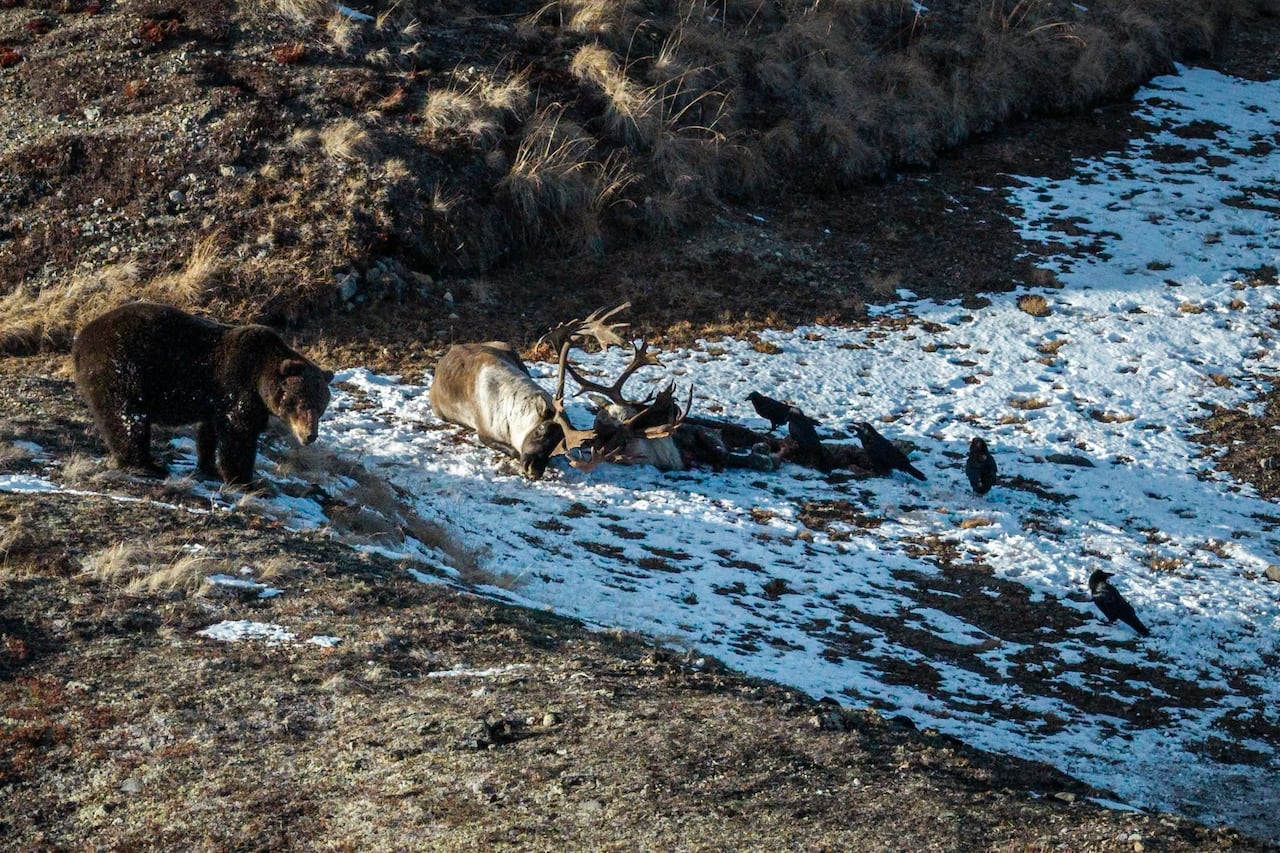
Mather documented various wildlife feeding on the carcass of the deceased bull caribou, including a bear and a group of ravens. (Submitted by Peter Mather)
Mather observed the living bull caribou for several days.
“Over the course of four days, that dead caribou vanished,” Mather remarked.
“Foxes, ravens, and golden eagles were feeding on it throughout that time.”
He noted that on the final day, a pack of wolves arrived and likely consumed most of the remaining carcass.
“In a way, [the wolves] liberated the other caribou, allowing it to walk away at the end, with two heads,” Mather said.
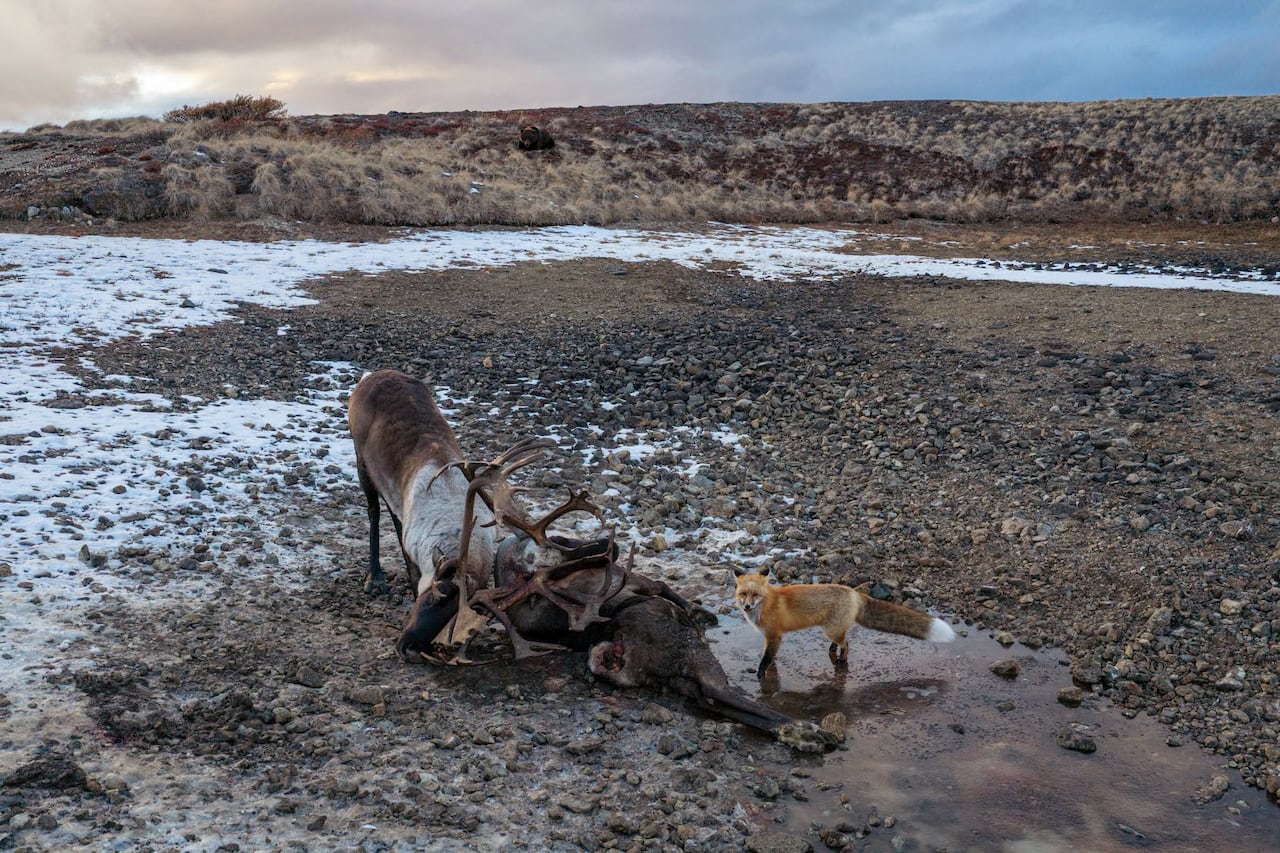
At one point, a fox visited to partake in a meal from the dead caribou. (Submitted by Peter Mather)
Antler locking is not uncommon
Mather noted that after the wolves had fed, the surviving caribou vanished, and he was unable to locate it.
His role involved documenting the rut, which is the mating season for caribou and often entails males battling one another, in collaboration with the Southern Lakes Caribou Recovery Team and the Kwanlin Dün First Nation.
Lars Jessup, a biologist with the Southern Lakes Caribou Recovery Project, indicated that this event occurred during a time when bull caribou are particularly susceptible.
“The rut is the most perilous season for bull caribou… they exert a lot of energy during the rut, and predators are typically present,” he explained.
He mentioned that it is somewhat typical for bulls to lock antlers, having previously found skulls and skeletons of caribou with their antlers interlocked.
“It’s probably more common for both to perish in such situations rather than one surviving,” Jessup noted, referring to the living caribou as “lucky.”
According to Jessup, the time for the living caribou to shed the extra weight is approaching.
“If he survives another month or so, he’ll likely drop those antlers and lose the additional burden, which should help him through the winter,” Jessup said.
“By the time people typically see them in the mountains around Christmas, the bulls are usually antlerless.”
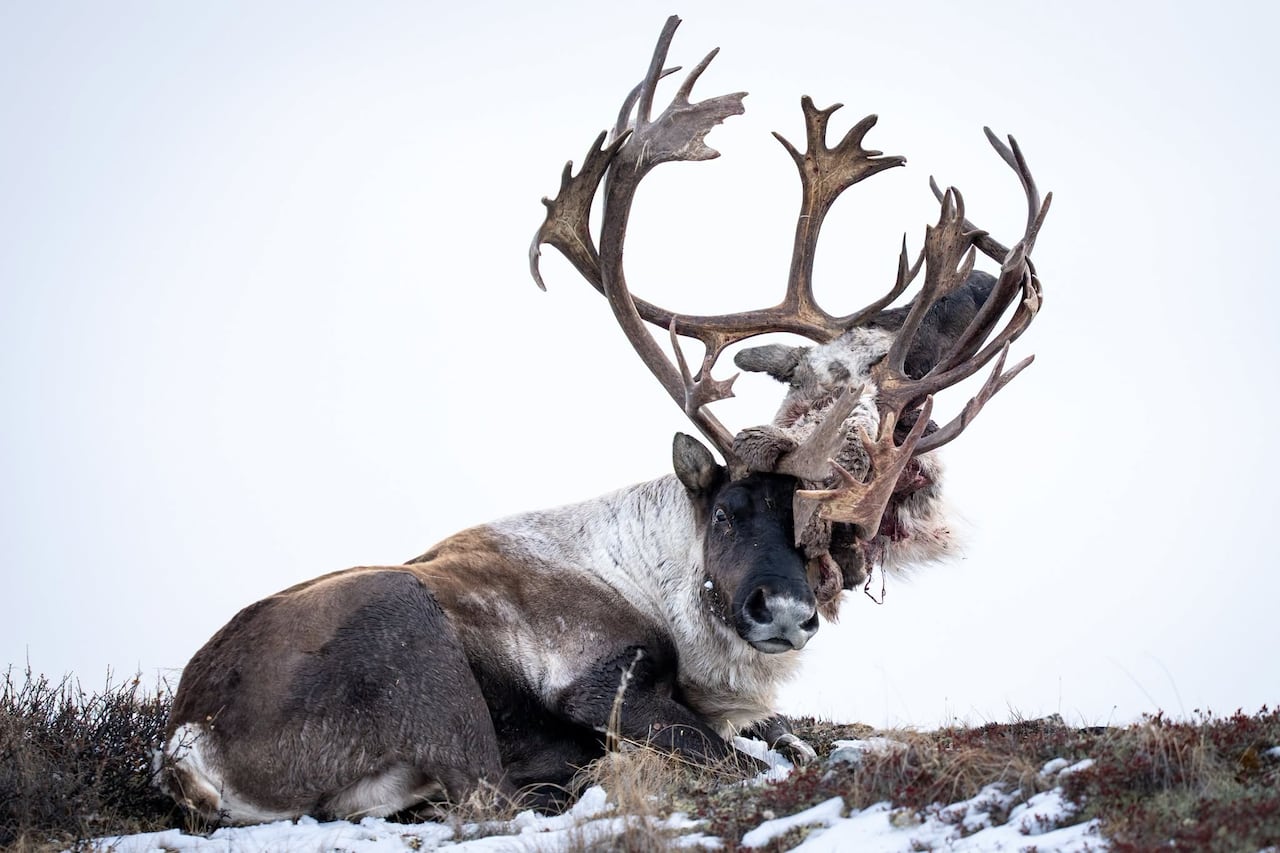
Eventually, other animals succeeded in freeing the surviving caribou from the burden of carrying another bull. (Submitted by Peter Mather)
Symbolizing the herd’s resilience
This specific caribou belongs to the Ibex herd, Jessup stated, one of the four herds that comprise the southern lakes caribou populations.
It is safeguarded by the southern lakes caribou recovery initiative, which has been ongoing for over 30 years.
“The herds have made significant strides in recovery over the past three decades, thanks to extensive efforts,” Jessup noted.
However, he expressed concern that the natural fluctuations in the caribou population seemed to be declining, as there have been few calves observed in the last five years.
For Mather, the photographer, the footage of that single caribou’s survival provides him with a sense of optimism.
“To me, it symbolizes the resilience of the entire herd, showcasing just how strong this caribou is,” he remarked.

