
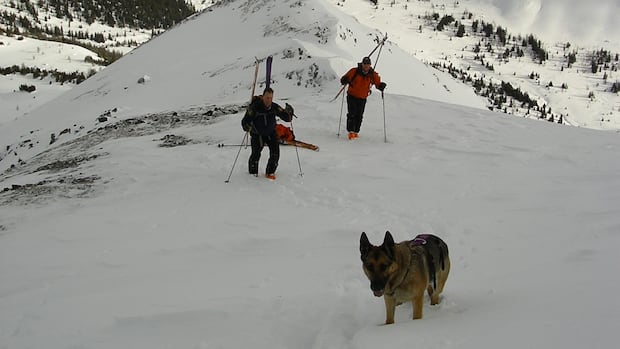
Parks Canada has discreetly terminated a search and rescue dog initiative that has been operational since the early 1970s.
“This service is critical for visitor safety and law enforcement,” remarked Scott Ward, a retired dog handler from Parks Canada, who served as a warden for 35 years and handled dogs from 1983 to 2000.
“Every year it gets busier. The number of calls is on the rise. The visitor safety teams are much more active now compared to my time.”
Mike Henderson, who worked as a dog handler in Banff National Park from 2001 to 2019, acknowledged the necessity of budget cuts but expressed concern that eliminating the canine program might compromise safety.
“You’re removing a program that has proven its worth over 55 years. We have continually demonstrated our effectiveness. … It’s not as if we were ever complacent or excessively costly,” noted Henderson, who worked with three dogs — Attila, Atar, and Cazz — and participated in over 1,000 rescue missions.
The final search and rescue dog, Leroy, retired last summer after seven years of service. Leroy played a role in locating over 50 individuals in the wilderness, finding avalanche victims, recovering bodies from mountains, assisting in poaching prevention, and served as a significant public relations ambassador.
Henderson and Ward mentioned that a new dog had undergone approximately two and a half months of training to qualify for federal service, only to have the program discontinued.
The federal budget for 2025 included a reduction of $145 million for Parks Canada over a three-year period.
A representative from Parks Canada indicated that they would respond to CBC News regarding inquiries about the reasons behind the program’s termination, but no comment was provided before publication.
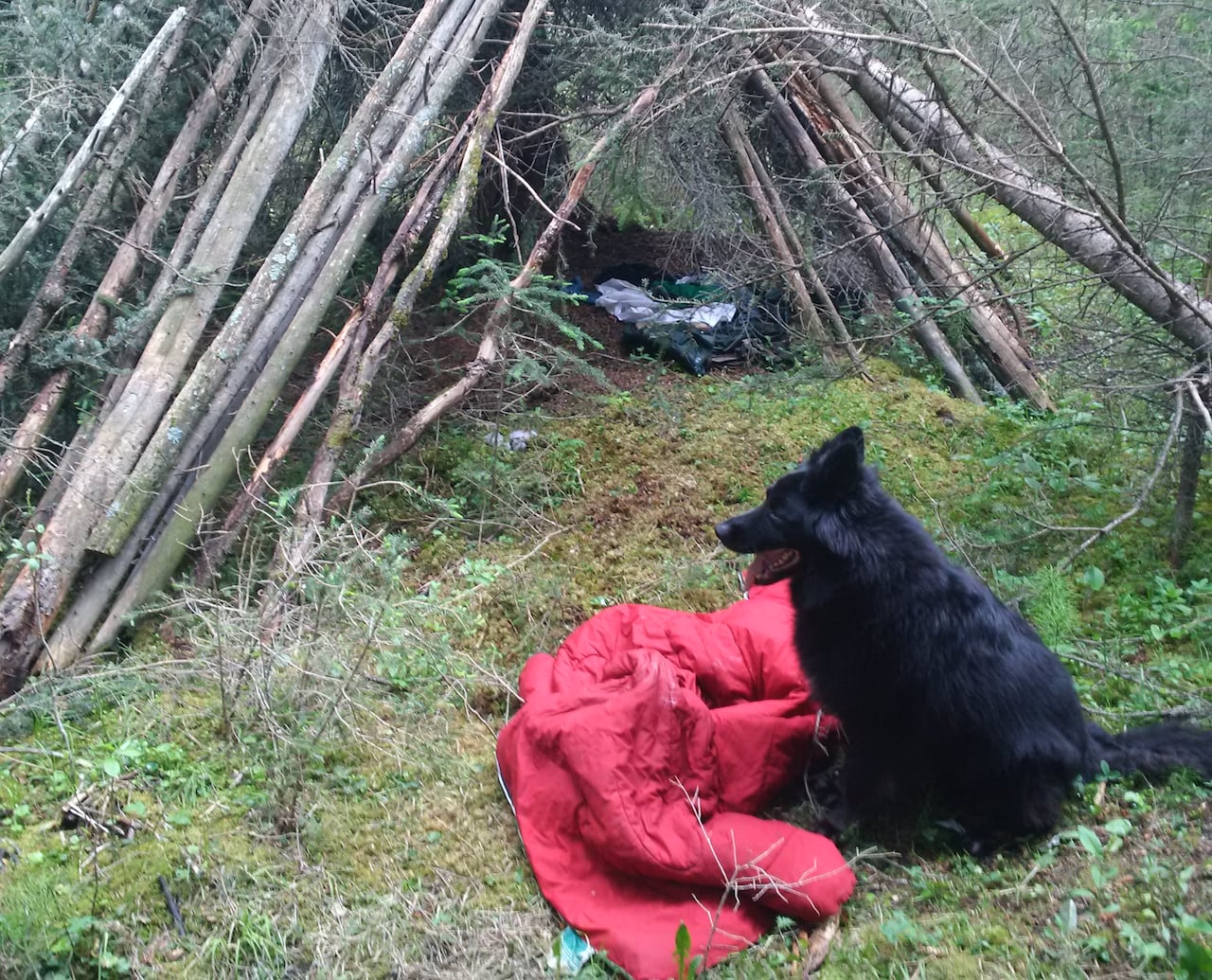
Cazz, a Parks Canada search and rescue dog, stands outside an illegal campsite on the edges of the Town of Banff. (Submitted by Mike Henderson)
‘Why’d we get rid of it now?’
The search and rescue initiative was established in 1970, beginning in Jasper National Park.
It was extensively utilized in the mountain national parks for backcountry rescues, locating missing persons, aiding local law enforcement, identifying avalanche victims, and discovering illegal campsites.
The program expanded to include six dogs but gradually diminished over time. The Jasper field unit ceased using dogs more than ten years ago, leaving only Banff with this capability.
Sid Marty, a warden in Banff, Jasper, and Yoho national parks from 1966 to 1978, stated that they collaborated closely with the search and rescue dog and its handler.
He explained that the dog could quickly locate individuals trapped in avalanches, preventing Parks Canada staff from becoming endangered during prolonged searches.
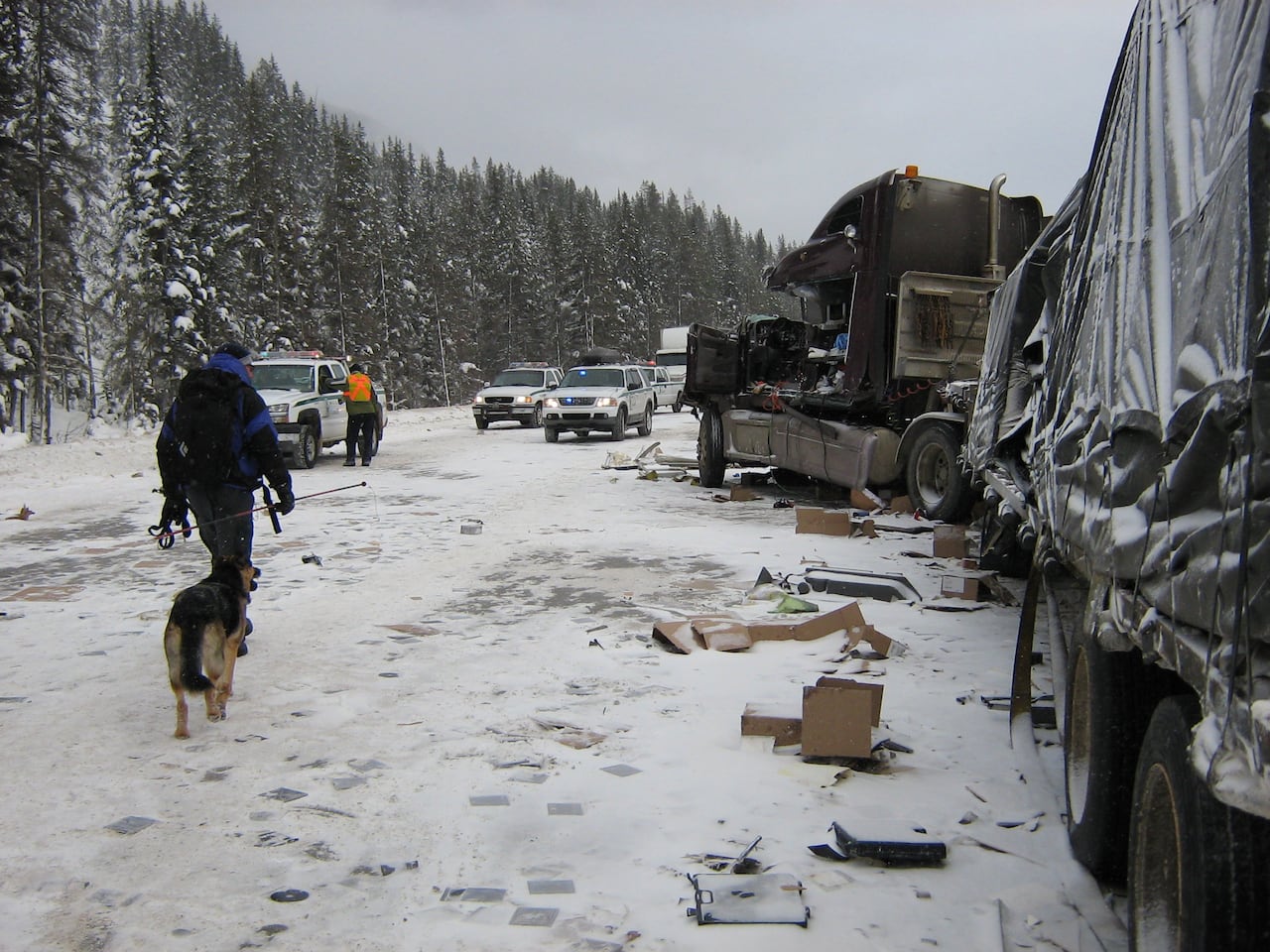
Search and rescue dog Atar scopes out the scene of a collision involving multiple semi-trucks on the Trans-Canada Highway. (Submitted by Mike Henderson)
Ward stated that his dogs — Data, Smokey, and Gypsy — played a vital role in locating missing individuals, including children who had strayed from campsites.
He noted that they were trained to detect human scents “as small as a paperclip in the grass to as large as a human body.”
Henderson stressed that the dogs provided assistance beyond just search and rescue.
He mentioned that their daily responsibilities included addressing illegal camping, responding to mental health emergencies, managing illegal campfires, enforcing area closures, preventing wildlife habituation by removing food, and monitoring for poaching activities.
“You can settle down rowdy campers,” he remarked. “You approach, ask politely and light up the dog, and everyone agrees to go to bed.”
Henderson argued that there should have been discussions to fully grasp the implications of the program’s elimination.
“Why did we decide to eliminate it now? This definitely warrants further discussion,” Henderson stated.
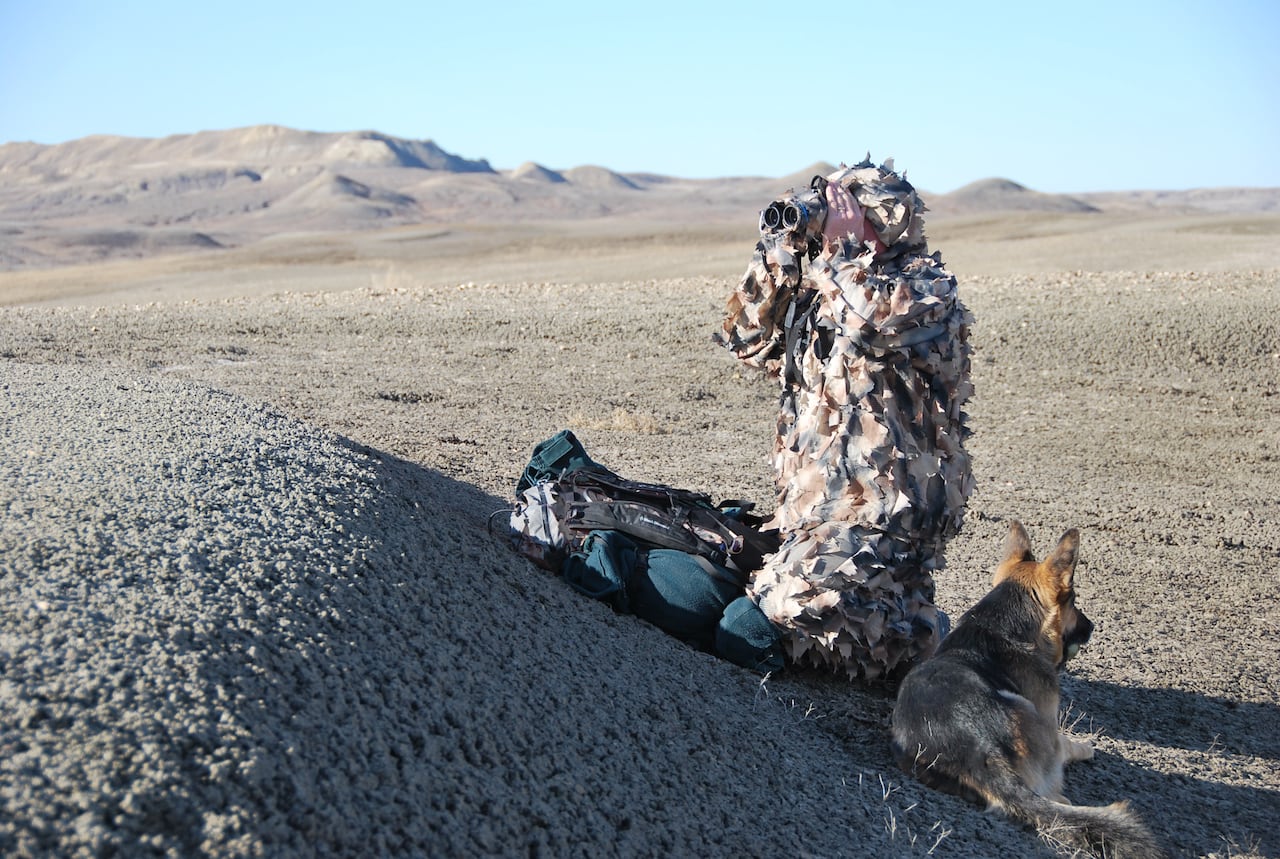
Former Parks Canada warden Mike Henderson and his search and rescue dog in Grasslands National Park in Saskatchewan during an anti-poaching operation. (Submitted by Mike Henderson)
Not only dogs getting the boot
Parks Canada is currently undergoing a “workforce adjustment” and has recently informed 2,917 employees — which is over half of its workforce — that they may face layoffs or reassignment. Andrew Campbell, acting CEO of Parks Canada, communicated in an email to staff that the agency needs to eliminate approximately 500 full-time positions.
The complete implementation of the new strategy is expected by 2027, and Campbell indicated that they are allowing employees to voluntarily resign or retire to lessen the number of layoffs.
“Parks Canada has utilized, and will continue to employ, all available measures to minimize involuntary separations,” he stated during a call with staff.

